












A study regarding the monumental discovery was published in The Astrophysical Journal.

Astronomers used two Hawaiian telescopes, based at the University of Hawai'i Institute for Astronomy Pan-STARRS on Haleakala, Maui and the W. M. Keck Observatory on Maunakea, Hawai'i Island, to observe the last 130 days of a red supergiant's life.
The research team observed the star's collapse into a Type II supernova while conducting the Young Supernova Experiment (YSE) transient survey, the first observation of its kind. The Panoramic Survey Telescope and Rapid Response System (Pan-STARRS) detected the star in mid-2020, and a few months later, a supernova had taken its place, designated supernova 2020tlf, or SN 2020tlf.
"Keck was instrumental in providing direct evidence of a massive star transitioning into a supernova explosion. It's like watching a ticking time bomb. We've never confirmed such violent activity in a dying red supergiant star where we see it produce such a luminous emission, then collapse and combust, until now," said Raffaella Margutti, an associate professor of astronomy at the University of California, Berkeley and the study's senior author.
You can read more from the study here.


 Overclocker gets hold of never released E-coreless Core i9-14901KE and achieves 7.4GHz using sub-zero cooling
 Xbox outage exposed how your physical Xbox game discs aren't completely safe
 GTA 6 could launch without one of its biggest features in Australia
 Victim of first autonomous agent cyberattack explains what happened and why
 Valve promises Steam Machine reservation holders will get their chance to buy before 2027
 KIOXIA's UFS 5.0 embedded flash memory opens the door to powerful, compact, on-device AI
 KIOXIA's next-gen NX1 Series SSDs for AI deliver close to 40% more performance with support for direct liquid cooling
 NVIDIA is giving away 3-Month Discord Nitro subscriptions to all GeForce gamers
 AMD Software Adrenalin 26.7.1 WHQL driver adds support for a brand-new RDNA 4 GPU
 Xbox Helix's biggest feature may be what hurts the Xbox console the most
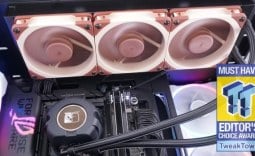 Noctua NL-LC1-36 Liquid CPU Cooler Review
 Logitech G316 X 98 Wired Gaming Keyboard Review - Retro-Inspired Board that Falls a Little Short
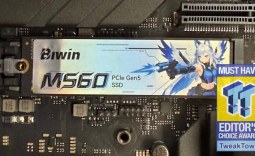 Biwin M560 2TB SSD Review - Best Overall Retail-Ready DRAMless SSD
 Logitech G512 X 98 Analog Mechanical Gaming Keyboard Review - An Innovative Two-in-One
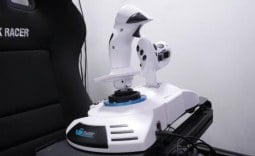 Thrustmaster T.Flight HOTAS 5 MSFS Edition Review
 SteelSeries Arctis Nova Pro Omni Wireless Headset Review - One Headset to Rule Them All
 SteelSeries Arctis Nova 7 Wireless Gen 2 Headset Review - New and Improved, But Is It Enough?
 AMD Ryzen 7 7700X3D Review - Days of Future Past
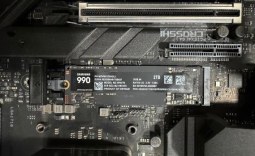 Samsung 990 2TB SSD Review - Ninth Gen QLC at PCIe Gen4 Speeds
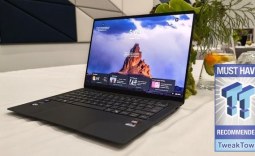 ASUS ExpertBook Ultra (Panther Lake) 14" Business Laptop Review
 Printer Not Working in Windows? How to fix detection, print queues and drivers
 The Ultimate Guide to Personalizing Your Windows 11 Taskbar
 How to Turn Your Windows Laptop Into a Second Monitor with Miracast and Wireless Display in Minutes
 6 Mistakes to Avoid When Buying a Windows Laptop
 I capped Windows Update's bandwidth with Delivery Optimization, and my downloads stopped choking
 I use this decade-old free tool that finds files faster than Windows Search does
 I install and update most of my apps with this Windows command now, and I stopped downloading sketchy installers
 Hisense U6SF 65-inch MiniLED TV: High Performance Meets Leisurely Convenience
 I stopped digging through Windows menus after I set up this one folder
 Don't sell your Windows laptop until you do these things