

Steam has added a new codec to its Remote Play streaming feature that was made by a single person from scratch, aimed specifically at reducing latency for game streaming across two PCs on a local network. The new codec is called Pyrowave, and requires at least 100Mbps of bandwidth to operate through Steam's game streaming Remote Play feature.
Pyrowave reportedly uses five to ten times the amount of bandwidth other streaming codecs use, but runs with an "extremely low" end-to-end latency on a good network, using the GPU to encode/decode each frame. Exact performance numbers were not given, but it is very likely Pyrowave provides lower latency than AV1 and H.265, two codecs that Remote Play already supports. Pyrowave also supports YUV 4:4:4 and HDR, keeping its functionality on par with AV1 and H.265.

For perspective, typical recommended bitrates for AV1 encoding range from 4Mbps to 50Mbps for 1080p, 1440p, and 4K video encoding and decoding. But with Pyrowave, the minimum bitrate you can set in Steam is reportedly 100 Mbps, with a maximum bitrate of 500Mbps.
Pyrowave's creator notes that the main goal of the codec was to remove as much processing as possible to reduce latency. In a blog post they published, they note that video codecs have high processing latency by design to help improve image quality at extremely high compression ratios. The main features Pyrowave throws away compared to other codecs are motion prediction and entropy coding.
Having a codec that behaves like Pyrowave is highly effective for use cases such as Steam's Remote Play streaming technology. Remote Play is designed primarily for streaming games between two PCs on a local network where bandwidth constraints are not a concern. The vast majority of home networks range between 1 Gbps and 10 Gbps in raw bandwidth, which is more than enough bandwidth to use the Pyrowave codec.

Frequently Asked Questions
Open a question for an answer from TweakTown's coverage of this news, or ask your own below.
Which Steam Remote Play settings need to be changed to enable Pyrowave?
What network speed is needed for Pyrowave to run smoothly on Steam Remote Play?
Why does Pyrowave use so much more bandwidth than AV1 or H.265?
What kind of latency improvement is Pyrowave aiming for in local game streaming?
Have a question that isn't listed here? Ask below, and TweakBot will answer it.

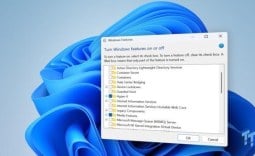
To use Pyrowave, you'll first need to opt into the Steam beta client branch, then manually enable Pyrowave in the Steam Remote Play advanced client settings.