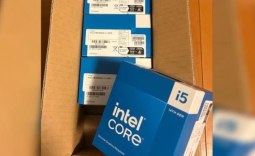


A Facebook post from a hardware community group just caught my attention, and it's a frustrating one. Apparently, this buyer, Crayola Johnson, ordered AMD's Ryzen 7 9800X3D from Amazon and received an Intel Core i9-10900K instead. The box arrived sealed with no visible signs of tampering, meaning whoever made the swap did so before the product even reached the customer's hands.

This is far from an isolated incident. We've covered multiple CPU switching cases on TweakTown over the past couple of years. The most egregious one was probably not even a CPU one, but a 970 EVO SSD that was disguised as a 990 PRO with fake stickers.
Earlier in 2025, a reviewer from Hardware Busters ordered a 9800X3D from Amazon Germany and found an AMD FX-4100 inside a sealed box. Before that, fake 7800X3D units with empty PCBs and counterfeit heatspreaders were circulating, and we also reported on a Ryzen 9 9950X3D that arrived with a 3D-printed base and no actual CPU under the IHS.
The 10900K is a 2020 Intel chip on the LGA1200 socket, so it is completely incompatible with any AM5 motherboard the victim would have bought to pair with the 9800X3D. The value gap is also significant: the 10900K trades for well under $100 on the used market today, while the 9800X3D retails around $479. Clearly, the buyer would have been less than pleased with this CPU swap.

How does this keep happening, then? Amazon's commingled inventory system has historically been a key enabler. Under commingling, stock from multiple sellers is pooled under a single product listing without individual unit tracking. A scammer can purchase a high-end CPU, swap it for a cheap one, reseal the box with enough care to pass a visual check, and return it. That tampered unit can then end up back in the inventory pool and shipped to an unsuspecting buyer as new.

Amazon announced plans to phase out commingling by March 2026, which should reduce this type of fraud, but it clearly hasn't stopped yet. AMD CPUs have been a common target of these scams, as we recently covered an instance where a buyer received a normal 9950X3D in the box of a Ryzen 9 9950X3D2 Dual Edition he ordered.

When your CPU order arrives, check the outer shrink wrap for signs of resealing, look for inconsistencies in the tape, and weigh the box if you have a scale handy (a 10900K is noticeably heavier than a 9800X3D due to the integrated heat spreader design). On AM5 chips specifically, the moment you see pins on the bottom of the processor, something is wrong, as genuine AM5 CPUs have no pins.
If you receive the wrong product, file a claim with Amazon immediately before attempting a return and document everything with photos. Given the 9800X3D's continued popularity, it's likely to remain a target. Thankfully, the user reported that Amazon is sending them a replacement unit, though they claim it took 4 layers of AI to get to a human.