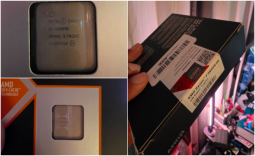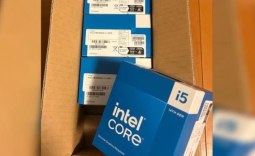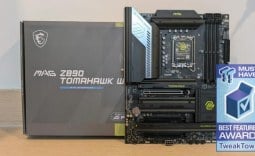


It seems like every day we find a new Amazon customer complaining about their order being mixed up or their components not being what was advertised. After we broke the news of a user receiving a Core i9-10900K in a 9800X3D box in our TweakTown exclusive, many affected customers reached out to us.
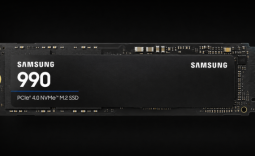
One particular email we received was especially shocking: a buyer had ordered a Samsung 990 PRO SSD but instead received a 970 EVO with stickers to make it look like a 990 PRO. He had ordered the SSD on June 19th and received it early the next morning. At first sight, nothing seemed out of the ordinary.
Popular Now: The Legend of Zelda: Twilight Princess 3DS port is getting closer to release as New 3DS performance improves

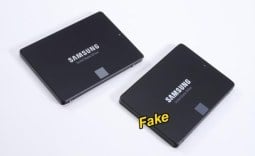
The box itself was of a 990 PRO, sealed normally, and the SSD would have passed a visual inspection, but our contact noticed something was off about the sticker application. It seemed sloppy, and peeling off from the right end, not what you would expect from a Samsung product. He thought nothing of it and installed it in his PC to format it. Then the first red flag became apparent: the drive's capacity was only 1TB.

Our contact already had a Samsung 970 EVO installed in his system, so he decided to cross-check the information with multiple programs to rule out a duplicate ghosting issue. One by one, all programs confirmed that it was indeed a 1TB Samsung 970 EVO Plus, rather than the much more expensive 990 PRO he had ordered.

To put the final nail in the coffin, he compared the serial number on the package, the sticker on the drive, and the digital serial number embedded into the firmware using Samsung's official software. They were all different, which confirmed that he had indeed been scammed. The serial number on the drive's sticker is S7KHNJ0WC81325H, while Samsung Magician showed the drive's SN as S6S1NJ0T705487J. You get the idea.

The buyer quickly requested a refund, which Amazon promptly processed and approved. However, that is little compensation for the string of swap scams that have been appearing in the PC hardware space recently. This is not an isolated incident. We have covered several of these "errors" before, such as the buyer who received a normal 9950X3D in a 9950X3D2 Dual Edition box. However, if these "errors" start becoming increasingly common, they cross the line into scam territory.

We had previously chalked down these instances to "commingling," in which stock from multiple sellers is pooled under a single product listing without individual unit tracking. This allows scammers to purchase products, replace the CPU or SSD inside with a cheaper substitute, reseal the box with enough care to pass a visual inspection, and then return it. That tampered unit can then be sold to an unsuspecting buyer again.
In this situation, the scam was even more deliberate and planned out than the previous instances. The scammer bought a 2TB Samsung 990 PRO for around $400, replaced it with a $230 1TB 970 EVO Plus, peeled the sticker off the 990 PRO, applied it carefully onto the 970 EVO, put it back in the box, re-sealed it carefully, and then shipped the return to Amazon. The seal was intact when it reached the victim, and the box was not tampered with.


This is where action needs to take place, and fast. Amazon has announced it will phase out commingling by March 2026, but we are months past that deadline, and scams like this are still appearing. Amazon's return inspection procedures need to be tightened up tenfold. A regular person should not be able to remove and reapply a company seal, tamper with the box, and then slip it past Amazon inspection this easily. This needs to change.

Previously, in our Amazon swap scam coverage on TweakTown, we covered an instance in which a reviewer ordered a 9800X3D from Amazon Germany and found an AMD FX-4100 inside a sealed box. We also brought attention to a 9950X3D CPU that arrived with a 3D-printed base and no actual CPU die. Moreover, we also saw fake 7800X3D units with empty PCBs and counterfeit heatspreaders circulating, but those were not purchased from Amazon.
It is clear that this is not an isolated incident but rather a series of hardware swap scams affecting dozens of users each year, if not more. Amazon needs to take immediate action to squash this issue, while companies like AMD, Intel, and Samsung need to improve their company seals so that a random scammer cannot remove and reapply them.

Frequently Asked Questions
Open a question for an answer from TweakTown's coverage of this news, or ask your own below.
How can I verify an SSD's true model and capacity immediately after unboxing to detect a potential swap?
What specific serial number mismatches should I check between the package label, drive sticker, and firmware tools like Samsung Magician?
If I receive a replaced or lower-capacity SSD from Amazon, what evidence from the drive and packaging will strengthen my refund or fraud claim?
Are there visible signs of tampering to look for on Samsung 990 PRO retail seals and stickers that differ from authentic application methods?
Have a question that isn't listed here? Ask below, and TweakBot will answer it.

If you have been affected by such a scam before, reach out to us at TweakTown, and we will be sure to report your experience on our platform.