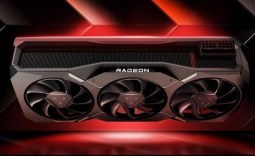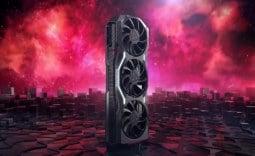


In a surprise announcement, AMD Computing and Graphics SVP Jack Huynh said FSR 4.1 upscaling is coming to RDNA 3 and RDNA 2 GPUs. RDNA 3, which includes Radeon RX 7000-series graphics cards and integrated graphics on new handhelds like the MSI Claw A8, will receive support starting in July. RDNA 2 GPUs will follow at some point in 2027.
For context, when AMD announced FSR 4 early last year, it was tied exclusively to its newer Radeon RX 9000 series GPUs. Gamers have been vocal about bringing the technology to older hardware ever since, but it didn't seem likely to actually happen.
Popular Now: MAXSUN removes the PCIe x16 slot from a Z890 Mini-ITX motherboard and routes the GPU over MCIO insteadThat was because FSR 4 launched exclusively on RDNA 4, due to hardware acceleration for the FP8 instruction set, which older AMD architectures lacked. After a year of behind-the-scenes work, AMD claims it has created an INT8 version of the technology without compromising quality or performance.

While AMD has yet to provide official performance comparisons with FSR 3, early signs suggest FSR 4.1 on RDNA 3 and RDNA 2 may not perform as poorly as feared. We have already seen popular tools like Optiscaler help users integrate FSR 4.0 and FSR 4.1 on RDNA 2 and RDNA 3 hardware. The results were surprisingly good. While there were performance drop-offs in the 9 to 13 percent range, the official release will likely improve those numbers.
AMD has yet to clarify how far its support extends or which features it will provide to different architectures. We do not know whether FSR 4.1 will include frame generation or whether AMD will reserve certain features for newer architectures, as NVIDIA has done. A recent SDK update indicated that FSR frame generation could achieve 4-6x performance gains, giving it feature parity with NVIDIA's MFG.

It is also worth noting that the upcoming official release incorporates the newer FSR 4.1 upscaler. Compared to the original FSR 4.0 release, FSR 4.1 delivers better image quality in nearly every area. It reduces blurring and smearing, retains fine details and distant geometry, renders particles more effectively, and produces noticeably less shimmer around object edges thanks to stronger temporal stability.
That being said, competition from NVIDIA is surely a reason for AMD to bring this much-needed change. But there is also a strong case to be made that Valve, the company behind the upcoming Steam Machine, may have quietly pushed Team Red.
The Steam Machine is built around RDNA 3 hardware, and it would have been a tough sell if AMD's best upscaling technology remained locked to RDNA 4. The hype around the Steam Machine should now pick up even more, knowing FSR 4.1 will be there from day one.