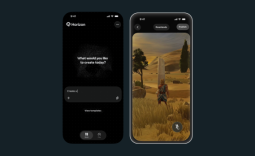


In a recently released corporate strategy presentation, Hideaki Nishino, President and CEO of Sony Interactive Entertainment, detailed the company's approach to using AI in game development. Nishino described AI as a "powerful tool" to support Sony's mission to become the best place to play and publish.
The presentation specifically mentions automating workflows, improving productivity, and accelerating tasks such as quality assurance, 3D modeling, and animation. One example highlighted is Mockingbird, an AI-powered tool that animates 3D facial models using performance capture data.
Popular Now: Control Resonant becomes Remedy's top Steam launch, and even pirates are telling people to buy itNishino revealed that Sony's studios are already adopting this AI animation tool and have used it to remaster Horizon Zero Dawn. Real-world video footage of hairstyles was converted into detailed 3D models, significantly reducing the time required to build them by hand. The Last of Us developer Naughty Dog and San Diego Studio were among other PlayStation studios already using similar tools.
However, Nishino was quick to add that the "vision, the design, and the emotional impact of our games will always come from the talent of our studios and performers." In efforts to preserve artists' integrity, Sony has also partnered with Bandai Namco to explore how generative AI can complement the latest technologies to best serve a creator's vision in video production.

Nishino also pointed to AI's role in improving PS5 Pro's visual fidelity, saying the technology will offer players a fresher, more immersive way to enjoy their favorite characters while giving publishers a "more efficient production environment."
The generative AI debate remains deeply divided. On one hand, companies continue to market AI as the next major technological leap, while on the other, many gamers want games kept as far as possible from aggressive AI-driven rendering and photorealistic manipulation. That sentiment was recently reflected in reactions to technologies like DLSS 5, with 58% of players voicing opposition to AI altering their games.

Many would consider Sony's approach a practical use case: automating repetitive development tasks so artists can focus on creative work rather than production busywork. That is also why you will not find an AI disclosure on Horizon's Steam page. Valve currently requires developers to disclose only fully AI-generated content, not the use of AI-assisted workflow tools.
Still, many gamers remain skeptical. As part of the same investor briefing, Sony also confirmed it has yet to decide on a launch window for the PlayStation 6 and expects to incur nearly $600 million in losses on its acquisition of Bungie.