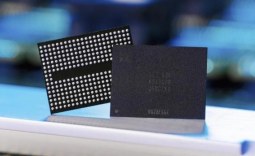


As if the current RAM crisis wasn't bad enough - with supply being consumed by AI needs and data centers therein - the future of cars is going to be an additional burden on memory production.
Fully autonomous cars could demand hundreds of Gigabytes of on-board memory, according to Micron's CEO Sanjay Mehrotra, who provided his thoughts as part of the latest fiscal report, after the firm had a booming quarter.
Popular Now: Xbox Series X can now run PS5 games thanks to a new emulatorThe Register reports that Mehrotra envisages "robust long-term growth in automotive memory demand", and that the amount of RAM used in a vehicle will go from 16GB currently to over 300GB with the advent of L4 autonomous cars.
- Read more: NVIDIA partners with Uber to support global expansion of Robotaxi-vehicles with NVIDIA chips
- Read more: Micron has signed agreements locking in record-high memory prices with major customers through 2030
- Read more: Oh great: HDD prices surge to highest point in 2 years with demand from China and the US
Those are vehicles which can operate without a driver in a geofenced area, and the crucial difference to L3 is that with L4 autonomy, the system doesn't require a human to be alert and ready to take over at the wheel if needed. (Although a human can still take over if they wish).
Clearly the processing and memory needs are going to be quite intensive in the case of L4 class vehicles, and when a considerable amount of these autonomous cars are rolling off the production lines, that's going to be a whole new drain on RAM resources.
Mehrotra also pointed out that there'll be another technological advance requiring similar heaps of RAM and that's robots, which will, the CEO believes, require a "compute platform that rivals that of a high-end L4-capable automobile".
Mehrotra noted that the world is on the "cusp of a 20-year growth vector in robotics" and to "expect robotics to become one of the largest product categories in the technology world".
We are looking to the future here, of course, but if AI growth continues apace, there's a worrying level of demand to be met even given that memory makers like Micron are currently working hard to build new fabs to better beef up supply.
The current RAM crisis is expected to last for this year and next, with some hope of normalization in 2028 from some quarters - although others are worried that we could be in for a prolonged shortage of memory throughout the rest of this entire decade.
Micron's profits are booming, as you might imagine. In Q2 2026 it benefited from almost $24 billion in revenue compared to $8 billion in the same quarter of 2025. The prediction for the next quarter is to exceed $33 billion, which would be a more than tripling of revenue year-on-year.
All the memory chip makers are similarly making hay while the sun shines, their only problem being that they can't produce enough RAM modules to keep up with the spiralling demand. And consumers are paying the price in this case, as AI profits are favored over the gains to be had from the likes of laptops or video RAM for graphics cards.