












The "attention economy" has reached new heights in China, and as pointed out by YouTuber Louis Zhao in a recent video, a phenomenon has emerged where hundreds of streamers are taking to the streets at night to create content.
Some streets and even the underpasses of bridges in China are being swarmed with livestreamers, as hundreds of content creators compete for viewers' attention. Zhao explains that this phenomenon is occurring for a multitude of reasons, with the primary one being the low barrier to entry for livestreaming and macroeconomic problems in China, such as the rising cost of living.
Zhao discusses why this is happening at night, the Chinese monetization model, and the role influencer agencies are playing in the influx of creators taking to the streets. Why the streets, or public places in general? In a nutshell, the content is more interesting when filmed in a public place, as there is chaos or a random element at play.
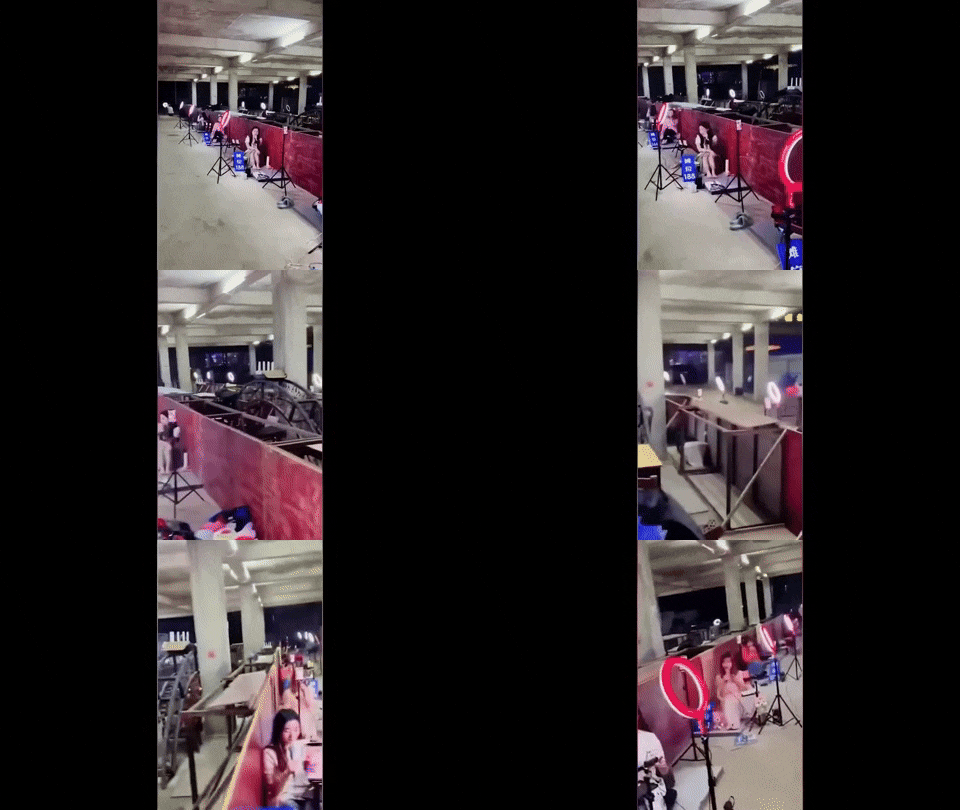
Additionally, many of these streamers are women and are seemingly playing into the "pity" of the more than likely male viewers who will see a female streamer out in the cold, on the street, seemingly homeless. The idea is that this setting will encourage the viewer to take pity on the streamer and donate money to help them get off the street.
However, these streamers aren't necessarily homeless, as many of them are part of an Influencer Agency, which sets them up with the streaming equipment and a designated spot to stream on the side of the road. The agency also typically handles all of the finances for the streamer, so they can just concentrate on creating the most engaging content possible. All of this management by the agency, of course, comes with a fee, typically in the form of a percentage of the total revenue generated by the streamer.
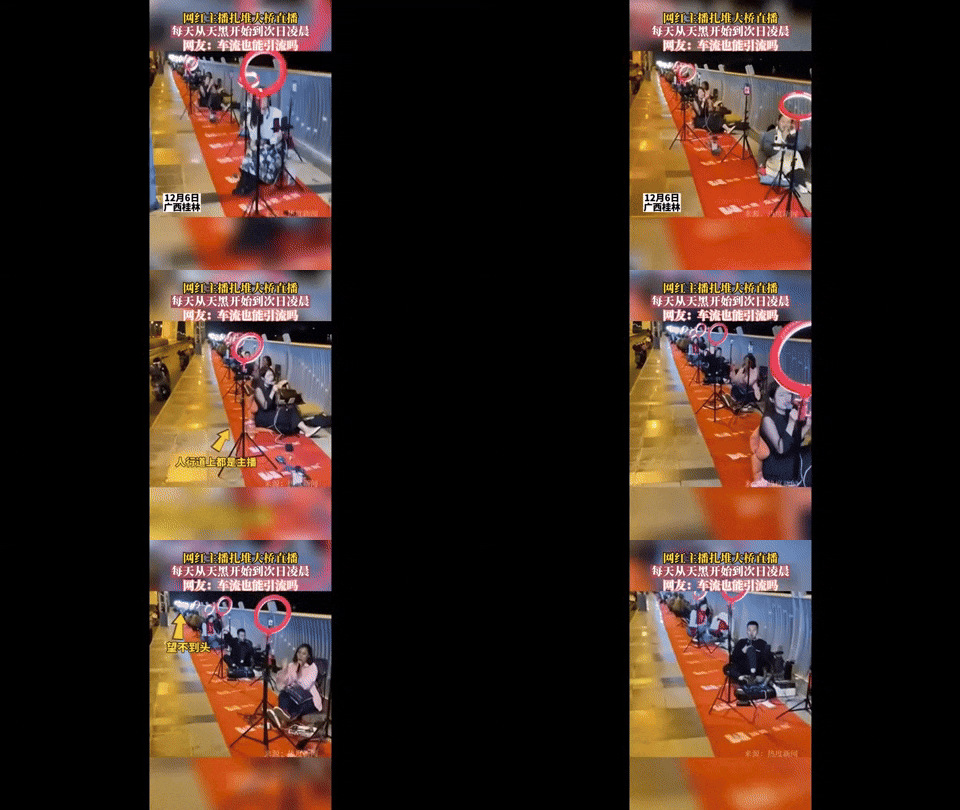
Another important difference between streaming in China and streaming in Western countries is how streamers get paid. For those who are unfamiliar, Western streamers who use platforms such as Twitch, YouTube, and Kick can earn money through advertising revenue sharing once they are accepted into the partner program of that platform.
Chinese streaming platforms currently don't share advertising revenue, meaning all streaming income must come from the viewer's pocket via donations. This point ties into why these streamers appear homeless and appeal to the pity of the viewer.
Why is it somewhat unsettling to see lines and lines of streamers on the street? Zhao makes a great observation as to why footage of these streaming avenues can invoke an off-putting feeling, with the YouTuber pointing out the juxtaposition between polar opposites. For example, the appearance of wealth and fame (appearing like a celebrity), versus poverty and obscurity (appearing homeless), as the streamers are all dressed in glamorous clothing and makeup, yet are sitting on the side of the road, appearing homeless.


 NASA new space telescope is now mapping the entire sky in 3D
 Twitch CEO reveals two-thirds revenue driven by viewers
 ISS cameras spot huge mysterious writing etched onto the surface of Earth
 Resident Evil reboot has begun shooting with 'Weapons' director Zach Cregger
 Insiders reveal GTA 6 Online mode plans - custom player-made experiences await
 Giveaway: 12 Winners Will Score MONTECH NX400 and NX600 CPU Coolers
 Sandisk NAS 800 NVMe SSD delivers PCIe Gen5 speeds for demanding NAS environments
 RayNeo announces new iO Smart Glasses and GT Series with 'cinema-grade' display
 IQUNIX launches premium EC75 Hall Effect keyboard with 0.01mm Rapid Trigger
 AVerMedia announces new pro-grade HDMI capture devices with up to 4K RGB24 True Color support
 Beyerdynamic announces new affordable MMX 100 and MMX 130 wireless gaming headsets with studio-grade sound
 AMD's latest Radeon driver adds support for Star Wars Zero Company, Call of Duty, and Radeon RX 9050 4GB GPU
 Razer's new Huntsman is the 'world's first low-profile analog optical esports keyboard'
 GTA 6 appears to have leaked from Rockstar India, also suspected to be a PC version
 Xbox struggles to move physical discs, accounts for only 4% of disc sales in the US this year
 Samsung Foundry raises manufacturing prices, may impact the Nintendo Switch 2
 GIGABYTE MO27Q2A Gaming Monitor Review: 1440p, 280Hz, and QD-OLED is a winning combination
 Cooler Master V8 ACE 3DHP BLACK CPU Cooler Review
 ASUS ROG Strix XG129C Review: A $199 Gaming Monitor You Don't Play Games On
 Cooler Master HAF II 500 Mid-Tower Chassis Review
 Corsair HS35 v3 Wireless Gaming Headset Review - An Affordable Winner
 D-Link F518 5G Wi‑Fi 6 AX1800 Mobile Hotspot Review: All-Day Mobile Hotspot
 Bose Lifestyle Ultra Speaker Review - Impressively Detailed Room-Filling Sound
 MSI Z890 Gaming Plus WIFI6E Review - Z890 for under $200
 Mortal Kombat (1995) 4K Ultra HD Blu-ray Review
 CPS PCCOOLER YS1200 ATX 3.1 80 PLUS Gold PSU Review
 Using Multiple Monitors? Change these Windows settings for a Better Experience
 Windows Sandbox is The Windows Security Feature Most People Never Use
 I ditched the Windows 11 context menu for this open-source tool, and here's why
 Windows 11 may be encrypting your drive already, and I checked where my recovery key went
 GIGABYTE's 40 Days of INFINITY celebrates 40 Years of Innovation with stunning GeForce RTX graphics cards and rewards
 I swapped File Explorer for this free file manager and finally got the layout I wanted
 How to tell if someone has been using your Windows PC without your permission
 6 Task Manager tips for troubleshooting Windows performance problems
 ASUS ROG's 20th Anniversary Line-up of Premium PC Gaming Gear has Arrived - Here's Everything You Need to Know
 Six File Explorer tips every Windows user should know