













Our Verdict
Pros
- Power efficiency
- User experience performance
- Gaming performance
- Single-sided PCB design
Cons
- None
Should you buy it?
Introduction & Drive Details

Micron's 2600 series represents two industry firsts. The most notable is that the 2600 series is the first commercially available SSD to come arrayed with ninth-generation 2048Gbit flash. The density here is massive, allowing for the first time in the commercial space 2TB flash packages requiring only 8-NAND die to get there, as opposed to the current and much more difficult-to-achieve 2TB x 16 NAND die flash packages.
The flash goodness doesn't stop there. Micron's 276-Layer G9 QLC flash is so advanced that its density comes with an incredibly small footprint, another significant best-in-the-industry achievement. Then there is the speed. With up to 3.6 GB/s, Micron G9 QLC is the fastest QLC NAND I/O rate shipping in an SSD. With that kind of speed on tap, we will most certainly find Micron G9 QLC NAND arraying PCIe Gen5 SSDs soon.
But wait, there's more. The Micron 2600 SSD, made with advanced G9 QLC NAND and available with Micron's unique Adaptive Write Technology (AWT), outperforms competitive TLC-based client SSDs. It delivers excellent performance and user experience for daily PC storage, effectively replacing value TLC drives. AWT enhances QLC SSD performance, raising the bar for QLC SSD write speed. AWT brings a new level of optimization to everyday computing and helps improve large file writes that are traditionally the arch-nemesis of 4-bit (QLC) flash-based SSDs.
Now that we've taken a brief overview of the industry firsts that Micron G9 QLC flash brings to the table, let's explore another. The 2600 series is the first SSD we've encountered featuring Phison Electronics' PS5029-E29 4-channel DRAMless controller. Based on its wildly successful PS5027-E27T, Phison's newly christened E29T is optimized for applications requiring the most efficient data path for performance and power. This product meets the 7GB/s requirement by utilizing PCIe Gen4x4 to deliver superior bandwidth and compatibility using the latest 3D NAND technology.


Best Deals: Crucial P310 2TB SSD
Price Trend:
Prices last scanned 6 hours and 30 minutes ago

7 days ago: $291 USD30 days ago: $279.99 USD

7 days ago: $289.99 USD30 days ago: $291.99 USD
7 days ago: $415.97 CAD
7 days ago: $419.99 CAD30 days ago: $419.99 CAD
7 days ago: £229.9930 days ago: £219

7 days ago: $34930 days ago: $349
7 days ago: $360.20 AUD30 days ago: $390.04 AUD
Phison's E29T controller offers extremely competitive power efficiency, capable of turning your notebook into an all-day productivity weapon even when AC power is unavailable. Advanced power management features such as L1.2 give your system extreme idle efficiency, so you can stow your notebook without turning it off.
Additionally, Phison's proprietary 7th-generation LDPC ECC engine operates on 4K frame sizes with increased spare NAND space. Additionally, support for advanced machine learning algorithms enhances performance and flexibility, assuring superior NAND flash reliability. And finally rounding out the package, Phison's E29T controller features MS DirectStorage support to accelerate gaming performance. This is becoming an important factor as there are now over 30 games that have DirectStorage technology baked in.
Advanced controller technology, industry best QLC flash, best performance, best density, low power, low heat and best value per gigabyte - this is what Micron's 2600 SSD is bringing to the table for its OEM partners. Exactly what OEM system builders are looking for.
Our Latest SSD Review Coverage
- Biwin M560 2TB SSD Review - Best Overall Retail-Ready DRAMless SSD
- Samsung 990 2TB SSD Review - Ninth Gen QLC at PCIe Gen4 Speeds
- Phison E37T SSD Controller Exclusive Preview - The Fastest DRAMless SSD Platform Yet
- Seagate FireCuda X1070 4TB SSD Review - A New Mainstream Contender
- Micron 3610 2TB SSD Review - DRAMless QLC at 11,000 MB/s
Now let's see exactly what Micron's new 4-bit arrayed OEM client SSD can do by the numbers.
Drive Details
| Item | Details |
|---|---|
| Model | Micron 2600 2TB |
| MSRP | N/A |
| Model Number | MTFDKBA2T0QHK |
| Interface | PCIe Gen4 x4 |
| Form Factor | M.2 2280 |
| Performance | Up to 7,200 MB/s |
| Warranty | By Partner |


If you need to manage your Micron OEM SSD, you can do so with Micron's Storage Executive Software. Firmware updates, secure erasing, health monitoring, and security features are as easy as a couple of clicks from your desktop.
Jon's Test System Specifications
Intel Test System
| Item | Details |
|---|---|
| Motherboard | ASUS Z890 Apex (Buy at Amazon) |
| CPU | Intel Core Ultra 9 285K (Buy at Amazon) |
| GPU | MSI SUPRIM X RTX 3080 12GB (Buy at Amazon) |
| Cooler | Alphacool Eissturm Hurricane Copper 45 (Buy at Amazon) |
| RAM | Patriot Viper Xtreme 5 8000 48GB (Buy at Amazon) |
| Power Supply | be quiet! Dark Power Pro 12 1200W (Buy at Amazon) |
| Case | PrimoChill's Praxis Wetbench (Buy at Amazon) |
| OS | Microsoft Windows 11 Pro (Buy at Amazon) |
AMD Test System
| Item | Details |
|---|---|
| Motherboard | ASUS ROG Crosshair X870E APEX (Buy at Amazon) |
| CPU | AMD Ryzen 9 9950X (Buy at Amazon) |
| GPU | MSI SUPRIM X RTX 3080 12GB (Buy at Amazon) |
| Cooler | Alphacool Eissturm Hurricane Copper 45 (Buy at Amazon) |
| RAM | Sabrent Rocket DDR5 32GB (Buy at Amazon) |
| Power Supply | be quiet! Dark Power Pro 12 1200W (Buy at Amazon) |
| Case | PrimoChill's Praxis Wetbench (Buy at Amazon) |
| OS | Microsoft Windows 11 Pro (Buy at Amazon) |
Please note: We employ an M.2 AIC for testing on our Intel Core Ultra 9 285K platform.
Sony PlayStation 5 - M.2 Storage Expansion
PS5 Read Performance
With Sony's wildly popular PlayStation 5 console now enabled for M.2 NVMe SSDs to be used as fast storage expansion, we are including results for PS5-compatible SSDs we test as a part of our reviews going forward.


For SSDs that don't have an adequately sized PS5 compatible heatsink or other SSDs where the heatsink provided doesn't fit right and can be removed, we both use and recommend Sabrent's unparalleled PS5 heatsink available Here.


We only chart SSDs that can deliver a minimum of 5,500 MB/s read, which is Sony's original recommendation.
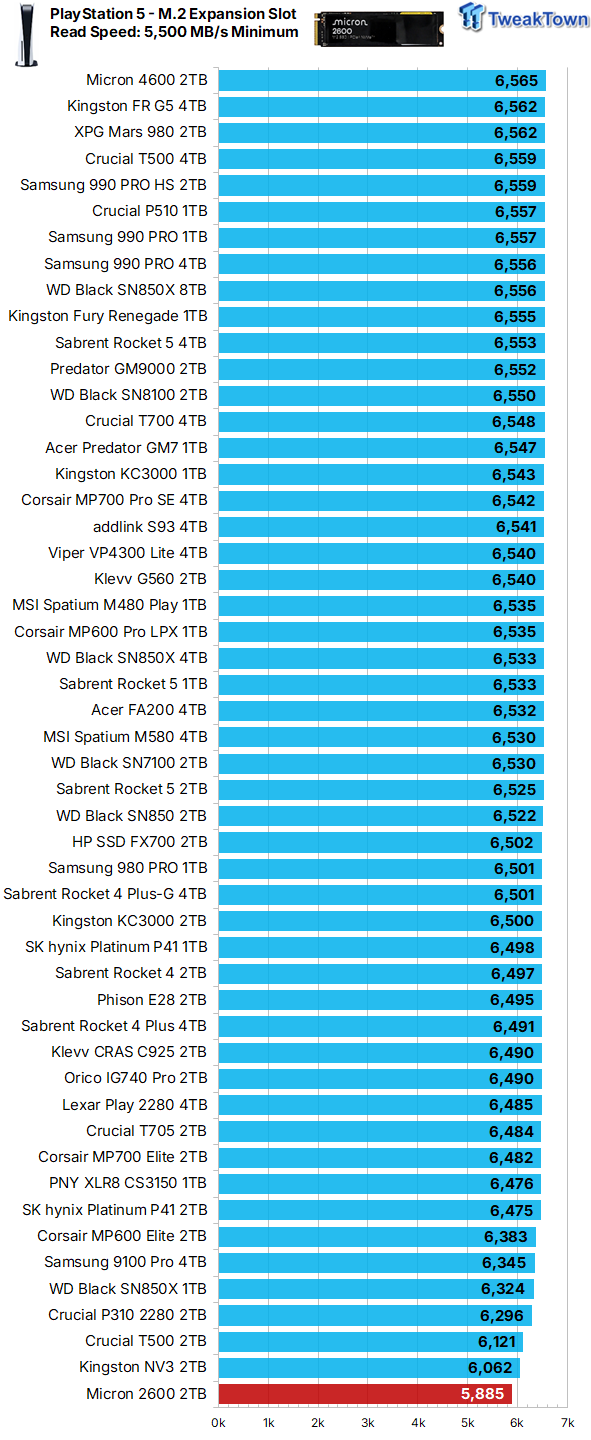
Our test subject makes the cut but obviously has not been optimized for PS5 M.2 storage expansion.
Synthetic Benchmarks: CDM, Max IOPS, ATTO
CrystalDiskMark
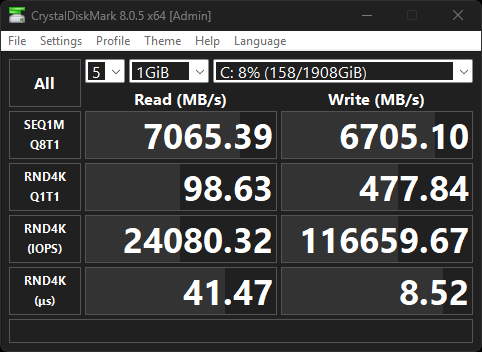
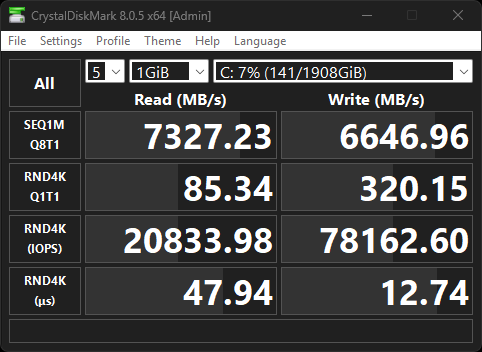
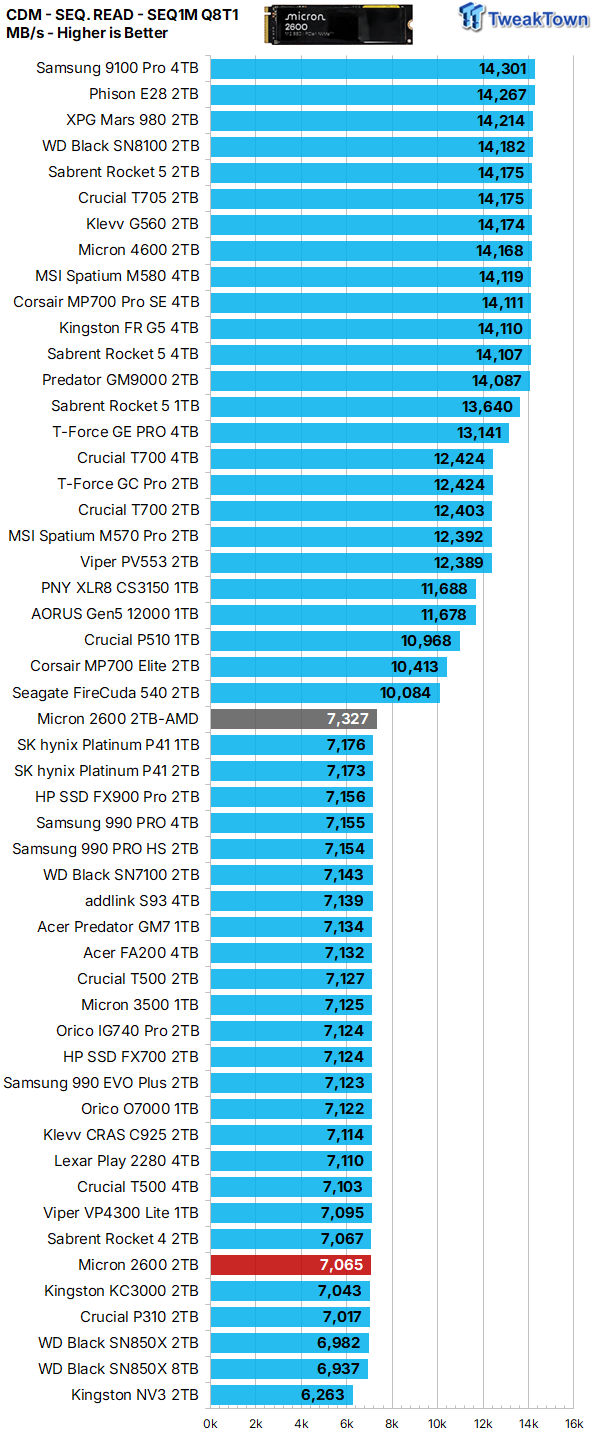
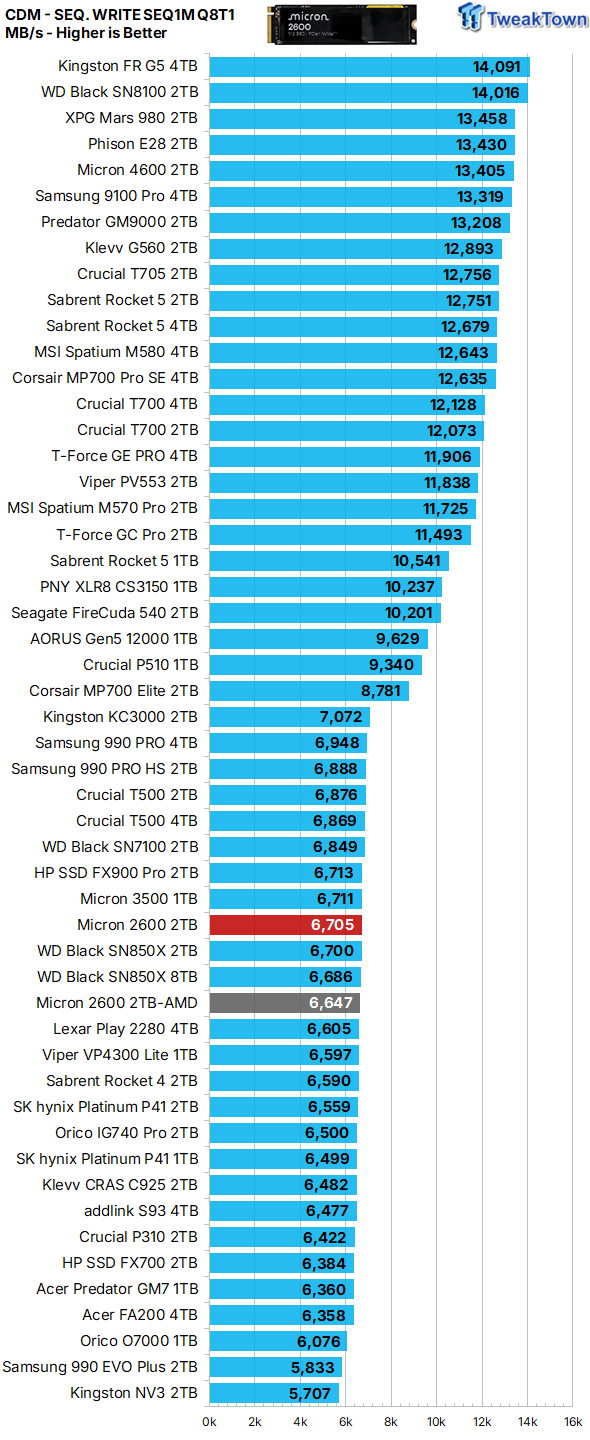
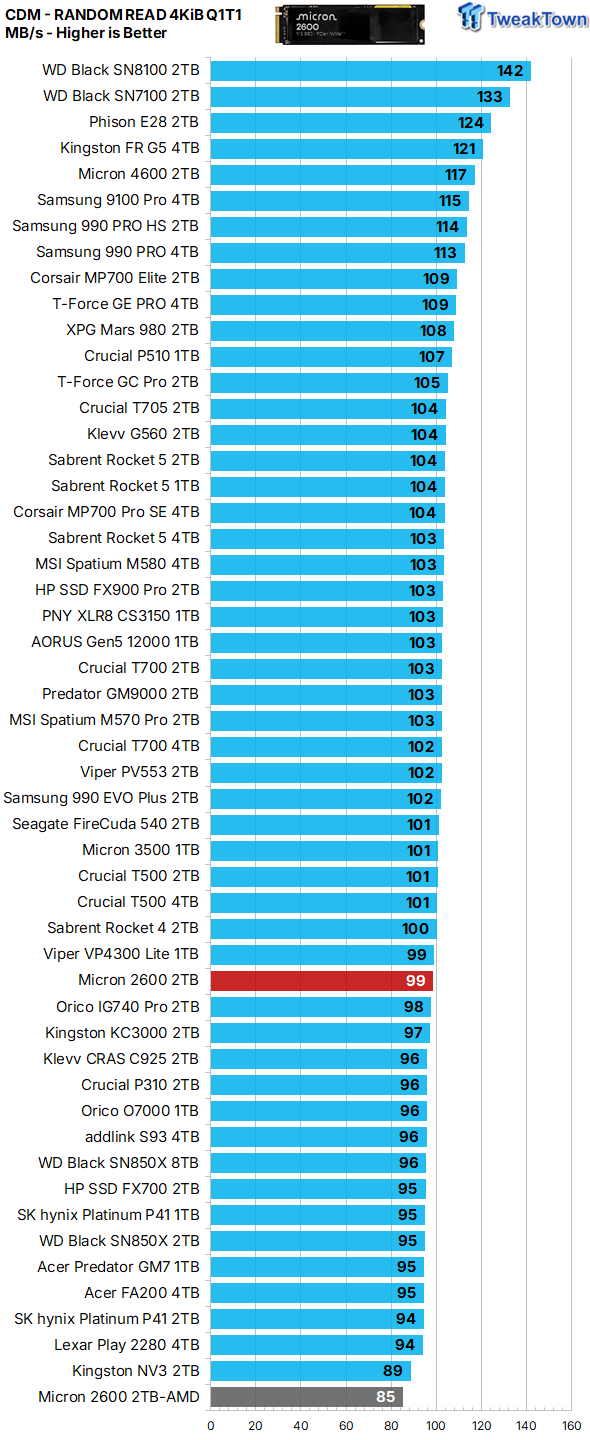
We employ CDM as our standard measurement for both sequential throughput and Q1T1 random read. In terms of sequential read throughput, the drive delivers as advertised and then some. In terms of sequential write throughput, we've not encountered QLC speed like this before. Outstanding. 4K QD1 read throughput is outstanding. In fact, it's tied for the best we've encountered to date from a QLC SSD.
Max IOPS
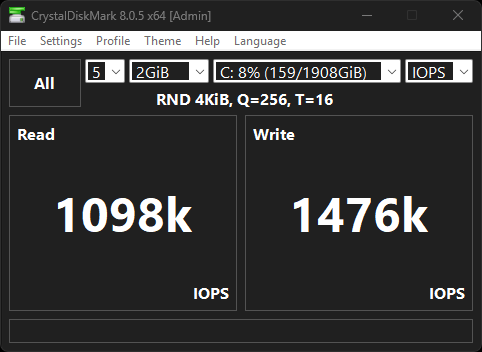
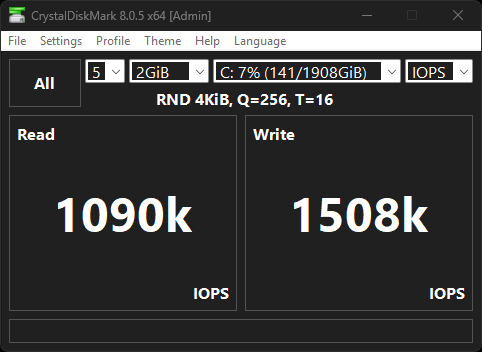
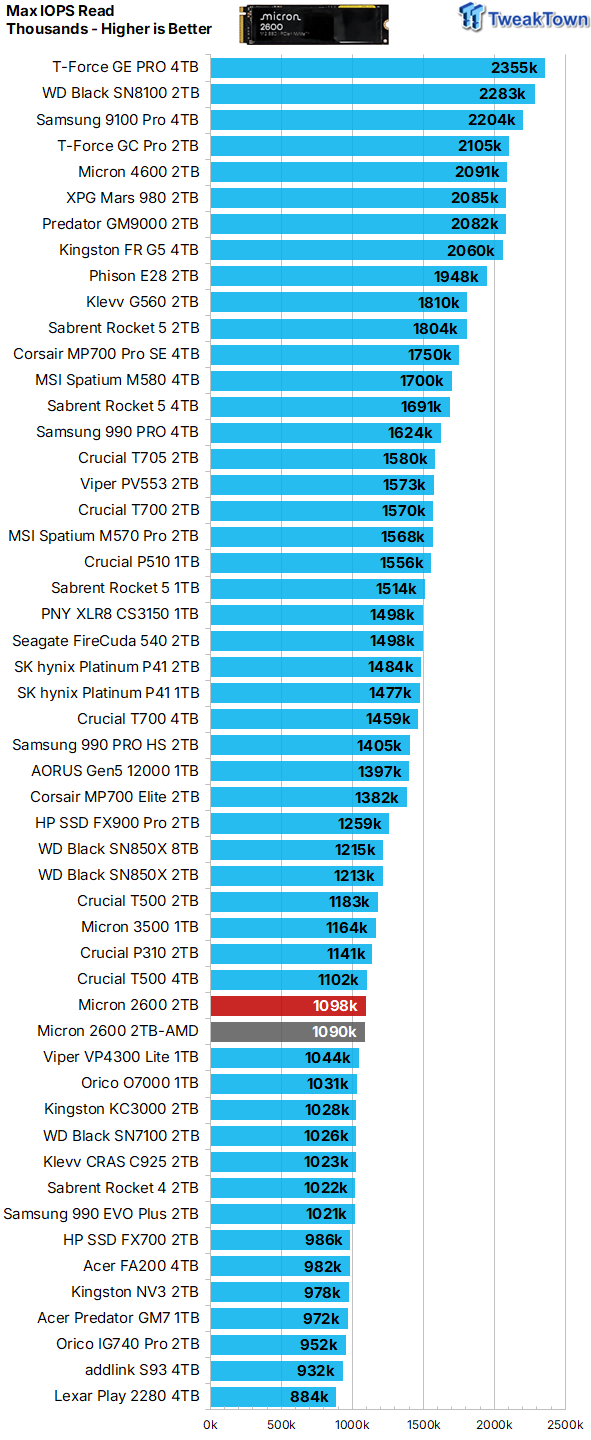
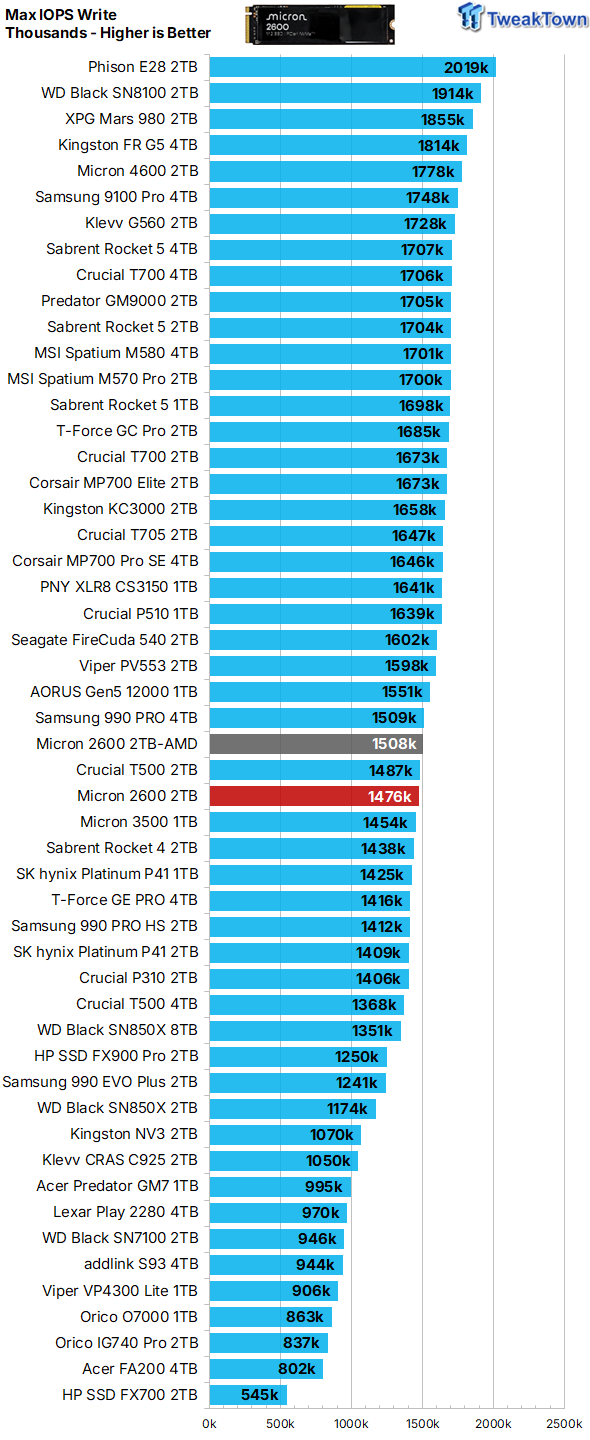
Micron's 2600 2TB SSD is factory spec'd for up to 1,000k random read IOPS and up to 1,100k random write IOPS. We have no issues in attaining factory random specs despite our more demanding user state. With a massive 1500K random write throughput, our contender again delivers more like a TLC SSD than a QLC SSD. Impressive.
ATTO
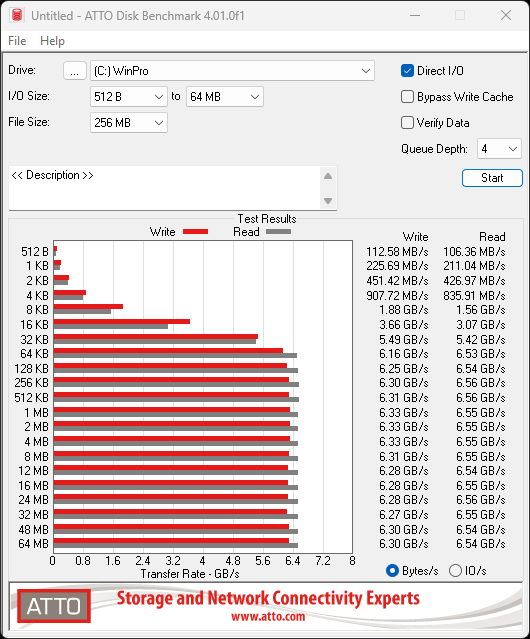
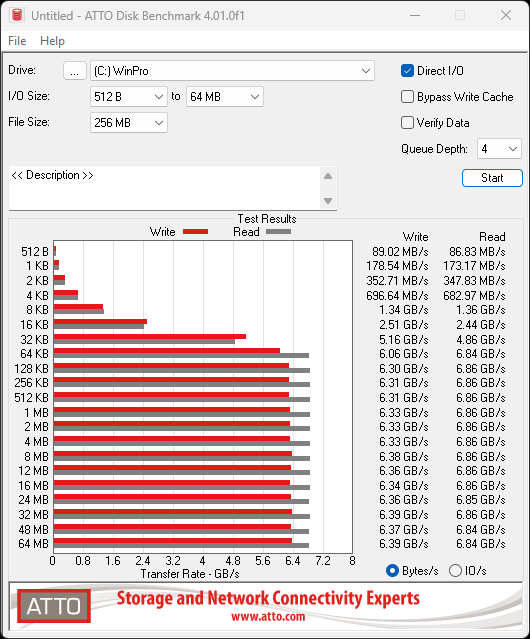
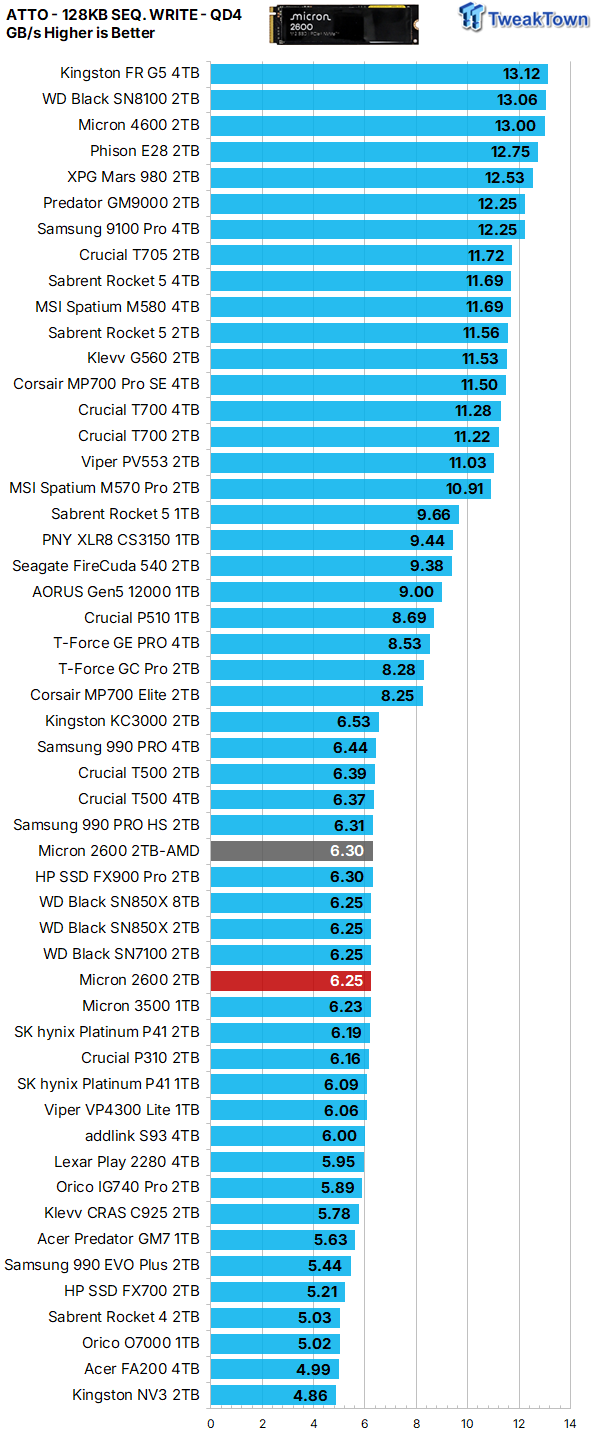
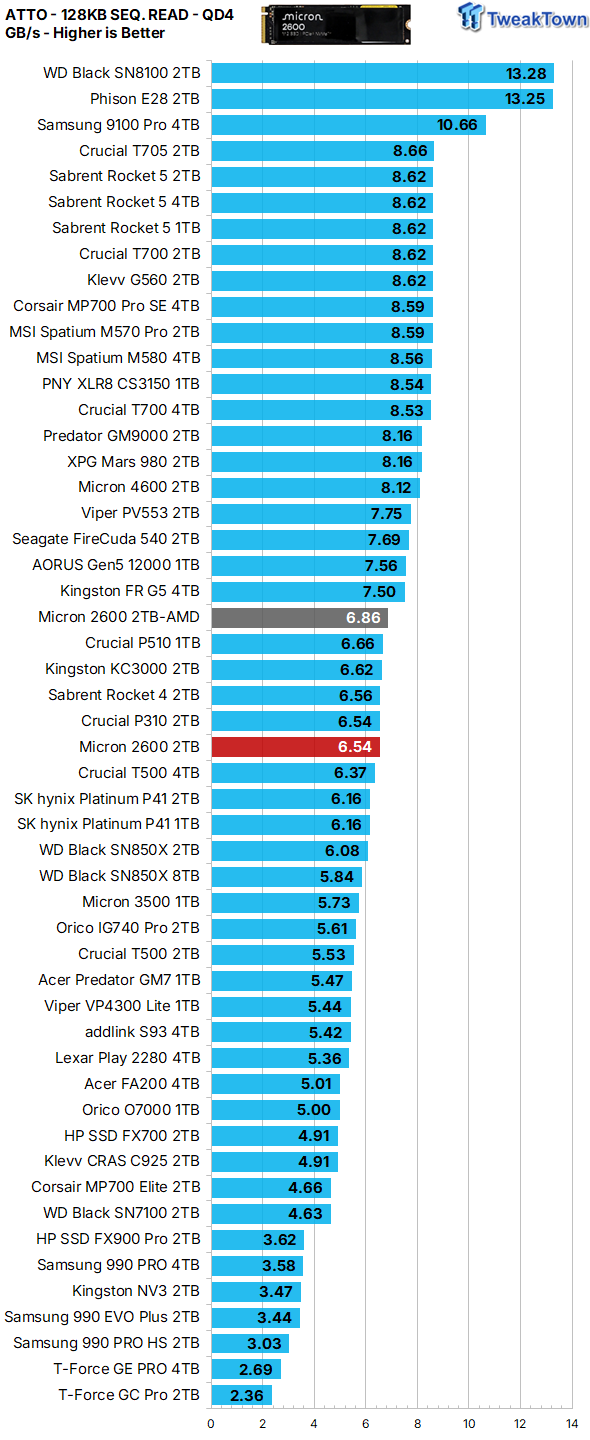
ATTO gives us a clear picture of what transfer sizes a particular SSD favors in terms of QD4 sequential throughput. We chart 128K transfers. At a queue depth of four, our 2TB contender favors sequential transfers of 128KB or larger when serving data to the host (reading) and 128KB or larger when programming (writing) data. Stunning small file performance - exactly what we are looking for from any SSD.
Real-World Testing: Transfers, 3DMark SSD Gaming Test, PCM10 Storage
Transfer Rates
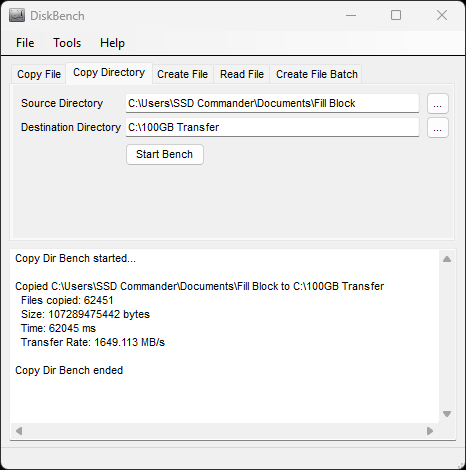
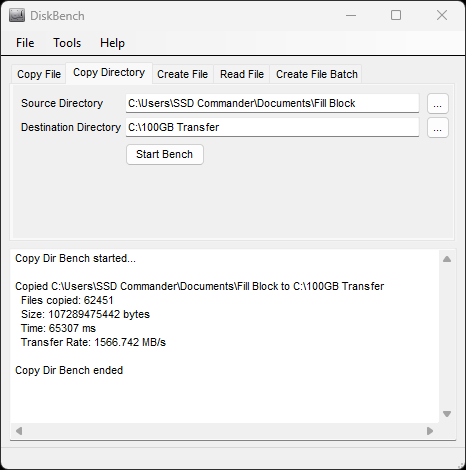
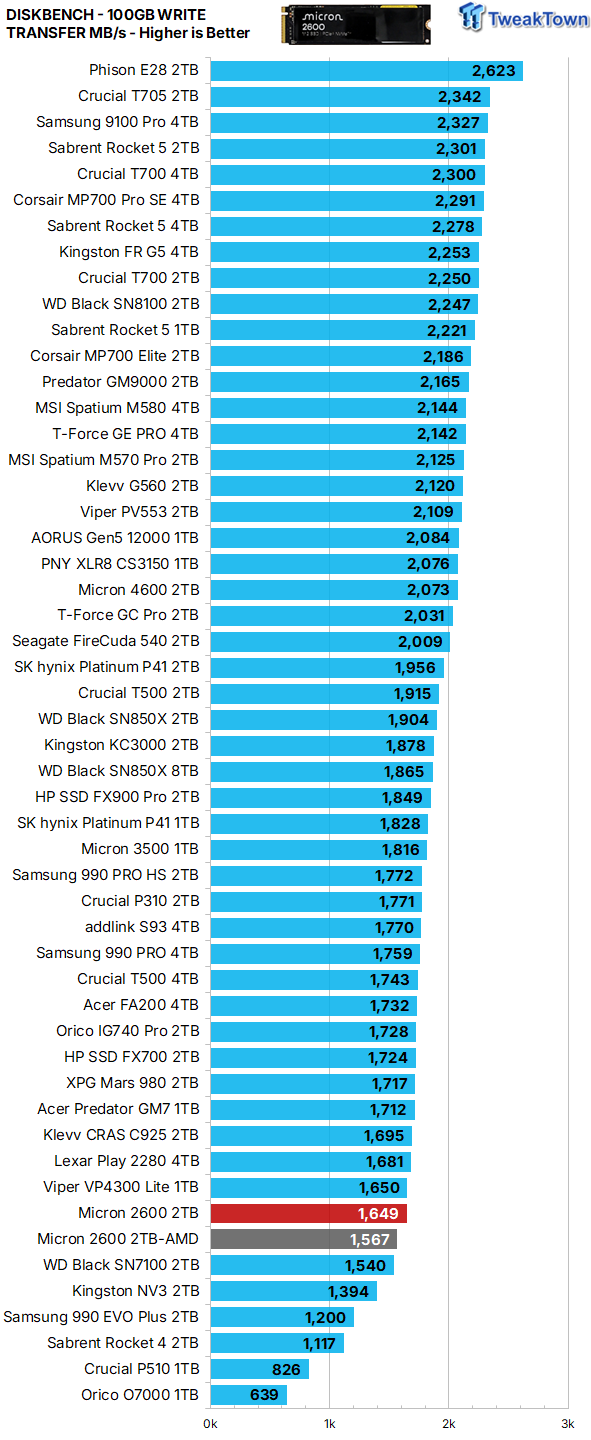
Our 100GB data transfer test is not your ordinary 100GB of data; ours is a crushing mix composed of more than 62K files. Write performance, random or sequential, is an infrequent operation, and as such, we do not consider it to be an important performance metric in the consumer space. An example is how many times a game is installed vs. how many times it's played. Here our test subject delivers quite well, although at a slightly lower rate than some of the other QLC SSDs that populate our chart. However, none of the others are built within the tight OEM power and thermal constraints of our test subject.
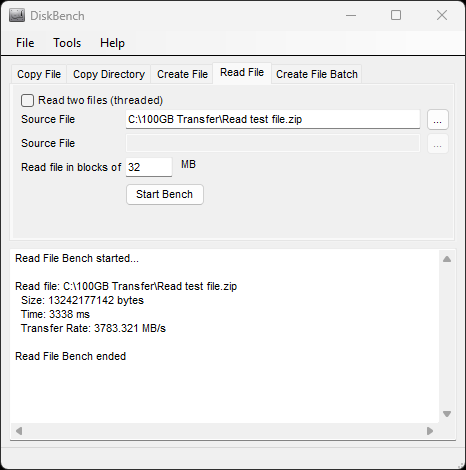
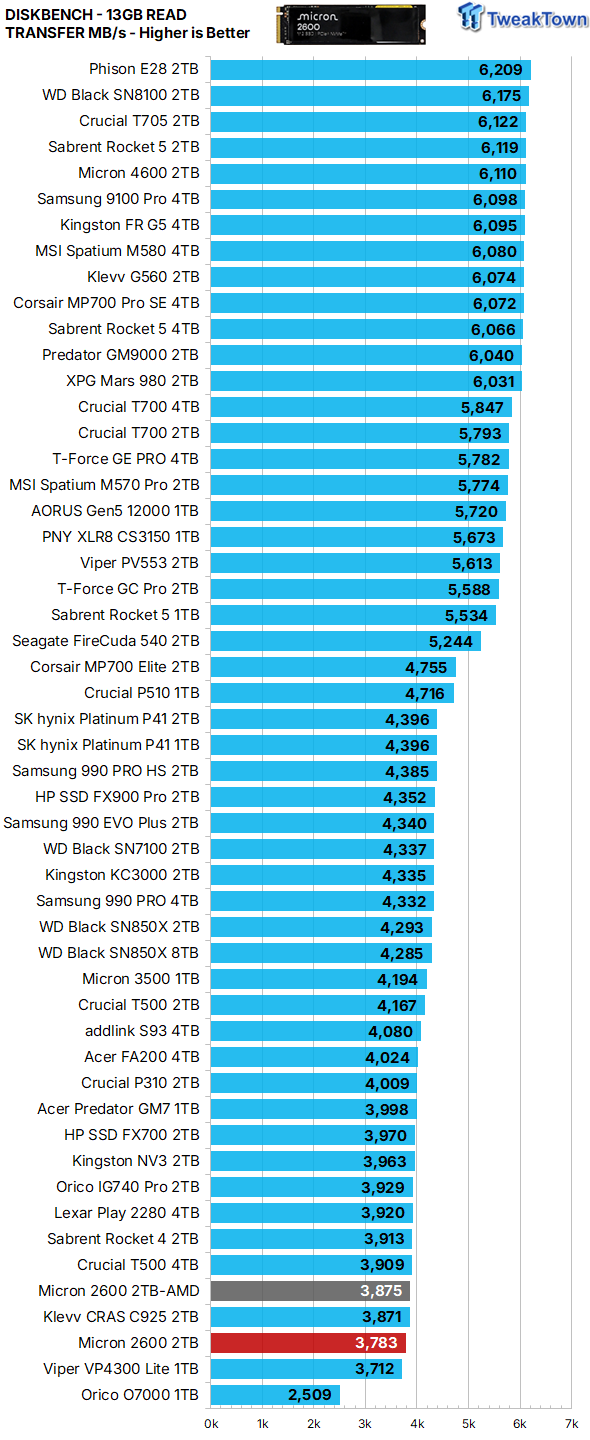
Unlike programming (writing) data, serving data to the host (reading) is typically an important performance metric as it relates to the consumer space. Here we find our test subject again delivering at a slightly lower rate than some of the other QLC SSDs that populate our chart. Again, none of the others are built within the tight OEM power and thermal constraints of our test subject.
3DMark SSD Gaming Test
UL's newest 3DMark SSD Gaming Test is the most comprehensive SSD gaming test ever devised. We consider it superior to testing against games themselves because, as a trace, it is much more consistent than variations that will occur between runs on the actual game itself. This test is the same as running the actual game, just without the inconsistencies inherent to application testing. In short, we believe that this is the world's best way to test an SSDs gaming prowess and accurately compare it against competing SSDs. The 3DMark SSD Gaming Test measures and scores the following:
- Loading Battlefield V from launch to the main menu.
- Loading Call of Duty Black Ops 4 from launch to the main menu.
- Loading Overwatch from launch to the main menu.
- Recording a 1080p gameplay video at 60 FPS with OBS (Open Broadcaster Software) while playing Overwatch.
- Installing The Outer Worlds from the Epic Games Launcher.
- Saving game progress in The Outer Worlds.
- Copying the Steam folder for Counter-Strike Global Offensive from an external SSD to the system drive.


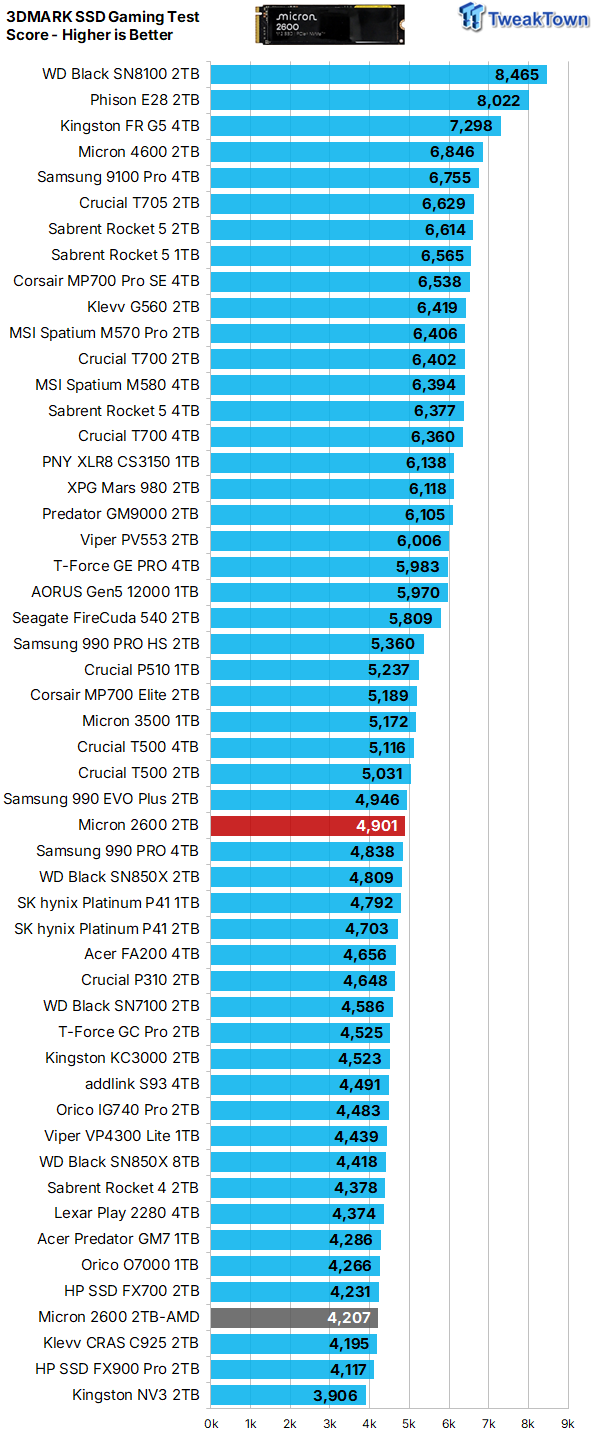
Gaming is a performance metric that matters to most DIY consumers, especially for the enthusiast crowd that TweakTown caters to. Now we've reached the point where results start to matter as they are a direct reflection of user experience.
As this chart shows, Micron's 2600 2TB is by far the best QLC arrayed SSD for gaming we've ever encountered at the time of writing. Micron states that its 2600 SSD can outperform most PCIe Gen4 TLC arrayed SSDs, and that's exactly what we are seeing here. This is performance that matters. Impressive.
PCM10 Storage Tests
PCMark 10 Storage Test is the most advanced and most accurate real-world consumer storage test ever made. There are four different tests you can choose from; we run two of them. The Full System Drive Benchmark and the Quick System Drive Benchmark. The Full System Drive Benchmark writes 204 GB of data over the duration of the test. These tests directly correlate with mainstream user experience.
PCMark 10 Full System Drive Benchmark
This test writes 204GB of data and covers a broad range of common consumer tasks, including booting Windows 10, file transfers, Adobe and Office applications, and startup times for games such as Battlefield V, COD Black Ops 4, and Overwatch. Unlike synthetic numbers, this is comprehensive real-world data, which is why we use it to rank SSDs in terms of user experience.


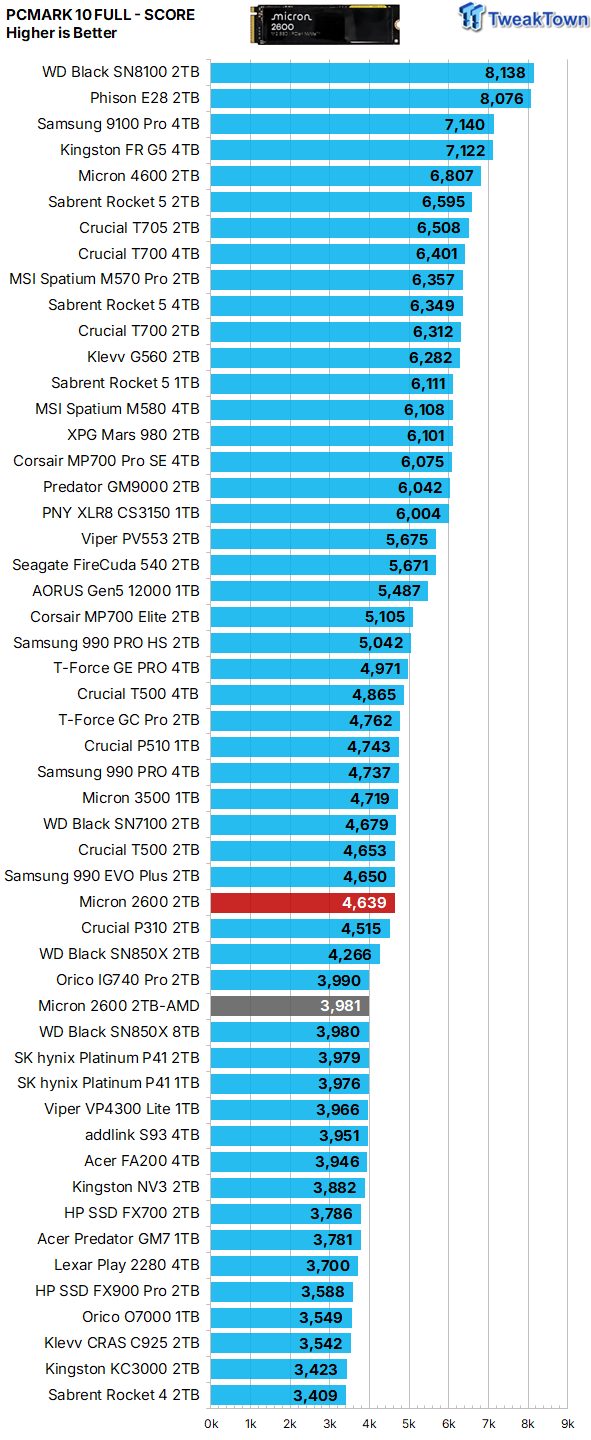
Again, the best we've ever encountered from a QLC arrayed SSD and again among the best we've seen from PCIe Gen4, including 8-channel controlled TLC arrayed competitors. Outstanding.
PCMark 10 Quick System Drive Benchmark
The Quick System Drive Benchmark writes 23 GB of data over the duration of the test.


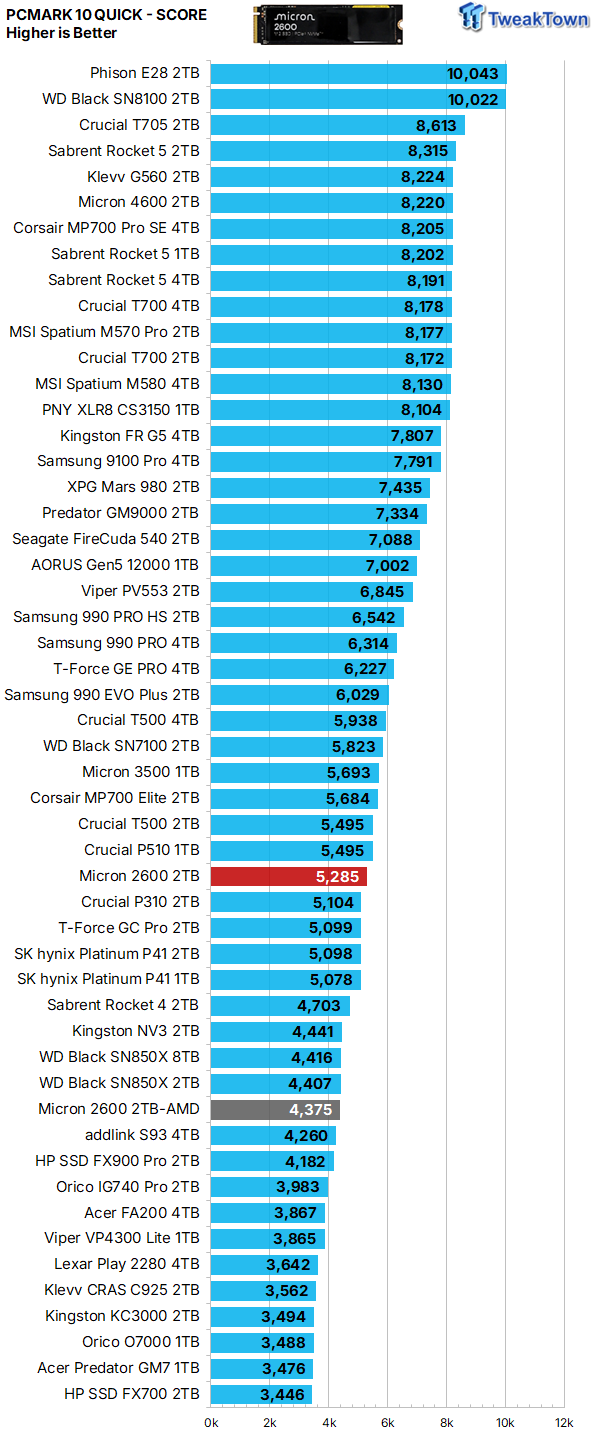
Of all the benchmarks we run, it can be argued that this one offers the best reflection of a typical consumer use case scenario. Again, our test subject delivers massively, beating all other QLC-arrayed SSDs and even most TLC-arrayed PCIe Gen4 SSDs. Stunning.
Final Thoughts
As we see it, Micron's 2600 SSD 2TB delivers everything we've always wanted from a QLC arrayed SSD and nothing we don't want. Its power efficiency is incredible for a 4-bit flash arrayed SSD, translating to better thermal performance than its competitors, which is a big deal for OEMs. The real-world user experience delivered is by far the best we've seen coming from a QLC-based SSD; in fact, it's better than most PCIe Gen4 TLC-based SSDs, and this is despite its OEM constraints. Real performance that matters is what Micron's 2600 Series is all about.
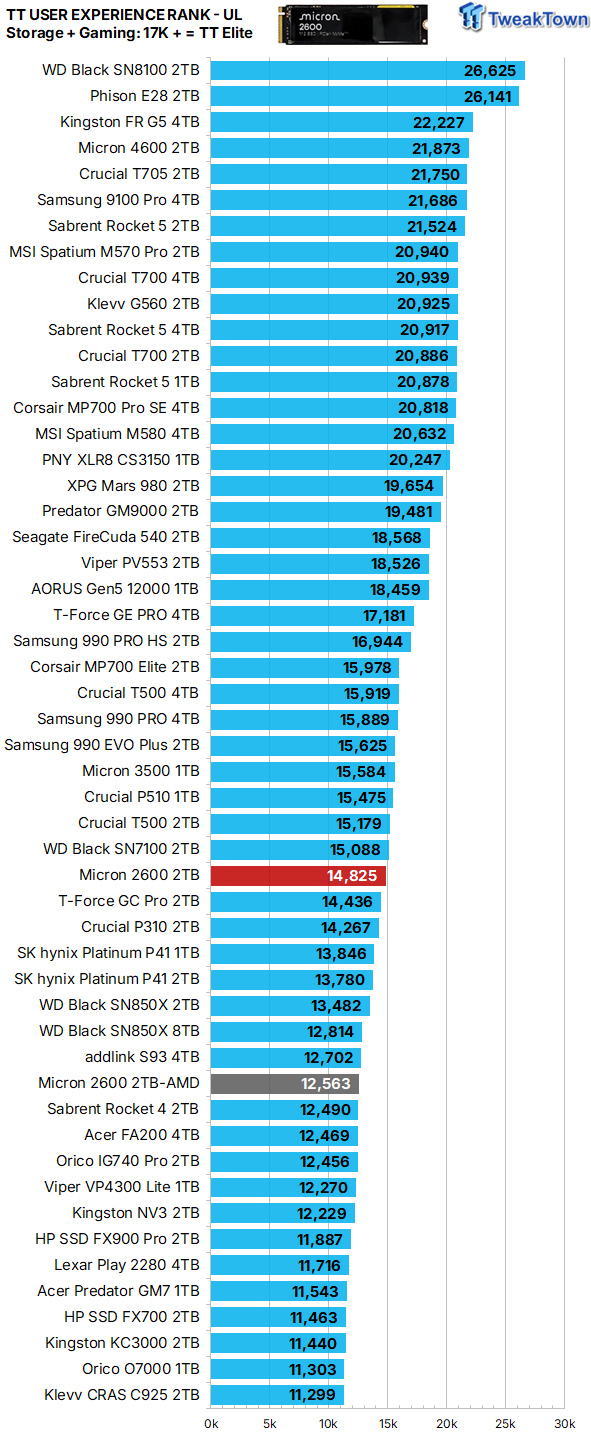
We rank SSDs in terms of overall user experience (performance where it matters most) as expressed by PCMark 10 storage and 3DMark gaming storage tests. Currently, we consider a user experience score of 17K or more to verify an SSD as a TweakTown Elite performer. Micron's 2600 2TB is definitely elite for what it is, but it doesn't get there as compared to all SSDs in general.

It's the new boss of QLC storage, making it a Must-Have, Best-Value Award Winner.


 Biwin M560 2TB SSD Review - Best Overall Retail-Ready DRAMless SSD
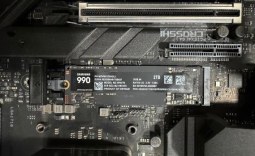 Samsung 990 2TB SSD Review - Ninth Gen QLC at PCIe Gen4 Speeds
 HighPoint Rocket 1604L Gen5 x16 NVMe Software RAID AIC Review: half the price with full 59 GB/s speed
 UGREEN NASync DXP4800 GT Review: powerful 4-bay NAS with AMD Ryzen and dual 10GbE ports
 Phison E37T SSD Controller Exclusive Preview - The Fastest DRAMless SSD Platform Yet
 Giveaway: 12 Winners Will Score MONTECH NX400 and NX600 CPU Coolers
 Assassin's Creed Odyssey becomes the highest-rated entry in the franchise, thanks to Nolan's 'The Odyssey'
 PlayStation gamers' planned week-long 'PS Blackout' begins today
 Nintendo Switch 2 will rise to £419.99 in the UK, starting September 1
 One retailer says 91% of attempts to buy DDR5 memory are coming from bots
 Jensen Huang signed NVIDIA RTX Pro 6000 graphics card sells for $57,450 at auction
 GTA 6 leaks have reportedly led to a morale drop at Rockstar, with Netflix frustrated as well
 The Blood of Dawnwalker won't hit 60 FPS on any console, PS5 Pro tops out at 40 FPS
 AMD claws back ground against Intel in the CPU market, climbs to 35% share in desktop CPUs
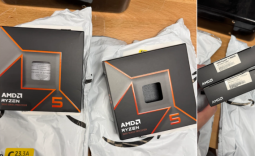 Redditor receives not one but TWO empty boxes of Ryzen 5 9600X from Amazon
 Xbox Series X25 Limited Edition Console is priced at $900, arrives November 2026
 Cooler Master MasterFan A120 Fan Review
 GIGABYTE MO27Q2A Gaming Monitor Review: 1440p, 280Hz, and QD-OLED is a winning combination
 Cooler Master V8 ACE 3DHP BLACK CPU Cooler Review
 ASUS ROG Strix XG129C Review: A $199 Gaming Monitor You Don't Play Games On
 Cooler Master HAF II 500 Mid-Tower Chassis Review
 Corsair HS35 v3 Wireless Gaming Headset Review - An Affordable Winner
 D-Link F518 5G Wi‑Fi 6 AX1800 Mobile Hotspot Review: All-Day Mobile Hotspot
 Bose Lifestyle Ultra Speaker Review - Impressively Detailed Room-Filling Sound
 MSI Z890 Gaming Plus WIFI6E Review - Z890 for under $200
 Mortal Kombat (1995) 4K Ultra HD Blu-ray Review
 Using Multiple Monitors? Change these Windows settings for a Better Experience
 Windows Sandbox is The Windows Security Feature Most People Never Use
 I ditched the Windows 11 context menu for this open-source tool, and here's why
 Windows 11 may be encrypting your drive already, and I checked where my recovery key went
 GIGABYTE's 40 Days of INFINITY celebrates 40 Years of Innovation with stunning GeForce RTX graphics cards and rewards
 I swapped File Explorer for this free file manager and finally got the layout I wanted
 How to tell if someone has been using your Windows PC without your permission
 6 Task Manager tips for troubleshooting Windows performance problems
 ASUS ROG's 20th Anniversary Line-up of Premium PC Gaming Gear has Arrived - Here's Everything You Need to Know
 Six File Explorer tips every Windows user should know