












NASA just beamed 4K video from the Moon to 25 million screens, but your 4K Netflix stream and YouTube videos still buffer. Or at least for some people, that is the case.

Thanks to AWS and NASA's Orion Artemis II Optical Communications System, the first-ever lunar 4K livestream hit 260Mbps via laser, far outpacing the 15-20Mbps most media services demand. The transmission covered more than 250,000 miles, with data received at Mount Stromlo Observatory in Australia and routed through NASA's White Sands Complex.
This wasn't just a one-off stunt or demonstration. The Laser-based optical communications offer significantly higher bandwidth than traditional radio, allowing NASA to send not just video, but mission-critical data, telemetry, and voice communications in real time.
This system will be what powers the next lunar missions, where NASA envisions a lunar base being set up and used as a springboard for other explorative missions in the solar system. Having a high-speed network between the Earth and the Moon is critical for mission success, not to mention human lives that will eventually be stationed on the lunar surface.
AWS claims the network was built in weeks and at "the cost of a laptop." The laser tech, developed over 20 years, is a major step toward future deep-space missions, including Artemis IV, the first crewed lunar landing in over 50 years, which NASA aims to broadcast globally.

Frequently Asked Questions
TweakBot answers common questions about this news using TweakTown's own coverage from this page and related content from our archive. All answers are generated from TweakTown content and not outside sources. Tap a question to reveal the answer, or type your own below related to this content.
What hardware on the Orion spacecraft and on Earth enabled the 4K laser transmission?
What are the bandwidth and latency characteristics of the optical link compared to NASA’s existing radio systems?
How will NASA integrate this optical communications system into Artemis IV’s mission architecture and ground stations?
What ground infrastructure upgrades (e.g., receivers, observatories, network routing) are required to receive and distribute lunar laser data globally?
Have a question about this content not listed here? Ask below and TweakBot will answer it.

Beyond live video, AWS powers NASA+ and runs thousands of trajectory simulations for each launch, handling up to 5TB of data per window via AWS GovCloud. The cloud partnership gives NASA the flexibility to scale in real time, ensuring mission control has the compute power it needs, when it needs it.


 Microsoft Outlook doesn't launch in space, and on Earth, the email app takes more than 15 seconds just to get started
 Report: No one is setting Fall release dates for games in fear of GTA 6
 Gran Turismo 7 will feature 'experimental support' for 8K 60FPS on the PS5 Pro
 5K gaming is hard: ASUS tests RTX 5090 D, can't reach 60FPS in Cyberpunk 2077, even with DLSS
 PS5 Linux can run path-traced Cyberpunk 2077 at 35 FPS, but Quake II RTX is the surprising winner
 Giveaway: 12 Winners Will Score MONTECH NX400 and NX600 CPU Coolers
 PlayStation gamers' planned week-long 'PS Blackout' begins today
 Nintendo Switch 2 will rise to £419.99 in the UK, starting September 1
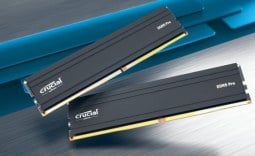 One retailer says 91% of attempts to buy DDR5 memory are coming from bots
 Jensen Huang signed NVIDIA RTX Pro 6000 graphics card sells for $57,450 at auction
 GTA 6 leaks have reportedly led to a morale drop at Rockstar, with Netflix frustrated as well
 The Blood of Dawnwalker won't hit 60 FPS on any console, PS5 Pro tops out at 40 FPS
 AMD claws back ground against Intel in the CPU market, climbs to 35% share in desktop CPUs
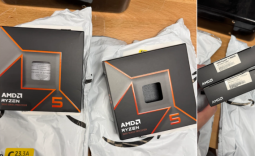 Redditor receives not one but TWO empty boxes of Ryzen 5 9600X from Amazon
 Xbox Series X25 Limited Edition Console is priced at $900, arrives November 2026
 Dave Bautista officially cast as Kratos in Amazon's 'God of War' TV Series, replaces Ryan Hurst
 Cooler Master MasterFan A120 Fan Review
 GIGABYTE MO27Q2A Gaming Monitor Review: 1440p, 280Hz, and QD-OLED is a winning combination
 Cooler Master V8 ACE 3DHP BLACK CPU Cooler Review
 ASUS ROG Strix XG129C Review: A $199 Gaming Monitor You Don't Play Games On
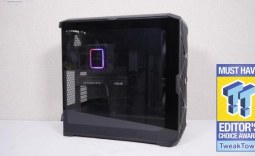 Cooler Master HAF II 500 Mid-Tower Chassis Review
 Corsair HS35 v3 Wireless Gaming Headset Review - An Affordable Winner
 D-Link F518 5G Wi‑Fi 6 AX1800 Mobile Hotspot Review: All-Day Mobile Hotspot
 Bose Lifestyle Ultra Speaker Review - Impressively Detailed Room-Filling Sound
 MSI Z890 Gaming Plus WIFI6E Review - Z890 for under $200
 Mortal Kombat (1995) 4K Ultra HD Blu-ray Review
 Using Multiple Monitors? Change these Windows settings for a Better Experience
 Windows Sandbox is The Windows Security Feature Most People Never Use
 I ditched the Windows 11 context menu for this open-source tool, and here's why
 Windows 11 may be encrypting your drive already, and I checked where my recovery key went
 GIGABYTE's 40 Days of INFINITY celebrates 40 Years of Innovation with stunning GeForce RTX graphics cards and rewards
 I swapped File Explorer for this free file manager and finally got the layout I wanted
 How to tell if someone has been using your Windows PC without your permission
 6 Task Manager tips for troubleshooting Windows performance problems
 ASUS ROG's 20th Anniversary Line-up of Premium PC Gaming Gear has Arrived - Here's Everything You Need to Know
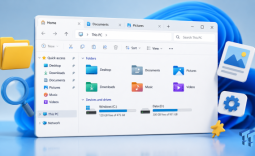 Six File Explorer tips every Windows user should know