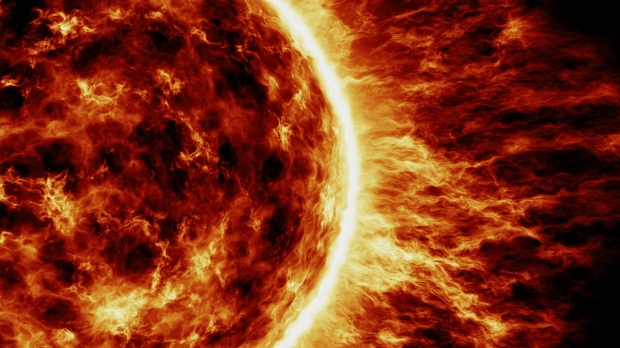




Last week, the Sun released an extremely powerful solar flare, and NASA's Solar Dynamics Observatory snapped an incredible image showcasing the fiery outburst.
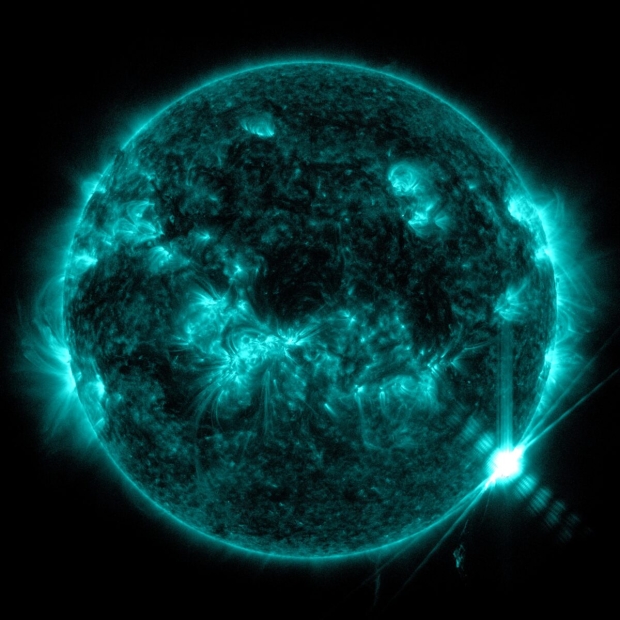
The solar flare occurred on February 9 and was an X-class solar flare, the most intense classification given to solar flares. These powerful blasts from our local star can cause some problems on Earth, and as you can probably imagine, the larger the blast, the bigger the problems. Luckily, in this case, the solar flare occurred on the side of the Sun facing away from Earth, with solar physicist Keith Strong mentioning this point on X by writing, "Goodness knows how big this flare would have been if it had happened this side of the sun."
Popular Now: Linus Tech Tips leaks Steam Frame first impressions, and Valve may be working on native Half-Life: Alyx supportSolar flares such as this one are often accompanied by a Coronal Mass Ejection (CME), a large wave of plasma that erupts into space in a specific direction similar to a wave. These CMEs can cause disruptions on Earth if their trajectory lines up with the planet. CME impacts result in geomagnetic storms that can cause many problems for Earth-orbiting satellites, power grids, radio signals, and GPS satellites.
It isn't all doom and gloom, though; aurora chasers love to hear a CME is on the way to collide with Earth as it means auroras, such as the Northern Lights and the Southern Lights, move closer to the equator due to the energized particles interacting with Earth's upper atmosphere. As for the recent solar flare that was followed by a very fast CME, due to the sunspot where the flare occurred, it's unlikely the CME will hit Earth directly, resulting in minimal impact.
![Photo of the $25 PlayStation Store Gift Card [Digital Code]](https://m.media-amazon.com/images/I/41cEZpeUA1L._SL160_.jpg)