












A study on the gene editing breakthrough titled "CRISPR-Cas9 editing of the arginine-vasopressin V1a receptor produces paradoxical changes in social behavior in Syrian hamsters" has been published in the journal Proceedings of the National Academy of Sciences.

Researchers from Georgia State University used CRISPR-Cas9 genome-editing technology to remove the expression of the Avpr1a receptor in Syrian hamsters. By removing the genes encoding for Avpr1a, the receptor is no longer made, and vasopressin, which normally binds to that receptor, can no longer influence the social behavior it typically regulates, such as pair bonding, cooperation, communication, dominance, and aggression.
Without the receptors, the hamsters showed higher social communication behavior levels than those with intact receptors. Typical differences in aggressiveness between male and female hamsters were also eliminated, with both displaying high levels of aggression towards members of the same sex.
"We were really surprised at the results. We anticipated that if we eliminated vasopressin activity, we would reduce both aggression and social communication. But the opposite happened. This suggests a startling conclusion. Even though we know that vasopressin increases social behaviors by acting within a number of brain regions, it is possible that the more global effects of the Avpr1a receptor are inhibitory," said Regents' Professor of Neuroscience H. Elliott Albers.
"We don't understand this system as well as we thought we did. The counterintuitive findings tell us we need to start thinking about the actions of these receptors across entire circuits of the brain and not just in specific brain regions," Albers continued.
You can read more from the study here.
Adam's Top 3 Recommended Articles:
Read more: Crazy video shows a test vehicle catapulted toward space at 1,000+ mph
Read more: New DARPA hypersonic missile prototype test flew 5x the speed of sound
Read more: Takers of the first-ever black hole photo have a massive announcement


 Pilot a mech in this unreleased Quake 4 expansion discovered on an old hard drive
 Family turns down $26 million to turn farmland into an AI data center
 Blizzard is now Xbox and Microsoft's 'top performing' game studio, new report
 XGIMI's Elfin Flip portable projector delivers 4K RGB Triple Laser tech in a compact package
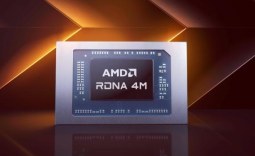 RDNA 4m GPU driver support appears, but AMD is expected to use RDNA 3.5 integrated graphics until 2029
 Publishers to save $10+ on every $70 game by eliminating discs, new report indicates
 ZOTAC replaces RTX 4090 with RTX 5090 after fourth RMA, but the warranty is only 30 days
 SK hynix approves $38.1 billion investment in two new fabs for AI memory supply
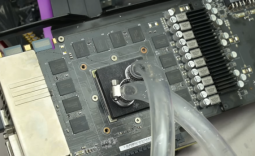 Benchmarks show direct water on die cooling with no heat spreader outperforms AIO liquid cooling on a GPU
 OpenAI's next hardware is a doughnut-shaped smart speaker with moving parts that wants to be your new phone
 Mortal Kombat (1995) 4K Ultra HD Blu-ray Review
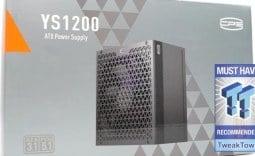 CPS PCCooler YS1200 ATX 3.1 80 PLUS Gold PSU Review
 ASRock X870E Taichi White Review: a premium AM5 motherboard with 10G LAN and WiFi 7
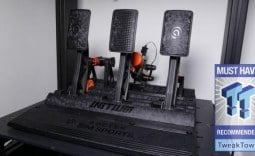 Asetek Initium Pedal Modular Upgrades Review
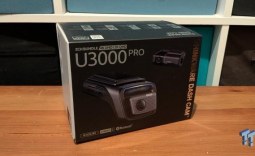 Thinkware U3000 Pro Review - Smart Dashcam with Wi-Fi quirks
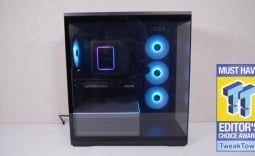 Montech TG3 Mid-Tower Chassis Review
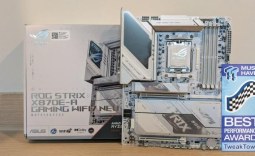 ASUS ROG Strix X870E-A Gaming WiFI7 Neo Review - A New Enticing Option
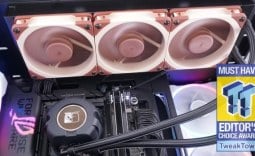 Noctua NL-LC1-36 Liquid CPU Cooler Review
 Logitech G316 X 98 Wired Gaming Keyboard Review - Retro-Inspired Board that Falls a Little Short
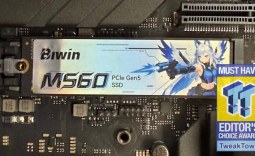 Biwin M560 2TB SSD Review - Best Overall Retail-Ready DRAMless SSD
 Windows 11 may be encrypting your drive already, and I checked where my recovery key went
 GIGABYTE's 40 Days of INFINITY celebrates 40 Years of Innovation with stunning GeForce RTX graphics cards and rewards
 I swapped File Explorer for this free file manager and finally got the layout I wanted
 How to tell if someone has been using your Windows PC without your permission
 6 Task Manager tips for troubleshooting Windows performance problems
 ASUS ROG's 20th Anniversary Line-up of Premium PC Gaming Gear has Arrived - Here's Everything You Need to Know
 Six File Explorer tips every Windows user should know
 I switched my PC to encrypted DNS in Windows 11, and browsing felt more private
 Printer Not Working in Windows? How to fix detection, print queues and drivers
 The Ultimate Guide to Personalizing Your Windows 11 Taskbar