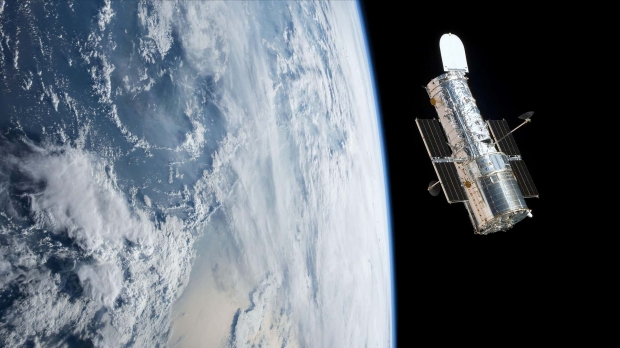
NASA's Hubble Space Telescope is showcasing an astronomical phenomenon in a new image that causes the appearance of galaxies to warp, magnify and even duplicate.
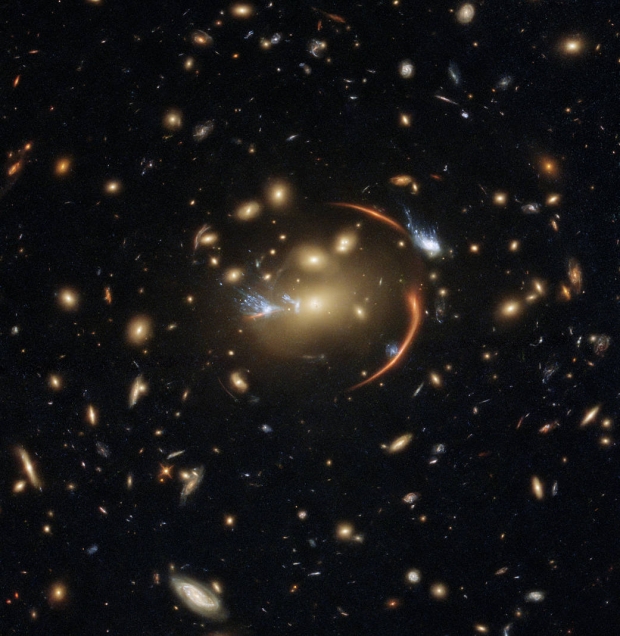
The image above was taken by NASA/ESA's Hubble Space Telescope and shows what NASA describes as "tell-tale" arcs caused by gravitation lensing. So, what is this astronomical phenomenon? Gravitation lensing happens when the light from a distant galaxy gets warped or distorted by the gravitational pull of an astronomical object.
For instance, the image above shows a galaxy cluster named MACSJ0138.0-2155, and according to NASA, MACSJ0138.0-2155 has "lensed" the galaxy MRG-M0138, which is located 10 billion light-years away and has run out of the gas required to create new stars. NASA describes this distant galaxy as a "slumbering giant".
Astronomers use gravitation lensing as a natural magnifying glass, allowing researchers to look deeper into the cosmos and spot objects that would originally be out of sight. For more information on this story, check out this link here.