

Micro Center appears to be tightening its sales process for the GeForce RTX 5090, with some buyers reportedly required to present government-issued identification and sign a declaration confirming that the graphics card will not be exported from the United States.
The requirement surfaced publicly when a customer at Micro Center's Tustin, California, store said they were required to complete an "Advanced Computing Product Purchaser Declaration" when purchasing a PowerSpec AI90 workstation equipped with an RTX 5090. According to the buyer, the requirement had been introduced only a few days earlier.
The form reportedly collects the purchaser's legal name, address, identification details, contact information, intended end user, installation location, and intended use.
It also requires customers to certify that they will not export, reexport, resell, or transfer the product outside the United States. Micro Center explicitly labels the declaration "NO EXPORT - NO EXCEPTIONS."
The policy comes amid U.S. export controls on advanced computing hardware for China and other restricted markets, which the Bureau of Industry and Security (BIS) has expanded since 2022.

BIS does not appear to require retailers to use Micro Center's specific declaration. However, BIS anti-diversion guidance issued in 2025 recommends that companies dealing with advanced-computing hardware obtain end-user certifications and collect information including the purchaser, intended end user, use case, and installation address.
Micro Center's form closely mirrors those recommendations, suggesting the retailer is applying its own stricter compliance procedure rather than following a newly mandated federal retail form.

The restrictions are not new. U.S. export controls on advanced computing hardware began in October 2022 and expanded in 2023, when NVIDIA confirmed licensing requirements for RTX 4090 exports to China and other destinations. Micro Center's declaration adds a retail-level compliance layer to that existing framework.
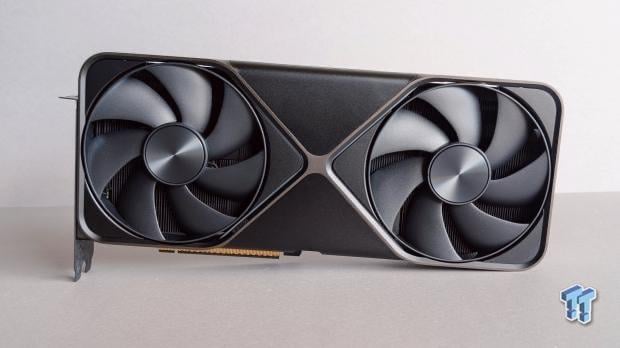
The added checks may make unauthorized exports harder, but they cannot eliminate every workaround. The GPU grey market has previously involved dismantling graphics cards and selling components such as GPU dies and memory separately.

Story Q&A
Powered by TweakBot
From TweakTown's coverage of this story.
What U.S. export licensing rules apply to shipping GeForce RTX 5090 GPUs to China and other restricted destinations?
Does Micro Center's no-export declaration cover standalone RTX 5090 cards as well as PowerSpec AI90 systems?
What records or customer certifications does BIS advise sellers to retain when handling advanced-computing hardware?
Does Micro Center's declaration prohibit domestic resale of an RTX 5090, or only resale or transfer outside the United States?
Want something else? Ask TweakBot.

For ordinary retail customers, however, the result is an additional layer of identification checks and paperwork when buying a GPU.