












A new overclocking tool has been developed that improves the crossbar frequency of an RTX 5090, giving the GPU faster interconnect speeds. Spotted by VideoCardz, a new tool called melonVolt has been published on an overclock.net forum thread that gives users direct control over the MSVDD voltage offset found on modern NVIDIA GPUs. Changing this voltage automatically increases or decreases the crossbar frequency, giving users a way to overclock their GPU's interconnect.
Based on user reports from the overclock.net forum, tinkering with the MSVDD voltage can improve the RTX 5090's crossbar frequency by over 100MHz depending on how far the voltage is pushed and how good the silicon quality is on the GPU. At least eight different users with various RTX 5090 models tested melonVolt with varying levels of success. The lowest GPU achieved 90MHz higher clocks from 2670MHz to 2760MHz, while the best GPU achieved 142MHz higher clocks going from 2625MHz to 2767MHz.
There is not a lot of benchmarking information to judge just how effective overclocking an RTX 5090's interconnect can be. But one of the overclock.net members who tried melonVolt did share a 3DMark Steel Nomad benchmark result showing their RTX 5090 outperforming a top 27 Hall of Fame RTX 5090 result while operating at a 120MHz lower GPU clock and memory clock. Unfortunately, 3DMark does not show the crossbar frequency for each individual result, but the top 27 result was achieved well before melonVolt came out.
For now, melonVolt can't be used on any RTX 50 series model, as Fmab, its creator, has only created an RTX 5090 and RTX 5080 version of the tool. That said, the RTX 5080 version came out just yesterday, suggesting Fmab might be making more melonVolt versions that support lower-tier RTX 50 series GPUs soon.

Frequently Asked Questions
TweakBot answers common questions about this news using TweakTown's own coverage from this page and related content from our archive. All answers are generated from TweakTown content and not outside sources. Tap a question to reveal the answer, or type your own below related to this content.
How does changing the MSVDD voltage with melonVolt affect RTX 5090 crossbar frequency?
Are there any benchmark results shown in the article that indicate performance gains from melonVolt?
What safety risks or warnings does the article mention about manipulating MSVDD with melonVolt?
Can melonVolt currently be used on lower-tier RTX 50-series GPUs like non-5090/5080 models?
Have a question about this content not listed here? Ask below and TweakBot will answer it.

The program does manipulate an RTX 50 series voltage that NVIDIA does not allow its consumers to manipulate in official overclocking programs, so use it at your own risk. There is also apparently no officially known safe voltage for MSVDD, which increases the risk of potential damage with this product.


 MSI Afterburner is getting an update that will improve and enhance GPU overclocking for all users
 Latest GeForce Game Ready Driver reportedly restricts voltage, impacting performance
 NVIDIA officially responds to RTX 50-series black screen and crashing reports
 Intel Graphics Software for Arc GPUs updated with easy-to-use overclocking controls
 GeForce RTX 50 Series hotspot temperature readings won't be added to MSI Afterburner
 Warner Bros. quietly confirms Hogwarts Legacy 2 is in development
 Lenovo IdeaPad Vibe leaks as a colourful MacBook Neo rival with six ports and Qualcomm Snapdragon or AMD options
 Anthropic is adding imperceptible, model-level watermarks to Claude's AI-generated text
 New app turns Steam Deck into a PlayStation Portal for PS5 game streaming and PlayStation Plus cloud gaming
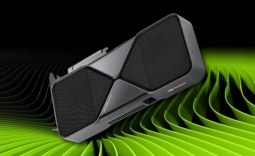 NVIDIA's RTX PRO 6000 Blackwell GPU price almost doubles, reaching $16,000
 Google's new Pixel 11 Series unveiled, powered by Google Tensor G6 and Gemini Nano AI
 CPS PCCOOLER unveils a new lineup of high-performance products for AI workstations
 Smilegate takes over Lost Ark in 2027, plans to eventually synchronize Western and Korean server content updates
 Crimson Desert Switch 2 release planned for H1 2027, Pearl Abyss says
 Halo Campaign Evolved two-week sales reach 1.2 million, analyst estimates
 D-Link F518 5G Wi‑Fi 6 AX1800 Mobile Hotspot Review: All-Day Mobile Hotspot
 Bose Lifestyle Ultra Speaker Review - Impressively Detailed Room-Filling Sound
 MSI Z890 Gaming Plus WIFI6E Review - Z890 for under $200
 Mortal Kombat (1995) 4K Ultra HD Blu-ray Review
 CPS PCCOOLER YS1200 ATX 3.1 80 PLUS Gold PSU Review
 ASRock X870E Taichi White Review: a premium AM5 motherboard with 10G LAN and WiFi 7
 Asetek Initium Pedal Modular Upgrades Review
 Thinkware U3000 Pro Review - Smart Dashcam with Wi-Fi quirks
 Montech TG3 Mid-Tower Chassis Review
 ASUS ROG Strix X870E-A Gaming WiFI7 Neo Review - A New Enticing Option
 I ditched the Windows 11 context menu for this open-source tool, and here's why
 Windows 11 may be encrypting your drive already, and I checked where my recovery key went
 GIGABYTE's 40 Days of INFINITY celebrates 40 Years of Innovation with stunning GeForce RTX graphics cards and rewards
 I swapped File Explorer for this free file manager and finally got the layout I wanted
 How to tell if someone has been using your Windows PC without your permission
 6 Task Manager tips for troubleshooting Windows performance problems
 ASUS ROG's 20th Anniversary Line-up of Premium PC Gaming Gear has Arrived - Here's Everything You Need to Know
 Six File Explorer tips every Windows user should know
 I switched my PC to encrypted DNS in Windows 11, and browsing felt more private
 Printer Not Working in Windows? How to fix detection, print queues and drivers