










Activision has an interesting strategy to get past Sony's lack of native PlayStation 3 backwards compatibility on modern PlayStation consoles.

In an unprecedented move that's rarely seen in the video games industry, Activision has announced it will re-release Black Ops and Black Ops II on PS4 and PS5. The publisher confirms that these will just be ports, not remasters, and will have campaign, multiplayer, and zombies. Black Ops II remains the fastest-earning Call of Duty game in history with $500 million made in just 1 day of sales.
The strategy here feels obvious; Xbox is bleeding profits with a paltry 3% margin and needs more higher-margin earnings. These gen 7 Call of Duty games are still popular and Microsoft/Activision hope to capitalize on nostalgia as well as pent-up demand for these classics, as Sony has underserved PS3 games to its PS4 and PS5 generations because there's no direct PS3 software compatibility for today's PS consoles.
Activision took matters into its own hands, conscripting Iron Galaxy to re-release ports of these highly valuable shooters. If it works out and the games sell millions of copies--which they should--then Activision (and Xbox as a whole) will be in a better position. Call of Duty games tend to deliver high-margin sales, meaning the huge volume of games sold usually eclipses the development budgets of the games and leads to high profits.
This decision somewhat highlights Microsoft's differentiated model for the franchise. On one hand, Xbox wants to use Call of Duty to help drive Game Pass subscriptions. Old Call of Duty games are rotated into Game Pass and can be played for a set fee instead of buying each game individually. That's a bonus for Xbox, but on PlayStation, there is no Game Pass, so Call of Duty is strictly sales-only on that platform.
Essentially, what Microsoft has done is skewed the franchise so that it can help maximize the potential on both platforms.
Unfortunately, the model is not without its problems. Microsoft pulling Call of Duty out of Game Pass not only reduced the price of the subscription itself, but also preserved the sales value of new Call of Duty games, which are now buy-to-play only at launch on both PlayStation and Xbox consoles.


 Black Ops 6 is online-only, all modes require internet to play
 Black Ops 7 Carry Forward program canceled, Black Ops 6 skins and unlocks aren't transferable
 Call of Duty lost $300 million in sales last year due to Game Pass
 Black Ops 7 not in PS Store top 5 downloads, breaking 10-year streak for Call of Duty franchise
 Activision move Call of Duty: Black Ops 7 beta end closer to Battlefield 6 launch date
 Enthusiast attempts to install second 12V-2x6 connector on RTX 5090, is rewarded with a hole punched through the PCB
 AMD plans to increase the price of its graphics cards by 10-15% in the second half of 2026
 Black Myth Wukong mirrors GTA V success with 30 million copies sold in less than 2 years
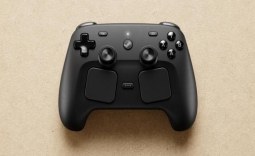 Steam Controller supply can't keep up with demand, Valve pushes orders to 2027
 Steam Machine shipments spotted, as Valve is rumored to launch the gaming PC next week
 HDMI 2.2 products are coming in 2027 as chip makers begin sampling FRL2 silicon this year
 Solo dev tries to make his own GTA 6 with AI, as he got tired of waiting for Rockstar
 A HandBrake update just gave Threadripper owners up to a 215% performance boost for free
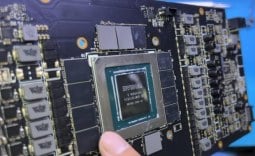 Repair channel buys ASUS RTX 4090 for $222 and finds plastic die with fake NVIDIA markings
 Epic's gen AI use deters partners, Vampire Survivors x Fortnite might get cancelled
 UGREEN FineTrack Mini 2 Air Tracker Tag Review - Long battery life, lesser performance
 Speed Racer (2008) 4K Ultra HD Blu-ray Review: a stunning remaster of the cult classic
 MOAIPLAY ORA PRO G1 850W ATX 3.1 PSU Review: high efficiency and 10-year warranty for $119.99
 Navman MiVue Smart True 4K Surround Dashcam Review - Seeing In All Directions At Once
 IQUNIX Magi96 Pro Aluminum Low Profile Mechanical Keyboard Review - Premium Build, Satisfying Sound
 Asetek Forte S-Series Racing Simulator Bundle Review
 Razer Pro Type Ergo Wireless Split Ergonomic Keyboard Review - Built for Comfort and Support
 ASUS ROG Strix Morph 96 Wireless Gaming Keyboard Review - Great Performance, More Affordable
 SAPPHIRE Radeon RX 9070 GRE PULSE OC Review - A New 1440p Challenger Has Arrived
 NZXT H6 RGB+ Compact Dual-Chamber Chassis Review
 7 ways to transfer data from Android to Windows PC quickly and easily
 I read the Windows Backup app screen carefully, and it does not back up what most people think
 Low Sound Volume on Windows 11? How to fix audio issues and restore normal volume
 8 Critical Warning Signs You Should Never Ignore in Windows 11
 This Windows security feature protects Documents from ransomware, but it is off by default
 Windows 11 already has a voice typing tool, and it is the one most people are not using
 Quick Assist is the only remote-support tool I open when a relative calls about their PC
 The PowerToys utilities I keep enabled on every Windows 11 PC, and the ones I turned off within a week
 TweakTown's Best of Computex 2026 Awards - The Best Hardware, Gaming Gear, and AI
 Phison E37T SSD Controller Exclusive Preview - The Fastest DRAMless SSD Platform Yet