










Xbox CEO Asha Sharma and head of Xbox Game Studios Matt Booty have co-authored a new blog post detailing the next 100 days at Xbox, which outlines the company's hurdles in the coming future. Some will be much easier to navigate than others.

The post on Xbox Wire put some harsh realities into the public eye, such as Xbox ending the year at about a 3% accountability margin, and that being down year-over-year. Additionally, the post states that over the past five years Xbox has spent $20 billion on ongoing investments, which includes content development (games), platform improvements, and a hardware subsidy, yet its annual revenue has declined "nearly half a billion during that time. Going forward, this cannot continue". Notably, that $20 billion total doesn't include the acquisition of Activision Blizzard King.
Another struggle is the ongoing hardware component crisis, spurred by AI companies' endless lust for more compute. AI is consuming the world's hardware for dedicated data centers, etc., straining other electronic markets, particularly gaming hardware, as components within those devices become scarcer as manufacturers shift to making components for AI-specific hardware.
"We are in a hardware component crisis. When I joined as CEO in February, the price we paid for console storage components was over 2x as high as we paid last fall. These costs have since doubled again. And as we plan for the 2027 holiday season, we expect another significant increase, taking us over 5x the prices we paid only two years earlier. Memory costs have followed a broadly similar trajectory," the letter explains
Sharma explained that since she joined as Xbox CEO in February, the price Xbox was paying for console storage components was over 2x what it was paying in the previous Fall, and as of now, that figure has jumped double again. Furthermore, Sharma expects the prices to continue increasing, which certainly doesn't bode well for the prices of the next Xbox, and even the PlayStation 6, which isn't immune to the hardware crisis.
"While the entire industry is facing a components crisis, we believe we have been impacted more greatly than many of our peers due to the choices we made over the last half decade. We are currently unable to make as many consoles as players want to buy, and we need a new business model and partnerships for hardware as we remain committed to Helix," reads the letter


 PlayStation 6 won't feature 'full' RDNA 5: next-gen Xbox is faster, but PS6 still a powerhouse
 PS6 gen may have 3 systems: PS6S, PS6, and PS6 handheld with prices ranging from $350 to $1000
 PS6 to cost half the price of the very premium next gen Xbox
 PS6 expected to cost Sony $760 in per unit, $699 shelf price still possible
 PlayStation 6 and Xbox Next could be delayed: 'industry as a whole' concerned over RAM supply
 Xbox needs help launching next-gen Helix console
 Ubisoft is closing two studios with hundreds of employees on the chopping block
 AMD says its next-gen EPYC 'Venice' processor is over 3X faster than NVIDIA Vera
 Fable's new 30-minute gameplay deep dive shows you how to buy property, fancy clothes, and get a date
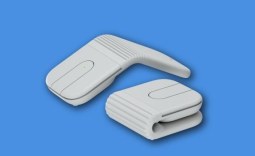 Logitech's new Mobi Fold is a portable mouse that looks like a flip phone
 Rampant fraud forces Valve to cut Steam gift card sales
 Microsoft sets a Patch Tuesday record with 206 fixes, and finally patches every zero-day Nightmare Eclipse disclosed
 Todd Howard is playing Elder Scrolls VI and it looks 'amazing,' Xbox exec says
 Google orders Intel Foundry to produce over three million TPUs for 2028 amid TSMC capacity crunch
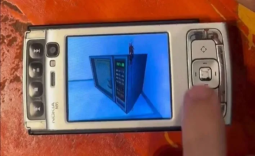 Half-Life now runs on a 2007 Nokia N95 at 30 FPS with Bluetooth mouse support
 MOAIPLAY ORA PRO G1 850W ATX 3.1 PSU Review: high efficiency and 10-year warranty for $119.99
 Navman MiVue Smart True 4K Surround Dashcam Review - Seeing In All Directions At Once
 IQUNIX Magi96 Pro Aluminum Low Profile Mechanical Keyboard Review - Premium Build, Satisfying Sound
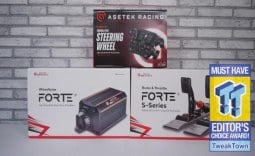 Asetek Forte S-Series Racing Simulator Bundle Review
 Razer Pro Type Ergo Wireless Split Ergonomic Keyboard Review - Built for Comfort and Support
 ASUS ROG Strix Morph 96 Wireless Gaming Keyboard Review - Great Performance, More Affordable
 SAPPHIRE Radeon RX 9070 GRE PULSE OC Review - A New 1440p Challenger Has Arrived
 NZXT H6 RGB+ Compact Dual-Chamber Chassis Review
 ASRock Radeon RX 9070 GRE Steel Legend Review - The RDNA 4 Mid-Range Reshuffle
 ASRock Z890 Taichi Aqua Motherboard Review - Flagship features without the flagship price
 The PowerToys utilities I keep enabled on every Windows 11 PC, and the ones I turned off within a week
 TweakTown's Best of Computex 2026 Awards - The Best Hardware, Gaming Gear, and AI
 Phison E37T SSD Controller Exclusive Preview - The Fastest DRAMless SSD Platform Yet
 USB Ports Not Working in Windows 11? Try These Fixes
 ASUS WiFi Routers and Networking Solutions Deliver Long-term Security and Reliability with No Additional Cost
 Second Monitor Not Detected in Windows 11? Try These Fixes
 Turn Your Old Smartphone Into a Dedicated Webcam for Your Windows PC
 The Send To menu is the right-click feature on Windows 11 that nobody bothers to customize
 Windows 11 will not let you pin a folder to the taskbar, but a 30-second workaround does
 ASUS ProArt Displays Unlock Creativity with Professional Monitors for Everyone