













NVIDIA has released GeForce Game Ready Driver 610.47, and buried inside it are the first signs of DLSS 5 making its way into the driver pipeline. User Warkratos discovered through the NVIDIA Profile Inspector that the new driver appears to add three new profile entries: DLSS-NR, DLSS-NR Streamline, and DLSS-NR Presets. The "NR" part almost certainly stands for Neural Rendering, which is how NVIDIA has been presenting DLSS 5 since its GTC 2026 reveal.
Before anyone gets too excited, these entries do not make DLSS 5 usable in any current games. Even if you enable the preset through the NVIDIA Profile Inspector, you will not get any DLSS 5 effects in existing titles. NVIDIA has not yet shipped any DLSS 5 files to go alongside these flags, so for most users, this is early groundwork rather than anything immediately useful.

For context, DLSS 5 introduces a real-time neural rendering model that takes a game's rendered 2D frame and motion vectors as input, then uses an AI model to infuse the scene with photoreal lighting and materials anchored to the source 3D content. NVIDIA's pitch is that it delivers a level of photorealistic computer graphics previously achievable only in Hollywood visual effects, running in real time at up to 4K resolution.
The technology drew significant backlash following its early demos, with many gamers criticizing the altered visuals and dubbing them "AI slop." But despite the harsh criticism, NVIDIA isn't backing off, and its plans to win over the more than 50% of users who don't want DLSS 5 altering their games involve assuring developers they will retain full artistic control.

The new driver updates suggest the 600-series driver will add more complete DLSS 5 support later this year. NVIDIA has confirmed a Fall 2026 launch window for DLSS 5, with titles including Phantom Blade Zero, Resident Evil Requiem, Assassin's Creed Shadows, Hogwarts Legacy, Starfield, and The Elder Scrolls IV: Oblivion Remastered among the first to support it. Hardware requirements are not yet confirmed, but the technology will likely only work with RTX 50-series cards, since early demos used two RTX 5090 cards, and NVIDIA is trying to reduce that to just one.


 GeForce RTX 40 Series owners are getting access to NVIDIA's new Smooth Motion tech
 GeForce Game Ready Driver 595.71 released, fixes issues from last week's recalled version
 NVIDIA GeForce Game Ready Driver for Indiana Jones, Path of Exiles 2, and Marvel Rivals is here
 NVIDIA removes the latest GeForce Game Ready driver due to a potentially damaging bug
 NVIDIA GeForce Game Ready 560.70 adds day one support for three new games
 Assassin's Creed Hexe to be revealed 'relatively soon' according to insider
 LG claims that you can improve your aim by up to 38% by playing on a 480Hz OLED monitor
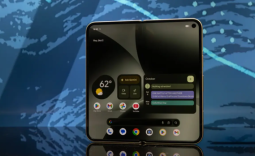 Pixel 11 Pro Fold leak may reveal Google's next big foldable upgrade
 Sony's $500 million lawsuit heats up after choice to end PlayStation disc production
 Spacecraft confirmed to be approaching one of Earth's seven mysterious 'quasi-moons'
 AI models could soon get cheaper as OpenAI, Meta, and xAI enter a new price war
 SAP escapes EU penalty by easing customer lock-in concerns
 Cursor builds AI agent 'Sand' to rival Anthropic's Claude Cowork
 PocketMage is a distraction-free pocket computer with a wizard-themed operating system
 Samsung is holding your health data hostage to train its AI
 MOZA FMP18 Panel Bundle Review: authentic F/A-18 Hornet cockpit controls for flight sims
 Micron 6600 ION 245.76TB Enterprise SSD Review - Best in Class Programming Speeds
 MOZA MA3F EFCM Flight Control Module Review: authentic Airbus A320 autopilot panel for simulators
 Turtle Beach Stealth Pro II Wireless Gaming Headset Review - Premium Sound, Fantastic Features
 MOZA MGX1000 Instrument Panel Review: a realistic Garmin G1000 replica for immersive flight sims
 Simagic Zeus Formula Steering Wheel Review: premium build and advanced inputs for F1 racing
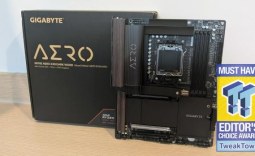 GIGABYTE X870E Aero X3D Dark Wood Review - A woody goody
 The Super Mario Galaxy Movie (2026) 4K Ultra HD Blu-ray Review
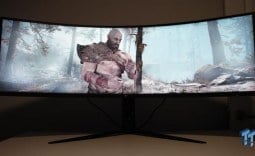 KTC H49S66 5K2K (5120x1440) 49-inch 180Hz Gaming Monitor Review
 HighPoint Rocket 1604L Gen5 x16 NVMe Software RAID AIC Review: half the price with full 59 GB/s speed
 I stopped digging through Windows menus after I set up this one folder
 Don't sell your Windows laptop until you do these things
 6 PC cleaning mistakes to avoid for safer hardware maintenance
 Phison and Intel Take Aim at Local AI's Memory Wall with aiDAPTIV
 How to Remap Keyboard Keys in Windows using Microsoft PowerToys
 7 tips to organize your Windows files for faster, easier access
 Intel Arc G3 Extreme first impressions with MSI's Claw 8 EX AI+ - Incredible power for an extreme price
 How to fix Wi-Fi Adapter Not Working on Windows laptops: troubleshooting tips
 Hisense U7SG 4K TV: Modern Entertainment for the New Age
 6 underrated Microsoft Word features worth using to boost your productivity