LG Display just put out an internal study claiming its 480Hz OLED monitors can improve your aim by as much as 38% over a standard 60Hz screen. These numbers are quite impressive and eye-catching enough to warrant a closer look.
According to the study, the company ran a blind test with 31 adult male gamers, all self-described generalists rather than esports pros, playing an unnamed first-person shooter at four refresh rates: 60Hz, 240Hz, 360Hz, and 480Hz, in random order. LG tracked hit score and the time it took players to eliminate a target after it appeared, then layered in subjective feedback on smoothness and tracking.
The headline result is a 38% jump in hit score at 480Hz compared to 60Hz, with most of that gain showing up between 60Hz and 240Hz. Going from 240Hz to 480Hz only added another 10% on top. LG chalks it up to OLED's near instant pixel response, which cuts input lag by more than 10 milliseconds at 480Hz compared to 60Hz.

However, there is also the other side of the coin. This is a company-funded study, run by the same company selling 480Hz OLED panels like the UltraGear GX7 and its newer Tandem OLED esports monitor. 31 participants are a small sample size, there's no independent replication yet, and LG hasn't specified the game, monitor model, or GPU used. There is room for doubt in this study, so just be mindful of that.

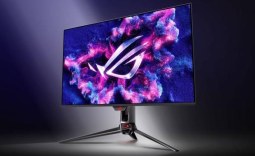
Generally, independent testing tends to show that the biggest gains appear early, with returns thinning out quickly past 240Hz. That lines up with LG's own numbers too, since the 240Hz to 480Hz jump was a fraction of the total improvement. For most people, a 240Hz OLED, like the panel inside ASUS's dual-mode 4K monitor, is probably the sweet spot. Going to 480Hz or beyond, like Samsung's 500Hz QD-OLED, mostly matters if you're chasing every last percent in ranked play, and only if your GPU can push those frame rates in the first place.

Worth remembering too that refresh rate is only one piece of the puzzle. Sensitivity settings, mouse quality, crosshair habits, and raw practice time probably matter as much as any panel spec. A faster monitor won't fix bad fundamentals; it just removes one small bottleneck once everything else is dialed in.

Frequently Asked Questions
Open a question for an answer from TweakTown's coverage of this news, or ask your own below.
Do independent Tweaktown benchmarks confirm the claimed input-lag reduction at 480Hz versus 240Hz and 60Hz?
How much visible improvement in hit registration can players expect when moving from 240Hz to 480Hz according to Tweaktown testing?
Have a question about this content not listed here? Ask below and TweakBot will answer it.

It is important to treat the 38% figure as a ceiling reached under ideal conditions, not something everyone will feel the moment they plug in a new monitor. If you're still on 60Hz, almost any upgrade will feel like a big step. As you pass 240Hz, you're paying a lot for a smaller slice of improvement.