

What started as a congratulatory social media post turned into one of the industry's more significant moments this week. Intel CEO Lip-Bu Tan posted on X to acknowledge NVIDIA CEO Jensen Huang receiving an honorary doctorate in science and technology at Carnegie Mellon University, but also used the moment to publicly confirm that the two companies are still actively developing products together. It is the clearest public signal of forward progress since the partnership was announced, and the market noticed, with Intel's stock ticking up following the post.
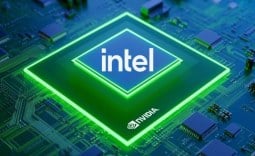
To recap, Intel and NVIDIA announced their strategic partnership roughly eight months ago in a deal both companies described as historic. The two companies planned to collaborate across data centers and consumer PCs, with Intel building custom x86 CPUs that NVIDIA would integrate into its AI infrastructure platforms, as well as x86 SoCs featuring integrated NVIDIA RTX GPU chiplets targeting a range of consumer devices. NVIDIA also backed the deal with a $5 billion equity investment in Intel, which has since received regulatory clearance.
Popular Now: Control Resonant becomes Remedy's top Steam launch, and even pirates are telling people to buy itPublic updates from either side have been relatively sparse since the initial announcement, which is part of why Tan's post generated so much attention. While the actual development work appears to be taking place out of the public eye, the CEOs of both companies have now confirmed that the collaboration is still active.
On the product roadmap, a few details have emerged through leaks and investor briefings. According to Intel VP John Pitzer, Intel is developing a custom Xeon processor for NVIDIA that will take advantage of NVIDIA's NVLink Fusion interconnect, allowing Intel's x86 CPUs to integrate directly into NVIDIA's AI server architectures. This is a meaningful upgrade from the current PCIe-based connection used in systems like the DGX B300, where tighter NVLink integration should offer considerably better bandwidth for AI workloads.

For the consumer side, leaks have pointed to a chip codenamed "Serpent Lake" as the first joint client product, reportedly tied to Intel's future Titan Lake architecture with an integrated NVIDIA RTX GPU tile. However, specific details like core counts and exact timing are based on leaks rather than confirmed roadmaps and should be treated as speculative. Analysts tracking the deal have suggested the first integrated x86 RTX consumer chips could arrive in time for the 2026 holiday season, with Intel-manufactured NVIDIA components on the 18A node potentially appearing by early 2027.
The collaboration also has significant implications for Intel's foundry ambitions, particularly around the upcoming 14A process node. If joint products perform well on 18A and later 14A, it would be a strong vote of confidence in Intel's manufacturing recovery. Whether the timelines hold up remains to be seen, but for now, the partnership is very much alive and seemingly on track.