

As personnel costs increase, tariffs drive up shipping, and supply issues continue driving up component prices, Nintendo navigates a continually challenging market with its new Switch 2 console generation.

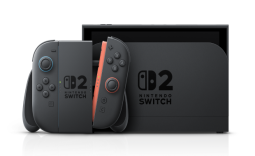
The Switch 2 console generation may become a grueling profit grind, at least when compared to its predecessor. From the get-go, Nintendo has said from the start that the Switch 2 costs more to make than the Switch 1, leading to a $499 asking price (which will jump to $549 on Sept 1). The original MSRP included tariff impacts into the price, but new entanglements--like the war in Iran, which has disrupted global oil prices--have pushed Nintendo to make a price hike.
Popular Now: Redditor buys an RTX 5070 Ti for $1,099 from Walmart, receives four graphics cards insteadThis price hike, Nintendo says, was essential to preserving the profitability of the Switch 2 console. If the price had stayed the same, then new global volatility could eat into hardware profits on a systematic level. Nintendo's latest FY26 results give a clear example of the impact this is having on the company.

Nintendo earnings at-a-glance
- FY2026 (April 25 - March 26)
- Net Sales - $15.23 billion
- Operating Profit - $2.356 billion
- Switch sales - 3.8 million
- Switch 2 sales - 19.86 million
As it currently stands, Nintendo is still making a ton of money from sales, but the per-unit profit of each Switch 2 sale is becoming less and less; Nintendo made $15.23 billion in sales through FY26, but only $2.336 billion in operating profit, representing an atypical 17% operating margin for the group.
The last time that Nintendo made revenues like this was when Nintendo reported a record-breaking $16.5 billion in FY21, and $14.74 billion revenue in FY22. Those milestones happened in periods where Nintendo sold 28.84 million consoles (FY21) and 23.03 million consoles (FY22), respectively. In FY26, Nintendo sold a total of 23.66 million Switch and Switch 2 consoles, combined.
The profits were very different for those years, though; FY21 had a record-breaking $6 billion operating profit, and FY22 had $5.1 billion. Conversely, FY26 delivered just $2.35 billion in operating profit.
This effect of hardware becoming more expensive to manufacture isn't unique to Nintendo, and affects all the Big 3 players, including PlayStation and Xbox--both of which have also raised prices, leading to a console generation where we have a $900 PlayStation 5 Pro console.