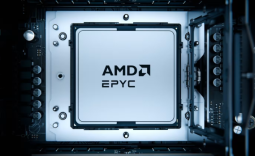


It's hard to ignore Microsoft's recent efforts at improving the Windows 11 experience, including more control over updates, faster performance, and storage fixes. AMD is now joining that effort in its own way. According to the latest patch series posted to the Linux kernel mailing list (via Neowin), AMD is adding a new CPPC-based element called "Highest Frequency" that could improve how Windows 11 and Linux handle CPU scheduling and boost behavior.
For context, CPPC, short for Collaborative Processor Performance Control, already helps operating systems figure out which CPU cores are fastest for a given task. Windows 11 and Linux rely on CPPC to prioritize preferred cores for gaming, productivity, and multitasking.
Popular Now: Xbox Series X can now run PS5 games thanks to a new emulatorHowever, on some systems, the relationship between CPPC performance values and actual clock speeds doesn't always map cleanly across all cores. This mismatch leads to inaccurate boost prediction and less efficient scheduling. That is what AMD's new Highest Frequency is designed to fix.
- Read more: AMD could have a plan to make Zen 6 CPUs run games much more smoothly, taking the pain out of jerky frame rates and 1% lows
- Read more: Biostar teases next-gen AMD motherboards to Computex 2026, and it could be our first look at the Zen 6 platform
- Read more: AMD 'Zen 6 LP' cores spotted, power-efficient cores back up PS6 Portable rumors

Instead of relying on estimates, the new register allows the firmware to expose the maximum boost behavior directly to the OS. Simply put, Windows and Linux will no longer have to guess the peak boost clock - they can read the actual hardware-reported limit. This should lead to smarter decisions when assigning workloads to different cores, more accurate CPU capacity calculations, and better boost ratio determination.
CPPC could become increasingly important for future Ryzen generations as processors continue to adopt more advanced boosting and power management technologies. AMD plans to roll out support through the upcoming ACPI 6.7 specification update, with AMD Linux engineer Mario Limonciello noting in the patch series that the register is "under a proposal with ASWG at the moment and trending for inclusion in ACPI 6.7," where it is expected to be formally defined.
The patches also add the necessary kernel-side support to read the value from the _CPC object when available, helping standardize the functionality across platforms. Reports also suggest the capability could appear in future AMD architectures beyond Zen 5, including possible Zen 6 processors. On the software side, future Windows updates, possibly Windows 11 26H2 and 27H2, may eventually optimize scheduling around this new capability.