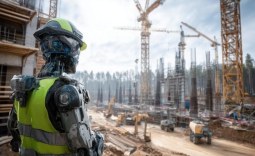


Meta is currently building a new $27 billion data center in Richland Parish, Louisiana, the company's biggest to date. Naturally, it's all about AI, with Meta noting that this 4 million-square-foot Richland Parish Data Center will play a "vital role in accelerating our AI progress, delivering over two gigawatts of compute capacity to train future open-source large language models."

With the energy requirements of these new data centers straining local grids and energy supplies, Meta has reportedly struck a deal with Entergy Louisiana to fund and help build seven new natural gas power plants in the region. With a combined power output of 5,200 megawatts, this is enough to cover "two gigawatts of compute" of the data center and then some.
Popular Now: RTX 5090 owner adds two 8-pin connectors to GPU with daughterboard mod dropping cable temps below 40CAs reported by the Wall Street Journal, the energy deal also includes 240 miles of 500-kilovolt transmission or power lines and battery storage. Now, although "natural gas" might sound good on paper, it's not exactly clean - it's still a fossil fuel. Albeit one with fewer emissions than coal-fired plants.
And with that, in addition to funding seven new natural gas power plants for its new mega data center, Meta will also help fund up to 2,500W of renewable energy resources with the potential to develop nuclear power. This all falls under Meta's pledge (made with other tech giants) to fund or build the energy and electricity infrastructure it needs to meet the energy demands of AI data centers.
Construction of the Richland Parish Data Center is currently underway. In addition to meeting the data center's energy needs with natural gas power plants, Meta has also previously stated that it will minimize the water impact by restoring local watersheds as part of its "restoring more water than we consume globally in 2030" goals.