












AMD recently reported its Q4 2025 earnings, with record revenue of $10.3 billion and a gross margin of 54%. This was indicative of AMD's banner year for investors, driven by the AI boom and demand for AMD's EPYC processors and Instinct graphics cards.

As part of its fourth-quarter and 2025 financial results, the company also forecast revenue of $9.8 billion for the first quarter of 2026, plus or minus $300 million. Although this is higher than the $9.38 billion estimate from Wall Street analysts, AMD's share price dropped 13% after its latest financial report.
The reason for the drop, according to reports, is that AMD's forecast felt too conservative for a company in the middle of the AI gold rush. Even though this follows last year's announcement of key AI partnerships with OpenAI and Oracle, and AMD's planned rollout of its server-based Helios AI systems later this year, there's also a growing sense of caution about the sustainability of AI infrastructure spending.
And with AMD's stock price falling, CEO Lisa Su made an appearance on CNBC's Squawk on the Street, presumably in an attempt to calm the uncertainty by saying, "What I would tell you from someone on the inside is AI is accelerating at a pace that I would not have imagined." And by confirming that demand continues to outpace supply and that so far this year, its CPU business is "going gangbusters."
AMD isn't the only company to see its stock price tumble after a seemingly impressive quarterly revenue report. After Microsoft reported 39% growth in its lucrative Azure and cloud-based services, its share price dropped by around 10%, wiping off $357 billion from its market cap. For those of us on the outside, the stock market will remain elusive and volatile.
As for AMD, it doesn't see any signs of AI slowing down. Lisa Su also told CNBC that the company's server-scale Helios AI systems, which will directly compete with NVIDIA, are on track to be an "inflection point" for the company.


 AMD's Client and Gaming segment had a record 2025, driven by demand for Ryzen processors
 AMD posts record revenue in Q3 2025: client and gaming segment is up 73% since last year
 AMD Gaming revenue soars 181% thanks to 'strong demand' for Radeon GPUs
 For the first time, AMD has overtaken Intel in data center revenue for Q1
 AMD's Client and Gaming revenue grew by 26% in Q1 2025, thanks solely to Ryzen
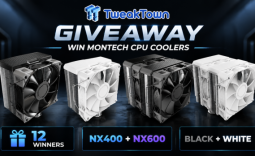 Giveaway: 12 Winners Will Score MONTECH NX400 and NX600 CPU Coolers
 STALKER 2 receives massive performance boost with new 2.0 update, game gets upgraded to Unreal Engine 5.5.4
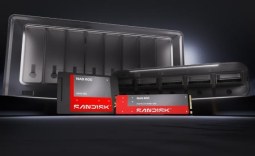 Sandisk NAS 800 NVMe SSD delivers PCIe Gen5 speeds for demanding NAS environments
 RayNeo announces new iO Smart Glasses and GT Series with 'cinema-grade' display
 IQUNIX launches premium EC75 Hall Effect keyboard with 0.01mm Rapid Trigger
 AVerMedia announces new pro-grade HDMI capture devices with up to 4K RGB24 True Color support
 Beyerdynamic announces new affordable MMX 100 and MMX 130 wireless gaming headsets with studio-grade sound
 AMD's latest Radeon driver adds support for Star Wars Zero Company, Call of Duty, and Radeon RX 9050 4GB GPU
 Razer's new Huntsman is the 'world's first low-profile analog optical esports keyboard'
 GTA 6 appears to have leaked from Rockstar India, also suspected to be a PC version
 Xbox struggles to move physical discs, accounts for only 4% of disc sales in the US this year
 Cooler Master MasterFan A120 Fan Review
 GIGABYTE MO27Q2A Gaming Monitor Review: 1440p, 280Hz, and QD-OLED is a winning combination
 Cooler Master V8 ACE 3DHP BLACK CPU Cooler Review
 ASUS ROG Strix XG129C Review: A $199 Gaming Monitor You Don't Play Games On
 Cooler Master HAF II 500 Mid-Tower Chassis Review
 Corsair HS35 v3 Wireless Gaming Headset Review - An Affordable Winner
 D-Link F518 5G Wi‑Fi 6 AX1800 Mobile Hotspot Review: All-Day Mobile Hotspot
 Bose Lifestyle Ultra Speaker Review - Impressively Detailed Room-Filling Sound
 MSI Z890 Gaming Plus WIFI6E Review - Z890 for under $200
 Mortal Kombat (1995) 4K Ultra HD Blu-ray Review
 Using Multiple Monitors? Change these Windows settings for a Better Experience
 Windows Sandbox is The Windows Security Feature Most People Never Use
 I ditched the Windows 11 context menu for this open-source tool, and here's why
 Windows 11 may be encrypting your drive already, and I checked where my recovery key went
 GIGABYTE's 40 Days of INFINITY celebrates 40 Years of Innovation with stunning GeForce RTX graphics cards and rewards
 I swapped File Explorer for this free file manager and finally got the layout I wanted
 How to tell if someone has been using your Windows PC without your permission
 6 Task Manager tips for troubleshooting Windows performance problems
 ASUS ROG's 20th Anniversary Line-up of Premium PC Gaming Gear has Arrived - Here's Everything You Need to Know
 Six File Explorer tips every Windows user should know