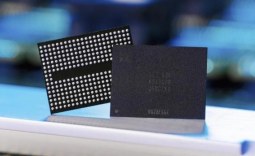


Last week, we reported on Phison's CEO discussing "severe shortages" expected to hit the NAND-based flash memory and SSD market due to a manufacturing shift prioritizing AI data centers and systems. This week, ADATA chairman Chen Lebai (via DigiTimes) has chimed in to confirm that DRAM, NAND Flash, SSDs, and even traditional HDDs are about to face an unprecedented and historic shortage as we head into 2026.

As foundries struggle to keep up with demand, including prominent players like Samsung Electronics, Micron, and SK Hynix, this will not only lead to rising prices but also make it much harder for consumers and non-AI-focused customers to get what they need. ADATA's chairman notes that when it comes to accessing stock for its own products, it's now competing directly with large cloud-based companies that are buying as much capacity as they can for their data centers.
Popular Now: The Witcher 3 remaster gets updated path tracing system requirements, requiring an RTX 5080 for 4KHe also states that this is the first time he has seen a situation where everything from DDR4 and DDR5 memory to NAND-based SSDs and traditional HDDs is experiencing simultaneous shortages. It has already reached the point where Chen Lebai is instructing his sales teams at ADATA to sell sparingly and focus on existing customers.
According to reports, ADATA still has inventory worth billions, but with limited supply, it's now essentially in "ration" mode for sales. ADATA chairman Chen Lebai is an industry veteran with almost three decades of experience in the memory field. With the rise of AI, he believes it has disrupted the typical cyclical pattern of technological innovation, where new technologies emerge. In contrast, older technology comes down in price before being phased out.
The proof of this is evident in DDR4 memory, which is now more expensive than DDR5 due to shortages and chip manufacturers prioritizing high-profit-margin AI products. And with ADATA now competing with the likes of OpenAI, Google, Amazon, Microsoft, and others, for capacity and wafer allocation, it paints a very bleak picture for the future of consumer electronics and technology. Phison's CEO, Pua Khein-Seng, went so far as to say that the shortages will last up to a decade, which will have far-reaching effects on everything from desktop PCs to gaming consoles, smartphones, motor vehicles, and more.