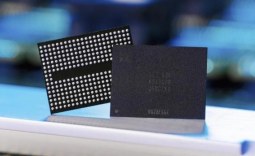
When it comes to the new AI era of edge computing, data centers, and cloud services, NAND-based flash storage sits alongside high-powered GPUs or graphics cards as two bits of hardware that are seeing unprecedented demand. In a recent interview, Pua Khein-Seng, CEO of Phison Electronics Corporation, a leader in all things flash storage, shared some insight regarding the forecasted NAND flash storage of 2026.

As seen over at the Taiwanese CommonWealth Magazine's tech column (via Tom's Hardware), Pua Khein-Seng notes that in addition to "severe shortages" next year, flash shortages "will be tight for the next ten years." That's a whole decade where it appears that buying SSDs and other NAND-based flash storage devices will become increasingly more expensive and difficult to source.
One of the reasons for the shortages stems from a shift toward HBM manufacturing for AI data centers and systems, where the margins are significantly higher. This leaves less room for older technologies, even though the demand for even PCIe Gen4 storage is increasing. Additionally, as companies shift toward more AI inference rather than training, the need for high-speed flash storage is rising.
In fact, it's marking a shift from more traditional platter-based HDDs to SSDs. "In 2020, the SSD-to-HDD ratio in data centers was in the single digits versus more than 90%," Pua Khein-Seng explains. "Today, it's about 20% to 80%. Looking ahead, SSDs will account for 80% to 100%. The real question is: how much new capacity will be needed to support that transition? That's why I say flash will remain strong for the next ten years."
For day-to-day consumers, Phison SSD controllers can be found in a wide range of storage solutions from some of the biggest names in SSD technology. Its latest Phison E28 Gen5 SSD controller not only delivers up to 14.8GB/sec read speeds, but it can do so using just 7W of power.