












AMD's Zen 6 architecture is expected to come with major power efficiency and latency improvements as Team Red seems to have implemented a new chiplet architecture that has already been showcased in the company's Strix Halo APUs.
The discovery was made by YouTuber High Yield, who pointed out in a recent video the architectural difference between AMD's Strix Point APUs and Zen 2,3,4, and 5 CPUs. Here's what was found. AMD currently uses what is called "SERDES PHYs" on the CCD (Core Complex Die) edges, the part of the CPU that contains the CPU cores. On the edge of these CCDs are high-speed serial lanes, which are used to communicate across the substrate, or the material that is beneath the dies.
SERDES PHYs is a serializer/deserializer, and AMD has been using this technique to communicate between chips since Zen 2. However, it appears that it will soon be changed. But first, here's how SERDES PHYs work in a nutshell. Data from the CPU cores is serialized into high-speed bitstreams, sent across the substrate, and then deserialized again on the other side. While this technique has worked well since Zen 2, it has two major downsides: it consumes extra power because the hardware has to encode/decode, clock recovery, and latency, as the data needs to be converted back and forth.
- Read more: AMD confirms next-gen Zen 6 'Medusa' CPUs for 2027: up to 32C/64T CPU, RDNA 5 GPU, on TSMC 2nm
- Read more: Intel's new Nova Lake-AX CPUs rumored with 48 Xe3 GPU cores, ready to battle Strix Halo APUs
- Read more: AMD still rumored with high-end 'multi-chiplet' Radeon GPU, could debut with UDNA architecture

Why not stick to this design if it's working so well? Well, AMD intends to add new components to its chiplet designs, such as GPUs and dedicated NPUs, which means the bottleneck for performance will be the communication between each of these chips. Here's where the performance jump comes in. High Yield points out that AMD has already showcased its next-generation chip architecture with its Strix Halo APUs, as it uses TSMC's InFO-oS packaging and redistribution layers (RDLs).

Instead of converting parallel data into serial streams, AMD now runs many short, parallel connections directly between dies, removing the need for serialization and deserialization, which, in turn, reduces power draw and latency, while also allowing bandwidth to scale more easily by simply adding more connections between the chips. High Yield identified this change in AMD's Strix Halo architecture by noticing pads typical of fan-out wiring and also the lack of large SERDES blocks that were used in previous Zen architectures. This is why High Yield believes AMD will be adopting this interconnect architecture change in Zen 6.
Here's an analogy to break it down easily.
Think of AMD's old SERDES interconnect like a city that only has a handful of ultra-fast bullet train tracks between districts. Each train track (a SERDES lane) is narrow, but the trains run at extreme speed and carry a steady flow of passengers. To make this work, every time people want to board, they first have to convert into a train-friendly format-lining up, being scanned, and packed into carriages (serialization). On the other end, they get unpacked again (deserialization) before entering the next district. It works, but the boarding and unpacking process takes time and energy, and there are only so many train lines you can realistically build.
Now compare that to AMD's new fan-out interconnect with RDL. Instead of relying on a few bullet train tracks, the city builds a massive freeway system with dozens or even hundreds of regular lanes. Cars (data) just drive directly across without needing to be packed and unpacked. The speed of each car isn't as extreme as the bullet train, but because there are so many lanes running in parallel, the total traffic flow is much higher. More importantly, there's no costly conversion process-cars stay cars the whole time-which saves fuel (power) and gets people to their destination faster (lower latency).


 AMD's next-gen Medusa Ridge CPU leak: desktop Zen 6 processors with 24 cores, 48 threads coming
 AMD's next-gen Zen 6 desktop, laptop CPUs get leaked photos: meet Medusa Ridge and Medusa Point
 AMD's confirms Zen 6 on TSMC 2nm, officially confirms future-gen Zen 7 on an even newer node
 AMD confirms next-gen Zen 6 'Medusa' CPUs for 2027: up to 32C/64T CPU, RDNA 5 GPU, on TSMC 2nm
 AMD deep dives new Zen 5 core architecture at Hot Chips 2024: new chapter in high-perf chips
 CPS PCCOOLER unveils all-in-one modular PC where you can replace the display and upgrade its hardware
 NVIDIA and LG are building a next-generation humanoid robot that will make its debut at CES 2027
 Intel will continue supplying Raptor Lake CPUs for 'years to come' thanks to the memory crisis
 NVIDIA's next-gen 'Feynman' GPUs to be built with TSMC's 1.6 nm A16 process
 OLED monitor shipments have doubled in a year, with ASUS as the global leader
 SK Hynix is running out of SSD replacements, leaving customers with inadequate refunds
 Kingdom Hearts 4 reveals Pixar's Coco-inspired Land of the Dead world and late 2027 release window
 Budget GPU shortages to get even worse in second half of 2026, warns PC Partner
 Intel plans an entry-level Panther Lake chip with 4 Xe3 cores for handhelds
 AMD denied any review samples for the Radeon RX 9050 because it's embarrassing
 Cooler Master HAF II 500 Mid-Tower Chassis Review
 Corsair HS35 v3 Wireless Gaming Headset Review - An Affordable Winner
 D-Link F518 5G Wi‑Fi 6 AX1800 Mobile Hotspot Review: All-Day Mobile Hotspot
 Bose Lifestyle Ultra Speaker Review - Impressively Detailed Room-Filling Sound
 MSI Z890 Gaming Plus WIFI6E Review - Z890 for under $200
 Mortal Kombat (1995) 4K Ultra HD Blu-ray Review
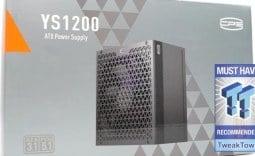 CPS PCCOOLER YS1200 ATX 3.1 80 PLUS Gold PSU Review
 ASRock X870E Taichi White Review: a premium AM5 motherboard with 10G LAN and WiFi 7
 Asetek Initium Pedal Modular Upgrades Review
 Thinkware U3000 Pro Review - Smart Dashcam with Wi-Fi quirks
 Windows Sandbox is The Windows Security Feature Most People Never Use
 I ditched the Windows 11 context menu for this open-source tool, and here's why
 Windows 11 may be encrypting your drive already, and I checked where my recovery key went
 GIGABYTE's 40 Days of INFINITY celebrates 40 Years of Innovation with stunning GeForce RTX graphics cards and rewards
 I swapped File Explorer for this free file manager and finally got the layout I wanted
 How to tell if someone has been using your Windows PC without your permission
 6 Task Manager tips for troubleshooting Windows performance problems
 ASUS ROG's 20th Anniversary Line-up of Premium PC Gaming Gear has Arrived - Here's Everything You Need to Know
 Six File Explorer tips every Windows user should know
 I switched my PC to encrypted DNS in Windows 11, and browsing felt more private