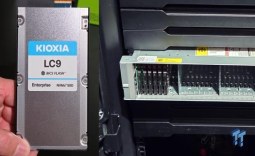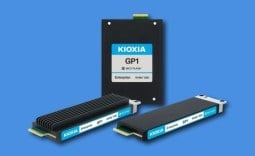
NVIDIA wants to co-develop new SSDs with KIOXIA that would be close to 100x faster in read speeds than current SSDs, and use them inside of AI servers to partially replace HBM as GPU memory expanders.
In a new report from Nikkei, we're hearing that KIOXIA is looking to partner with NVIDIA to commercialize new SSDs by 2027 with nearly 100x faster read speeds, to use inside of AI servers and to partially replace HBM as GPU memory expanders. KIOXIA has previously said that by 2029, almost half of NAND memory demand is projected to be AI-related.
Popular Now: Rockstar's next game after GTA 6 is already confirmed, but it isn't Red Dead Redemption 3Nikkei reports that NVIDIA is aiming for 200 million IOPS, with KIOXIA planning to use two SSDs to achieve that, which will also be on the next-next-generation PCIe 7.0 standard. Masashi Yokotsuka, Executive Vice President of KIOXIA said: "we will collaborate with the world's largest GPU manufacturer to achieve super performance in GPU systems".
- Read more: MLC NAND prices have tripled as Samsung shuts its last 2D NAND line and Kioxia plans a full exit by 2029
- Read more: SK hynix to boost DRAM production by a huge 8x in 2026, still won't be enough for RAM shortages
- Read more: Micron's CEO says AI memory demand is just in its 'first innings' and memory supply is already insufficient
TrendForce reports news from a US investment firm report cited by TechNews that highlighted that the long-awaited comeback for NAND, which had missed the huge AI investment boom over the last two years. The report suggests surging AI inference demand and the need for high-speed, high-capacity storage with random I/O access are making QLC-based eSSDs the "go-to solution".
Other emerging NAND products, including Nearline SSDs, could also gain traction as HDD supply tightens in late 2026/early 2027, while high-bandwidth flash (BHF) might help relieve some of the memory bottlenecks in AI clusters. Analysts from the company project AI-related NAND will make up 34% of the global NAND market by 2029, which will add around $29B in TAM.