Our Verdict
Pros
- In-camera 4K elements look rather nice, with an attempt to restore the image to the best possible quality
- Some nice new bonus features provide some nice retrospective insights
Cons
- The improved resolution reveals some of the clumsiest CG effects ever put to film
- The 5.1 soundtrack does not impress
Should you buy it?
Following the surprise success of the first Mortal Kombat film in 1995, a sequel was immediately fast-tracked into production, which set the stage for several issues that would ultimately trash any goodwill established from the first film, and result in the franchise's feature film ambitions being iced for the next two and a half decades. Nearly 30 years later, we can view Annihilation completely divorced from hype and expectations, but unfortunately it's still pretty much a turkey.
After Liu Kang's hard-won victory in the tournament, the tyrannical Shao Kahn (Brian Thompson) shatters the dimensional barriers and launches a full-scale invasion of Earth, killing Johnny Cage and forcing a power-stripped Rayden (James Remar) to rally the surviving champions - Liu Kang (Robin Shou), Sonya Blade (Sandra Hess), Jax (Lynn Williams), and Kitana (Talisa Soto). Hurtling through portals into the nightmarish wastes of Outworld, the ragtag team must unlock new abilities and confront Shao Kahn's elite killers in a relentless series of brutal showdowns. Only by stopping the merger can they save Earth from total annihilation.
Popular Now: DLSS 5 has been modded into Skyrim, and it definitely transforms character facesKey among Mortal Kombat: Annihilation's flaws were the obvious recasting of key actors, including Lambert Wilson, Linden Ashby, and Bridgette Wilson, a rushed script, and the replacement of director Paul W.S Anderson. Worse, the released film was ultimately revealed to be a work-in-progress workprint, which accounts for some of the worst CG visual effects ever seen in a feature film. This decision is discussed in the disc's supplements in a surprisingly frank manner - apparently the film was doing great in test screenings, so they simply decided that the extra polish wasn't worth it. Well, that was a huge mistake, because whilst it is fundamentally flawed in a lot of ways, some tighter editing and better visual effects would have gone a long way to improving the film - and its legacy.
Video
Mortal Kombat: Annihilation is presented in its original aspect ratio of 1.85:1 in the Rec. 2020 color space, finished with dynamic Dolby Vision and static HDR-10 high dynamic range formats and encoded with AVC H.265 compression. Notably, director John R. Leonetti approved it.
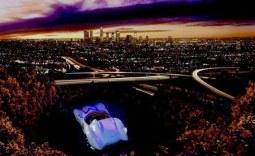
As with Mortal Kombat, this transfer hails from a new scan of the original camera and interpositive elements held by Warner, which makes for a big improvement over previous releases. Unsurprisingly, the in-camera elements look rather impressive. Still, the CG interpositive is marred by some of the ugliest CG and digitally composited sequences ever put to film, including very obvious low-resolution shots that are DVD quality or worse. Much like the film itself, this is a case study in contrasts, alternating from impressive to disappointing at a schizophrenic pace. The HDR pass helps gloss over the image as best it will while still respecting the original intent, but that can only do so much.
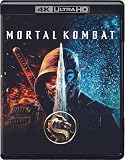
Best Deals: Mortal Kombat
Prices last scanned 20 hours and 30 minutes ago


Overall, this is a decent effort to patch up what is essentially a very problematic master in the best possible way. While it does comprehensively improve on the previous DVD, that's somewhat cold comfort.
Our Latest Blu-ray Movies Review Coverage
- Mortal Kombat (1995) 4K Ultra HD Blu-ray Review
- The Super Mario Galaxy Movie (2026) 4K Ultra HD Blu-ray Review
- Speed Racer (2008) 4K Ultra HD Blu-ray Review: a stunning remaster of the cult classic
- Teenage Mutant Ninja Turtles III (1993) 4K Ultra HD Blu-ray Review
- TRON: Ares (2025) 4K Ultra HD Blu-ray Review

Audio

Frequently Asked Questions
Open a question for an answer from TweakTown's coverage of this review, or ask your own below.
Which original elements were scanned for this 4K release and who approved the transfer?
How does the release handle the film's problematic CG and low-resolution effects in the new transfer?
Which new and preserved bonus features are included on Arrow Films’ 4K disc?
Who participates in the two newly recorded audio commentaries on this release?
Have a question about this content not listed here? Ask below and TweakBot will answer it.

Mortal Kombat: Annihilation is presented in DTS-HD Master Audio 5.1.
Unlike the first film's modest audio remixing, Arrow appears to have repurposed the same 5.1 mix used in previous laserdisc, DVD, and Blu-ray releases, sans any major refinements. Dialogue remains largely clear and prioritized amid the chaos, though the midrange can lack fine detail in the loudest passages. Channel separation is decent, but is often confined to the front soundstage. Low frequencies can get a bit muddy and ill-defined at times. George S. Clinton's score, with its collection of well-known techno-heavy tracks, is fun and does a lot of heavy lifting for the film.
Overall, an acceptable effort that gets the job mostly done, but won't be your next demo disc.

Extras
In typical Arrow style, we have a great collection of new bonus features lovingly created by the boutique studio, in addition to preserving the previous bonus features. Let's jump in.
First up, we have not one, but two newly recorded Audio Commentaries, the first with director John R. Leonetti, moderated by Gillian Wallace Horvat, and the second with 'comic book expert' Dave Baxter. I kept listening for Leonetti to start apologizing for the film and pointing out its flaws, but was left disappointed.

The bulk of the extras consist of roughly 50 minutes of newly filmed interview featurettes with members of the cast and crew. First up is The Queen of the Night, which profiles Sindel actress Musetta Vander, including her last-minute casting. Techno, Taiko, Orcho interviews composer George S. Clinton on his wider career and his approach to the score on both Mortal Kombat films, while The Man of a Thousand Deaths features stunt performer J.J. Perry (who suited up for Scorpion, Cyrax, and Noob Saibot) recalling the physical pain of filming.
Finally, we have some vintage marketing material pieces in Behind the Scenes, On Set Soundbites, the original Theatrical Trailer, TV Spots, and a rather superfluous image gallery.