







Business, Financial & Legal - Page 7
Catch up on business, finance, and legal news shaping tech, gaming, and science - mergers, lawsuits, antitrust, IPOs, Big Tech earnings, and market trends. - Page 7
Stay Updated
Follow TweakTown for breaking tech news, reviews, and daily updates.


As an Amazon Associate, we earn from qualifying purchases. TweakTown may also earn commissions from other affiliate partners at no extra cost to you.
Developer sentenced to prison after nuking corporate network with revenge malware
A former developer at power management company Eaton has been sentenced to prison after unleashing revenge malware on the company's network.

The former developer is 55-year-old Davis Lu, who spent 12 years at Eaton before he decided to take down its network with malware. Why did Lu turn on his employer? During his time at the company, Lu climbed the corporate flagpole to the level of senior developer of emerging technology, but then Eaton went through a restructuring phase that resulted in Lu being demoted. Following this bad news, Lu installed a "kill switch" that was designed to activate if the company removed his local network access.
The malware was in the form of a Java program that was designed to generate increasing numbers of non-terminating threads in an infinite loop, which would eventually exceed the server's resources and crash the network. Lu labelled this malware as "IsDLEnabledinAD," which stands for "Is Davis Lu enabled in Active Directory," and uploaded it using his corporate credentials. Eaton unknowingly activated the malware when Lu was terminated from his position on September 9, 2019.
US government approves $8.9 billion equity stake in Intel, contingency plan for its foundry biz
President Trump has just announced the US government has secured a 10% stake worth around $8.9 billion in Intel, calling it a "great deal" and that it's now likely to be replicated with other semiconductor companies in the near future.

The Trump administration plans to convert $7.9 billion of CHIPS Act grants meant for Intel into equity, and as an inducement to re-shore chip fabrication onto American soil, as well as the $3 billion grant that Intel received under the Secure Enclave program from the Pentagon.
Intel CEO Lip-Bu Tan posted on X saying: "Just met with President Trump to announce a historic agreement: the U.S. government is investing $8.9B in @Intel to boost American semiconductor leadership. I'm excited about the work ahead to ensure the most advanced silicon technology and computing products of the future are designed and built right here in the USA".
JPMorgan says Intel should give up chip making business, concentrate on its foundry business
JPMorgan thinks that Intel should remove itself from the chip-making business, and push into its foundry business, and that the move could be beneficial to TSMC as well.

The investment firm's Technology and Telecoms team said in its latest report that Intel Foundry's "illusory competition" is actually more beneficial to TSMC, with analysts believing that the existence of Intel's foundry business could help TSMC avoid regulatory pressure that stems from its monopolistic position.
JPMorgan added that customer participation in Intel Foundry's "revival plan" is not all negative, and that the fundamental challenges that Intel Foundry face goes far beyond capital. The investment firm said TSMC will continue to maintain the lion's share of the market at 90% for advanced process nodes, with JPMorgan adding an "Overweight" rating on TSMC with a target price of NT$1275.
US government could demand equity stakes in TSMC, SK hynix, Samsung, just as it has with Intel
The US government is looking into taking equity stakes in other big tech companies that receive CHIPS Act funding in order to strengthen next-gen semiconductors made on American soil, and it could include TSMC, Samsung, Micron, SK hynix, and more.

In a new report from Reuters and two of its sources, US Commerce Secretary Howard Lutnick is looking into the federal government taking equity stakes in other companies, after its recent 10% stake in Intel under the Trump administration. Lutnick is reportedly looking at how the US government can take equity stakes in exchange for CHIPS Act funding for companies including TSMC, Micron, and Samsung.
Lutnick has said that the US government doesn't want to tell Intel how to run its vast operations, while White House press secretary Karoline Leavitt said on Tuesday that Lutnick was working on a deal for the US government to take a 10% stake in Intel. Leavitt told reporters: "The president wants to put America's needs first, both from a national security and economic perspective, and it's a creative idea that has never been done before".
SoftBank buys $2 billion in Intel shares after Trump admin eyes a 10% stake in the company
SoftBank has just announced that it is investing $2 billion into US chipmaker Intel, as the Japanese bank deepens its investment into advanced technology and semiconductor innovation in the United States.

The deal includes pricing each share at $23, with SoftBank securing around 86.9 million shares, making it one of Intel's top ten shareholders. This follows earlier news that the Trump administration was eyeing off taking a 10% stake in Intel, making the US government the biggest shareholder of the company.
The $2 billion investment from SoftBank ensures its commitment to gain exposure to the growing semiconductor fabrication business in the United States, and that the Japanese bank's belief that Intel would have a "critical role" in the future of US semiconductor manufacturing.
Trump admin in talks to take a 10% stake in Intel, US gov would be the biggest shareholder
The Trump Administration is in talks with Intel to take a 10% stake in the company, by converting some (or all) of the CHIPS Act grant money from Intel into equity.

Bloomberg is reporting from a White House official and other people familiar with the matter, which would see the US government become Intel's largest shareholder. Intel is set to receive $10.9 billion in CHIPS Act grants for both commercial and military production, and at Intel's current market value, a 10% stake in the company would be worth around $10.5 billion.
According to Bloomberg's sources, the exact size of the stake in Intel, and whether the Trump administration decides to ink the deal, is "still in flux". White House spokesperson Kush Desai declined to comment on the specifics of the discussion, only saying that no deal is final until it's announced by the administration.
TSMC sets production price of 2nm node at $30,000 per wafer, no 'discounts' in its policy
TSMC has reportedly set the production price of its bleeding-edge 2nm process at $30,000 and has established a new policy of supplying 2nm chips without any discounts according to new reports.

The company plans to kick off trial production in the next 34 months, aiming for a monthly production capacity of 30,000 to 35,000 wafers. By 2026, TSMC plans to establish a production system with a monthly production capacity of 60,000 wafers across its four factories, with initial yields reportedly in the mid 60% range, and for SRAM, yields reportedly exceed 90%, with Korean media outlet DDaily reporting that there are "no obstacles to mass production".
The high pricing on 2nm wafers isn't just a simple reflection of production costs, but rather a strategy to maximize profits by focusing its limited initial production capacity on "premium demand". TSMC is targeting customers with high-performance computing (HPC) and AI needs, including Apple, NVIDIA, and AMD.
AMD pencils in November 11 to unveil next-gen products and technology roadmaps at analyst event
AMD has announced that it will be hosting its 2025 Financial Analyst Day on November 11 in New York City, where we can expect details on next-gen products and long-term financial plans from the company.

The upcoming event should be filled to the brim with new details on AI and Data Center products, with AMD's next-gen Zen 6-based "Venice" EPYC CPUs and future-generation "Verano" CPUs should be teased, as well as next-gen RDNA 5 and UDNA GPU architectures.
UDNA will be a big concentration for AMD as it has the Instinct MI400 and MI500 AI accelerators already teased, so we might get a glimpse into what to expect from the company's next-generation AI accelerators past 2027. We should get some updates to the ROCm ecosystem for AI, as well as the AMD's strategy for AI with its UDNA architecture.
Veteran 10-year Intel employee sentenced for corporate espionage
An Intel employee was sued by the company in 2021 for allegedly stealing trade secrets and sending them to Microsoft. That former Intel employee has now been sentenced.

Varun Gupta, a former Intel employee of 10 years, was sued by the company in 2021 for taking confidential documents to his new employer, Microsoft, in 2020. These documents included approximately 4,000 data files that featured critical company information such as Intel's pricing strategies, rival business analysis, and more.
Gupta had access to these files at Intel as he was an Intel product marketing engineer. Prior to his transition to Microsoft, Gupta copied the files over to a portable storage device and then uploaded them to a Microsoft-issued work laptop.
Continue reading: Veteran 10-year Intel employee sentenced for corporate espionage (full post)
US government will use 15% sales tax on NVIDIA and AMD AI GPUs to China to pay down debt
The US government will be charging NVIDIA and AMD a 15% sales tax on AI chips sent to China, with reports suggesting they'll use that 15% sales tax to pay down US debt.

During a recent interview with US Treasury Secretary Scott Bessent, he was asked about where the agreement with NVIDIA came from. Bessent discussed that Trump came up with the deal, adding that "the President is one of the most open-minded people I know. He does everything at first principles. Why did we do things this way? Why shouldn't we do it the other way?"
Bessent believes that the new deal would be beneficial to NVIDIA and other chip makers, providing them with a path to "expand into China that can make NVIDIA chips the bellwether for Chinese technology and then the US taxpayer gets a share of that". He also remained open to the agreement being applied outside of the technology industry, but reiterated that right now in its current form, it is unique to NVIDIA and AMD.
Trump admin considers taking a stake in Intel to boost US semiconductor manufacturing prowess
The Trump administration is in discussions with Intel to have the US government secure a stake in the company that would help it rapidly expand its domestic manufacturing plans.

In a new report from Bloomberg, it's being reported that the US government having a stake in Intel would help its plans with its Ohio chipmaking factory hub, with Intel once promising to turn the Ohio site into the world's largest semiconductor facility, but has been experiencing delays.
President Trump and Intel CEO Lip-Bu Tan met at the White House earlier this week, where President Trump called the meeting a "success" just days after calling for Tan's immediate resignation as the CEO of Intel. The idea with a stake in Intel would see the US government pay for its slice of the company with details being ironed out according to Bloomberg's sources, while another cautioned that the plans remain "fluid".
Intel USAI initiative shows commitment to US manufacturing, announces AI agents for US military
Intel has just unveiled its new "USAI" narrative, underscoring its US manufacturing prowess, in perfect timing almost inside 24 hours of Intel CEO Lip-Bu Tan meeting with President Trump at the White House.

Intel has unveiled its new USAI campaign, which has appeared on a bus stop stating "Built for the mission. Backed by Trust. That's the power of Intel Inside". The poster continues, saying with "five decades of US-based manufacturing and ready-to-deploy AI solutions, Intel is a proven partner to help the public sector implement AI security and at scale".
Intel has a USAI website live, explaining its new USAI narrative that shows Intel's commitment to not just the US public sector, but also partnerships with the government and military. Intel explains: "At Intel, we know the future belongs to those who build it right. And it starts right here at home-in the USA. For over five decades, we've been the only U.S.-based company committed to advanced manufacturing on American soil to produce the world's most cutting-edge chips".
President Trump calls meeting with Intel CEO Lip-Bu Tan at the White House successful
President Trump just met with Intel CEO Lip-Bu Tan, a week after the president said the new Intel CEO was "highly conflicted" and called for his resignation immediately, calling the meeting a "success".

President Trump and some of his cabinet members met with Lip-Bu Tan, with President Trump writing on Truth Social after the meeting with a positive outlook on the Intel CEO.
President Trump said on Truth Social: "I met with Mr. Lip-Bu Tan, of Intel, along with Secretary of Commerce, Howard Lutnick, and Secretary of the Treasury, Scott Bessent. The meeting was a very interesting one. His success and rise is an amazing story. Mr. Tan and my Cabinet members are going to spend time together, and bring suggestions to me during the next week. Thank you for your attention to this matter!"
PCI-SIG intros PCIe 8.0 specs: 256 GT/s bandwidth, with 1TB/sec bi-directional on x16 port
PCI-SIG has announced the new PCIe 8.0 specification will once again double the data throughput of PCIe 7.0 to 256 GT/s, planned for release to its members in 2028.

The new PCIe 8.0 standard will provide 256 GT/s of raw bit rate and up to 1TB/sec bi-directionally through a next-gen PCIe 8.0 x16 configuration, with the new PCIe 8.0 specification aimed at supporting emerging applications like AI (artificial intelligence) and ML (machine learning).
PCI-SIG says the next-gen PCIe 8.0 standard will also be aimed at high-speed networking, Edge computing, quantum computing, and other data-intensive markets like automotive, hyperscale data centers, high-performance computing (HPC) and military/aerospace.
Intel CEO to meet with the White House after the US president demands resignation
Intel's CEO Lip-Bu Tan is meeting with US President Donald Trump on Monday morning, following Trump's demands for the Intel CEO to resign from his position immediately.

The debacle between Intel's CEO and the Trump administration came to fruition when Republican Senator Tom Cotton sent a letter to Intel's board regarding Tan's investment in various Chinese companies. The letter raised concerns about Tan's investments, which then Trump caught wind of and responded to in a Truth Social post, writing Tan was "highly conflicted" and that he must resign from his position as Intel's CEO immediately.
Tan recently responded to this criticism in a statement that reaffirmed his commitment to the United States, writing the US has been his "home for more than 40 years. I love this country and am profoundly grateful for the opportunities it has given me."
NVIDIA and AMD agree to pay US government 15% of all revenue from AI chips sold to China
NVIDIA and AMD have both agreed to pay the US government 15% of all revenue generated from the sale of AI chips to China, according to a new report from Reuters.

The new agreement follows the Trump administration's prevention of sales of NVIDIA's H20 chips to China in April, which was then followed up with an announcement last month that sales were going to proceed under a new agreement and that deliveries would begin soon.
Notably, on Friday the Commerce Department began issuing licenses for the sale of H20 chips to China, and when asked about the reentry into China an NVIDIA spokesperson told Reuters, "While we haven't shipped H20 to China for months, we hope export control rules will let America compete in China and worldwide."
Intel CEO Lip-Bu Tan responds to President Trump's claims that he should step down as Intel CEO
Intel CEO Lip-Bu Tan has responded to recent claims and comments about him and his company, reiterating his commitment to the United States, after President Trump said the Intel CEO was "highly CONFLICTED" and "must resign immediately".

In a new letter to Intel employees, Intel CEO Lip-Bu Tan addressed all of the recent claims, disclosing that there is a lot of misinformation against him and spreading around the internet about Intel. He said: "Let me start by saying this: The United States has been my home for more than 40 years. I love this country and am profoundly grateful for the opportunities it has given me. I also love this company".
He continued: "Leading Intel at this critical moment is not just a job - it's a privilege. This industry has given me so much, our company has played such a pivotal role, and it's the honor of my career to work with you all to restore Intel's strength and create the innovations of the future. Intel's success is essential to U.S. technology and manufacturing leadership, national security, and economic strength. This is what fuels our business around the world. It's what motivated me to join this team, and it's what drives me every day to advance the important work we're doing together to build a stronger future".
TSMC, Samsung + SK hynix also exempt from Trump's 100% tariffs like NVIDIA + Apple
South Korea has confirmed that its big tech powerhouse companies -- Samsung and SK hynix -- are exempt from President Trump's 100% tariffs on semiconductors. Taiwan has also said TSMC is exempt from the tariffs, too.

The Trump administration unveiled punitive sectoral tariffs for the semiconductor industry yesterday, removing the sting of the levy by exempting companies that are already either in the middle of building, or have committed to building semiconductor facilities on American soil.
President Trump then confirmed that there would be levy-exempt status stamped onto Apple and NVIDIA, as the two US-based tech companies have hundreds of billions of dollars of investments inside of the US.
President Trump: Intel CEO is 'highly CONFLICTED, must resign immediately' over ties with China
President Trump has called for Intel CEO Lip-Bu Tan to resign immediately, after it was discovered the new Intel CEO has ties to Chinese companies.

In a new post on Truth Social, President Trump said: "The CEO of Intel is highly CONFLICTED and must resign immediately. There is no other solution to this problem. Thank you for your attention to this problem!"
The post from President Trump calling for the resignation of the Intel CEO comes after a Republican Senator sent a letter to the Intel board of directors, as Lip-Bu Tan had earlier ties with Chinese companies that are now becoming a mainstream issue, and President Trump wants him to resign.
Apple is first with end-to-end USA silicon supply chain, new chips produced in America
Apple has just announced it's expanding its end-to-end American silicon supply chain, alongside its announcement of spending another $100 billion on US manufacturing.

The US-based company announced the news next to President Trump and his administration pushing for more US-based semiconductor manufacturing. The US silicon supply chain is on track to producing over 19 billion chips for Apple products in 2025, including TSMC Arizona which is producing tens of millions of chips for Apple using its most advanced process technologies on American soil.
Apple is TSMC Arizona's first and largest customer.
 Giveaway: 12 Winners Will Score MONTECH NX400 and NX600 CPU Coolers
 GTA 6 leaks have reportedly led to a morale drop at Rockstar, with Netflix frustrated as well
 The Blood of Dawnwalker won't hit 60 FPS on any console, PS5 Pro tops out at 40 FPS
 AMD claws back ground against Intel in the CPU market, climbs to 35% share in desktop CPUs
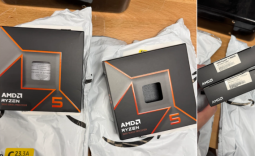 Redditor receives not one but TWO empty boxes of Ryzen 5 9600X from Amazon
 Xbox Series X25 Limited Edition Console is priced at $900, arrives November 2026
 Dave Bautista officially cast as Kratos in Amazon's 'God of War' TV Series, replaces Ryan Hurst
 Take-Two begins the hunt for GTA 6 leaker CyberLeek, subpoenas Microsoft and Discord
 PlayStation 6 handheld not expected to stay under $600, warns leaker
 AMD confirms the Radeon RX 9050 4GB will have a tiny 64-bit bus and just 16MB Infinity Cache
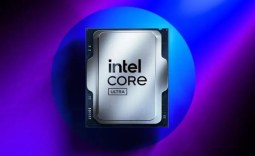 Intel 'Nova-Lake-S' 28-core CPU with bLLC reportedly draws 296W at PL2
 Cooler Master MasterFan A120 Fan Review
 GIGABYTE MO27Q2A Gaming Monitor Review: 1440p, 280Hz, and QD-OLED is a winning combination
 Cooler Master V8 ACE 3DHP BLACK CPU Cooler Review
 ASUS ROG Strix XG129C Review: A $199 Gaming Monitor You Don't Play Games On
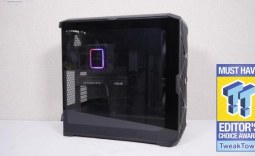 Cooler Master HAF II 500 Mid-Tower Chassis Review
 Corsair HS35 v3 Wireless Gaming Headset Review - An Affordable Winner
 D-Link F518 5G Wi‑Fi 6 AX1800 Mobile Hotspot Review: All-Day Mobile Hotspot
 Bose Lifestyle Ultra Speaker Review - Impressively Detailed Room-Filling Sound
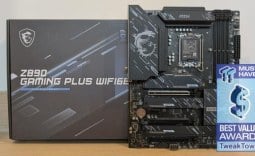 MSI Z890 Gaming Plus WIFI6E Review - Z890 for under $200
 Mortal Kombat (1995) 4K Ultra HD Blu-ray Review
 Using Multiple Monitors? Change these Windows settings for a Better Experience
 Windows Sandbox is The Windows Security Feature Most People Never Use
 I ditched the Windows 11 context menu for this open-source tool, and here's why
 Windows 11 may be encrypting your drive already, and I checked where my recovery key went
 GIGABYTE's 40 Days of INFINITY celebrates 40 Years of Innovation with stunning GeForce RTX graphics cards and rewards
 I swapped File Explorer for this free file manager and finally got the layout I wanted
 How to tell if someone has been using your Windows PC without your permission
 6 Task Manager tips for troubleshooting Windows performance problems
 ASUS ROG's 20th Anniversary Line-up of Premium PC Gaming Gear has Arrived - Here's Everything You Need to Know
 Six File Explorer tips every Windows user should know