







Business, Financial & Legal - Page 10
Catch up on business, finance, and legal news shaping tech, gaming, and science - mergers, lawsuits, antitrust, IPOs, Big Tech earnings, and market trends. - Page 10
Stay Updated
Follow TweakTown for breaking tech news, reviews, and daily updates.


As an Amazon Associate, we earn from qualifying purchases. TweakTown may also earn commissions from other affiliate partners at no extra cost to you.
Apple hit with €500 million fine for violating EU's Digital Markets Act, must pay by July
Apple has violated the European Union's Digital Markets Act, regulators find, and must pay a €500 million fine by July.

The EU recently released its 70-page determination on Apple's ongoing conduct. Last month, European Commission enforcers found that Apple has violated the Digital Markets Act of 2024, and now the agency has published their findings on the matter.
According to the Commission, Apple broke the Digital Markets Act's Article 5(4), which is related to anti-steering provisions (Apple must allow developers to freely communicate with consumers, including offers available outside of the App Store). Apple must pay a sizable 500 million euro fine, the Commission has decided.
NVIDIA CEO Jensen Huang dines with the biggest business partners in Taiwan, including TSMC
NVIDIA founder and CEO Jensen Huang hosted a dinner for its supply chain partners last night, with the biggest and best in Taiwan's technology industry.

Jensen personally saw off TSMC chairman C.C. Wei, with the NVIDIA CEO saying that the TSMC boss will be "very busy" in the future between making next-gen AI GPUs and GeForce RTX series GPUs. The two executives shook hands and said goodbye to each other "tacitly" reports Taiwan media outlet UDN.
Jensen told the media that in the future NVIDIA will build AI supercomputers all over the world, including Taiwan, and that Taiwan will be very busy. Jensen is expected to announce NVIDIA's new global HQ in Taiwan at Computex 2025 tomorrow, and that the Chinese market will see the company creating the best products for China, all while complying with US export restrictions.
NVIDIA plans new R&D center in Shanghai, should help its AI GPU business in China
NVIDIA CEO Jensen Huang is expected to unveil its new global HQ in Taipei, Taiwan this week with Computex 2025 starting in just a couple of days time, but now we're hearing news that NVIDIA is preparing to build a new R&D facility in Chinahai that would help the company stay competitive with AI GPUs in China.

In a new report from the Financial Times, we're hearing that NVIDIA is reportedly looking to build a new research and development center in Shanghai, China, which would help the company stay competitive in China. NVIDIA has been hit with a sales dive over continuously tightened US export restrictions, so NVIDIA is working around that with this proposed new R&D facility in Shanghai.
NVIDIA CEO Jensen Huang reportedly talked about his plans with Shanghai mayor Gong Zheng when the two met in the city last month, with the usual "according to two people with knowledge of the matter". NVIDIA is leasing a new office space in Shanghai that will house all of its existing employees, as well as room for expansion.
NVIDIA's new global HQ in Taiwan to be unveiled next week at Computex 2025 by CEO Jensen Huang
NVIDIA CEO Jensen Huang will reportedly announce NVIDIA's new global HQ in Taiwan, with the announcement taking place as Computex 2025 kicks off in Taipei, Taiwan.

In new reports from UDN and on X by insider Dan Nystedt, we can expect the big announcement from Jensen as he and his family just landed in Taipei ahead of Computex 2025 in a private jet that flew into Hong Kong according to local media. It's expected that theme of Computex 2025 is "AI Next" with 4800 of the booths at the show, a reported 60% of them will be AI-related.
Local media reports that NVIDIA CEO Jensen Huang flew from California into Taipei, but Jensen was just shaking hands with President Trump and Saudi crown prince Mohammed bin Salman in Saudi Arabia in the last 24 hours. I suspect he would've either flown from Saudi Arabia to California, and then Taipei, but the NVIDIA CEO has been quite the busy man lately between all of these uber-important meetings.
Bill Gates says Elon Musk is responsible for killing the world's poorest children
Bill Gates has said that Tesla and SpaceX CEO Elon Musk is responsible for "killing the world's poorest children" through his cuts to US development assistance.

In a new interview with the Financial Times, Microsoft founder Bill Gates has come out against Elon Musk for the decision made by the group the Tesla CEO formed, called the Department of Government Efficiency (DOGE), which is tasked with cutting over-spending throughout the US government. According to reports, DOGE shut down the US Agency for International Development in February, which Gates says has left life-saving food and medicines expiring in warehouses, resulting in the resurgence of diseases such as measles, HIV, and polio.
More specifically, Gates said Musk has canceled grants to a hospital in Gaza Province and Mozambique, which provided the necessary medical care to prevent women from transmitting HIV to their babies. Gates said that Musk did this under the belief that the US was supplying condoms to Hamas in Gaza in the Middle East.
Apple could order a chunky $60 billion worth of chips from TSMC in 2025 alone says analyst
Apple is expected to order up to $60 billion worth of chips from TSMC in 2025 alone according to analysts, which will push the Taiwanese semiconductor leader to over NT $1 trillion of revenue this year.

The analysis is based on how much of TSMC's share in Apple's products is growing, with TSMC's new Arizona, USA-based semiconductor fabs to play a key role in Apple's continued releases of iProducts. Apple CEO Tim Cook has been adamant that his company is TSMC Arizona's largest customer, with its bleeding-edge 2nm process node being a key part of increasing the value of Apple's orders with TSMC.
In a new report from Taiwan's Economic Daily, we're hearing that analysts think that new 2nm orders from Apple should reach around NT $1 trillion (around $33 billion USD or so) in 2025, and that's just for new 2nm orders. TSMC earned around $90 billion of revenue in 2024, with revenue growth expected for TSMC coming from an increase in pricing across Apple's entire product stack since TSMC Is the sole semiconductor provider.
TSMC fab prices in the US surge, with NVIDIA GPU price rises for GeForce RTX and AI GPUs
TSMC has reportedly increased its wafer costs at its US-based semiconductor plants, with NVIDIA GPU prices expected to "rise across the board" with both gaming and AI GPU price rises on the way.

In a new post by insider @Jukanlosreve on X, DigiTimes supply chain sources have said NVIDIA is "facing multiple crises" with a reported $5.5 billion write-down on its Q1 2025 earnings thanks to the ban on its H20 AI GPUs entering China seeing CEO Jensen Huang running between the US and China to cull the impact and help pursuading the Trump administration to chill on its AI chip restrictions.
In order to maintain stable profitability, NVIDIA has reportedly raised official prices for almost "all of its products" allowing its partners to increase prices accordingly. NVIDIA launched its high-end GeForce RTX 5090 earlier this year, with custom ASUS variants launching for around NT $90,000 but surging past NT $100,000 through distribution channels, an increase of over 10%. Meanwhile, Hopper H200 and Blackwell B200 AI GPU modules and server prices have also increased.
Intel Foundry rumored with possible Intel 18A process node orders with Intel, Google and NVIDIA
Intel is reportedly deep in discussions with NVIDIA, Google, and Microsoft to use its Intel 18A process node (classified as 2nm) for their upcoming chips, which would move some large orders away from TSMC.

In a post shared on X by insider @Jukanlosreve and reported by Korean media outlet Chosun, we're hearing that Intel Foundry's fresh new Intel 18A process node will enter stable mass production in the second half of the year, with Intel officially announcing in early April that 18A had entered risk production.
Intel Foundry being in discussions with the likes of NVIDIA, Google, and Microsoft could be a masterstroke move against TSMC in a world now controlled through tariffs under the Trump administration. Intel is a US-based company, and TSMC is a Taiwan-based company... if Intel is using its Intel Foundry semiconductor manufacturing arm on US soil, making and providing chips to US companies... then there are no tariffs.
Microsoft's $69 billion Activision deal: Investigation verdict released
Microsoft's purchase of Activision in 2023 was the most expensive video game acquisition of all time, and with that title comes a lot of regulatory scrutiny to ensure the deal didn't violate any antitrust laws that made the market unfair for competition.

The $69 billion deal attracted considerable attention at the time and has certainly given Microsoft and its gaming brand, Xbox, a massive boost in the market. However, with a deal of this proportion, regulators such as the Federal Trade Commission (FTC) wanted to get involved to ensure everything was done legally. An investigation was launched into the deal. The investigation results have now been published, and Microsoft has been found completely clean of any wrongdoing.
Bloomberg's legal team delved into the details of the document posted by the United States Court of Appeals for the 9th Circuit, which stated in quite heavy language that Microsoft hasn't violated any antitrust laws with its acquisition of Activision Blizzard King, and most notably, the conclusion of the investigation will "reshape how the Federal Trade Commission reviews deals involving rapidly evolving technology."
AMD's Client and Gaming revenue grew by 26% in Q1 2025, thanks solely to Ryzen
AMD has posted its first quarter 2025 financial results, and with $7.4 billion in revenue and a gross margin of 50%, it's good news. The company's impressive revenue was once again driven by growth in the Data Center segment, which saw a first-quarter revenue increase of 36% year over year.

AMD CEO Dr. Lisa Su cites the company's expanding 'data center and AI momentum' as playing a key role in its continued success (this is the fourth consecutive quarter of growth). However, AMD's Client and Gaming segment seems to be doing well, too, with revenue up 28% year over year.
This covers AMD Ryzen products for desktop and mobile devices, Radeon GPUs, and hardware for consoles like the PlayStation and Xbox Series X|S. However, AMD's Ryzen processors grew revenue here, with Client revenue growing by a massive 64% year over year. AMD's Gaming business, on the other hand, fell by 30%, even with the recent launch of the Radeon RX 9070 Series.
AMD rumor: abandons 4nm orders with Samsung Foundry, shifts 4nm to TSMC Arizona for EPYC CPUs
AMD has reportedly abandoned the use of Samsung Foundry's SF4X process node, after reports suggested the company would be mass-producing its I/O dies for EPYC server CPUs on Samsung 4nm.

In a new post on X by insider @Jukanlosreve, we're hearing that AMD has "decided not to use Samsung Foundry's SF4X process" after reports back in February 2025 that it would be using the process node for its I/O die on EPYC processors. We should expect AMD to shift those orders over to TSMC and its new Arizona plant in the US for these 4nm chips.
AMD was reportedly exclusively collaborating with Samsung on its new SF4X process node, with the new SF4X node used on its EPYC server CPUs, Radeon APUs, and even Radeon GPUs, with AMD using a dual-sourcing strategy between TSMC and Samsung Foundry, which would've been a big deal (mostly for Samsung here).
Elon Musk officially has his own city under the banner of SpaceX
After years of it being a possibility, Elon Musk's Starbase facility in Texas is now an official city after residents of the area approved the decision.

The Starbase facility is located on the southern tip of Texas and is where Elon Musk's space-faring company, SpaceX, operates its rocket launches/development. The ruling to turn Starbase into an official city came after residents voted to incorporate a patch of land as a new municipality in an election held on Saturday. Out of the 283 eligible voters, the majority are SpaceX employees, with 212 votes in favor of the decision and six opposing it.
As for the size of the new city, Starbase's jurisdiction will be about 1.6 square miles, have its own local government, a mayor, two commissioners, taxation, and other local infrastructure. The first mayor of the city will be Bobby Peden, a SpaceX vice president.
Continue reading: Elon Musk officially has his own city under the banner of SpaceX (full post)
TSMC's new 2nm node progressing smoothly: matching 5nm, surpassing 3nm, 7nm at similar stages
TSMC's next-gen 2nm process node (N2) is progressing smoothly, with defect density (D0) matching its 5nm process, and surpassing its 3nm and 7nm nodes at similar stages of development.

We can expect mass production of TSMC's new 2nm process node in Q4 2025 according to the latest reports from Taiwanese media outlet Ctee, with AMD's new EPYC "Venice" CPU being the first to complete tape-out on 2nm, and Apple's next-gen iPhone 18 expected to use 2nm chips. Intel is also reportedly using TSMC's new 2nm process node for the compute tiles on its next-gen Nova Lake CPUs.
TSMC's list of 2nm clients includes Apple, NVIDIA, AMD, Qualcomm, Intel, MediaTek, and Broadcom. NVIDIA's next-gen Rubin AI GPU family will arrive on 3nm at first in 2026, with a refresh possibly hitting 2nm in the future. TSMC chairman C.C. Wei recently emphasized that demand for 2nm is "unprecedented" and far exceeds the demand of 3nm.
Apple posts $95.4 billion of revenue for Q1 2025, iPhone still the 'bread and butter'
Apple has posted its Q2 2025 financial results, with the company pulling in $95.4 billion in revenue -- down from the record-breaking $124.3 billion in revenue from the previous quarter -- with its "bread and butter" doing quite well, as always.

Apple broke industry estimates for its Q2 2025 revenue, and enjoyed some healthy business in all departments apart from one. Apple's "bread and butter" is the iPhone, which pulled in $46.84 billion in revenue, compared to $45.96 billion from the previous quarter: driven by the new iPhone 16e release.
The recent launches of the new 13-inch and 15-inch M4 MacBook Air laptops helped boost up Macrevenue, with $7.95 billion in earnings compared to $7.45 billion in Q1 2025.
Apple to invest over $500 billion in the US thanks to Trump's domestic semiconductor plans
Apple CEO Tim Cook has personally thanked President Trump and his focus on domestic (US) semiconductor manufacturing, pledging that his company would invest $500 billion in the US over the next 4 years.

Tim Cook has promised that Apple will invest $500 billion in the United States in the next 4 years, and that it has a long-standing relationship with domestic suppliers.
Cook said in his virtual presentation during President Donald Trump's celebration of his first 100 days in office: "I want to take a moment to recognize President Trump's focus on domestic semiconductor manufacturing, and we will continue to work with the administration as we invest in these areas".
Take-Two shares drop after GTA 6 is officially delayed
Grand Theft Auto 6 has been officially delayed by Rockstar Games, with the developer saying it needs more time to complete development of the highly anticipated title.

The announcement of GTA 6 being delayed until May 26, 2025, has resulted in Take-Two Interactive's share price sliding by as much as 7% at the time of reporting, marking a deep decline for the publisher. Take-Two Interactive CEO Strauss Zelnick has responded to the announcement of the delay with a recent statement, saying the publisher fully supports Rockstar's decision, and that "While we take the movement of our titles seriously and appreciate the vast and deep global anticipation for 'Grand Theft Auto 6,' we remain steadfast in our commitment to excellence."
Despite the announcement of the delay, Take-Two still anticipates delivering a multiyear period of growth for its business, which will include "enhanced value for our shareholders." More specifically, Take-Two reiterated that it expects it achieve sequential increases in net bookings in fiscal 2026 and 2027, saying it believes it will achieve record levels of bookings during both periods.
Continue reading: Take-Two shares drop after GTA 6 is officially delayed (full post)
Taiwan government enforces 'silicon shield' by restricting TSMC from exporting high-end tech
The Taiwanese government is planning to better control exports of its advanced semiconductor process technologies, as well as outbound semiconductor investments according to new reports.

In a new report from the Economic Daily, we're learning that Taiwanese government officials will enforce the "N-1" technology restriction, which will see TSMC banned from exporting its latest production nodes, and it'll also introduce a penalty for violating the N-1 restriction.
Taiwan Premier Cho Jung-tai has said that the new N-1 policy will apply to TSMC's planned production in the United States, with only one generation older allowed to be deployed overseas. However, TSMC's most advanced semiconductor process technology is its current N3P process node, but before the end of the year we'll see TSMC begin fabbing new chips on its N2 process node, which will then become the flagship process node.
TSMC could skip High-NA EUV for its next-gen A14 process for cost-efficiency over performance
TSMC is reportedly not using High-NA EUV lithography machines for its next-gen A14 (1.4nm) process node, and will instead continue to rely on its conventional 0.33-NA EUV machines.

The news was revealed at the North American Technology Symposium recently, with the move leading semiconductor competitors like Intel Foundry with a technological edge over TSMC (Intel spent billions buying ASML's bleeding-edge High-NA EUV lithography machines).
TSMC's SVP Kevin Zhang said during the recent North American Technology Symposium: "TSMC will not be using high-NA EUV lithography to pattern A14 chips, manufacturing of which is scheduled to start in 2028. From 2 nanometers to A14, we don't have to use high-NA, but we can continue to maintain similar complexity in terms of processing steps. Each generation of technology, we try to minimize the number of mask increases. This is very important to provide a cost-efficient solution".
TSMC has 24 semiconductor fabs under construction worldwide, 83,825 employees in total
TSMC currently has 24 semiconductor factories under construction across Taiwan, the United States, Germany, and Japan, but the company has a shortage of fab workers that could slow things down.

In a new report from DigiTimes, we're hearing that almost all of the teams that TSMC has in Taiwan that can be mobilized, have been, and that hiring locals in Taiwan has caused issues to get worse across its global supply chain. TSMC had 83,825 employees at the end of 2025, which is a huge increase from the 51,000 staffers it employed at the end of 2019.
However, turn over of TSMC employees has reportedly been high enough that it has pushed the company to increase salaries and bonuses, with overseas operations being a challenge to figure out local work culture. Japan is very similar to Taiwan, but there aren't many workers to fill positions, while the shortage of workers in the US has made it hard for TSMC to deal with America's "work-life balance" idea.
TSMC plans next-gen A14 process node (1.4nm) production for 2028, while 1nm is expected in 2029
TSMC says that it remains on track to begin high-volume production of next-gen chips on its new N2 (2nm-class) process node, the first production tech that uses gate-all-around (GAA) nanosheet transistors, in the second half of this year.

The news was unveiled during TSMC's recent North American Technology Symposium 2025 event, with its new N2 node to power multiple products this year from AMD, Apple, and most recently, Intel.
TSMC's next-gen A14 process node, when compared against the upcoming N2 process, will have 15% more performance using the same power, or up to 30% power reduction at the same speed, along with over 20% more logic density. TSMC will be evolving its NanoFlex standard cell architecture to NanoFlex Pro, enabling greater performance, power efficiency, and design flexibility.
 Giveaway: 12 Winners Will Score MONTECH NX400 and NX600 CPU Coolers
 GTA 6 leaks have reportedly led to a morale drop at Rockstar, with Netflix frustrated as well
 The Blood of Dawnwalker won't hit 60 FPS on any console, PS5 Pro tops out at 40 FPS
 AMD claws back ground against Intel in the CPU market, climbs to 35% share in desktop CPUs
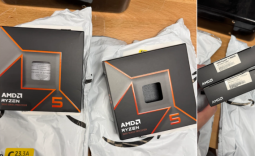 Redditor receives not one but TWO empty boxes of Ryzen 5 9600X from Amazon
 Xbox Series X25 Limited Edition Console is priced at $900, arrives November 2026
 Dave Bautista officially cast as Kratos in Amazon's 'God of War' TV Series, replaces Ryan Hurst
 Take-Two begins the hunt for GTA 6 leaker CyberLeek, subpoenas Microsoft and Discord
 PlayStation 6 handheld not expected to stay under $600, warns leaker
 AMD confirms the Radeon RX 9050 4GB will have a tiny 64-bit bus and just 16MB Infinity Cache
 Intel 'Nova-Lake-S' 28-core CPU with bLLC reportedly draws 296W at PL2
 Cooler Master MasterFan A120 Fan Review
 GIGABYTE MO27Q2A Gaming Monitor Review: 1440p, 280Hz, and QD-OLED is a winning combination
 Cooler Master V8 ACE 3DHP BLACK CPU Cooler Review
 ASUS ROG Strix XG129C Review: A $199 Gaming Monitor You Don't Play Games On
 Cooler Master HAF II 500 Mid-Tower Chassis Review
 Corsair HS35 v3 Wireless Gaming Headset Review - An Affordable Winner
 D-Link F518 5G Wi‑Fi 6 AX1800 Mobile Hotspot Review: All-Day Mobile Hotspot
 Bose Lifestyle Ultra Speaker Review - Impressively Detailed Room-Filling Sound
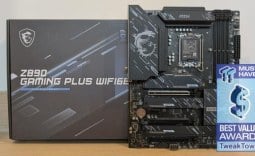 MSI Z890 Gaming Plus WIFI6E Review - Z890 for under $200
 Mortal Kombat (1995) 4K Ultra HD Blu-ray Review
 Using Multiple Monitors? Change these Windows settings for a Better Experience
 Windows Sandbox is The Windows Security Feature Most People Never Use
 I ditched the Windows 11 context menu for this open-source tool, and here's why
 Windows 11 may be encrypting your drive already, and I checked where my recovery key went
 GIGABYTE's 40 Days of INFINITY celebrates 40 Years of Innovation with stunning GeForce RTX graphics cards and rewards
 I swapped File Explorer for this free file manager and finally got the layout I wanted
 How to tell if someone has been using your Windows PC without your permission
 6 Task Manager tips for troubleshooting Windows performance problems
 ASUS ROG's 20th Anniversary Line-up of Premium PC Gaming Gear has Arrived - Here's Everything You Need to Know
 Six File Explorer tips every Windows user should know