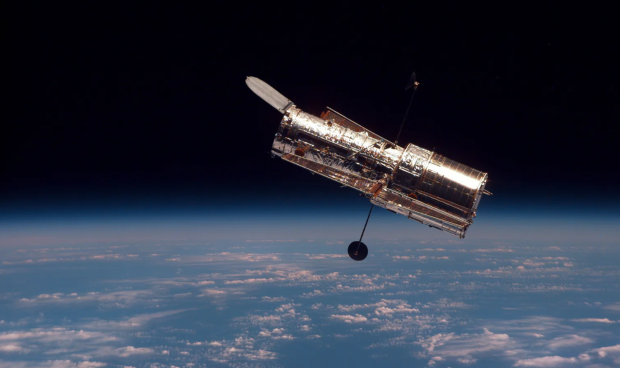




NASA has released an incredible new Hubble Space Telescope image that showcases a cosmic bridge linking two galaxies.
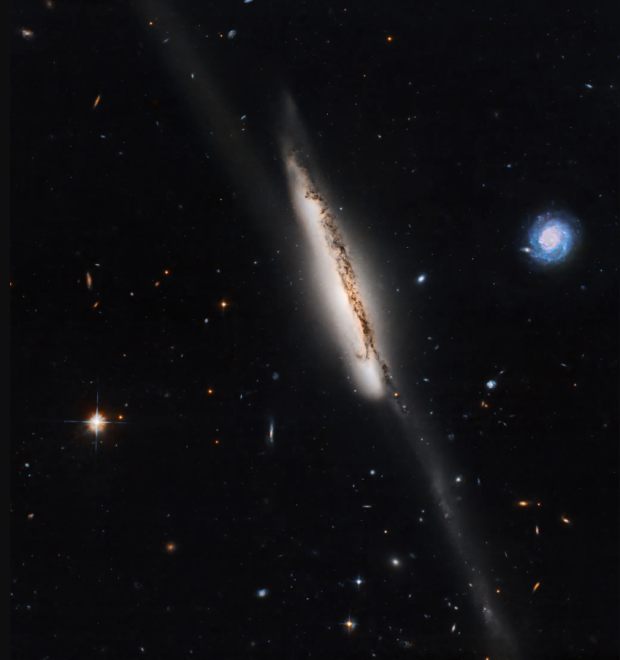
The galaxy seen above is part of a galactic group called Arp 295, and what can be seen in the image is an incredible 250,000 light-year-long bridge of stars and gas that stretches between two galaxies, Arp 295a to Arp 295b. The galactic cluster imaged above is located 210 million light years from Earth and gives astronomers a peak into the future of our own Milky Way galaxy as it is anticipated that it will collide with the closest neighboring galaxy, Andromeda, in approximately 4 billion years.
So, how did this cosmic bridge form? Reports indicate that following the collision of the two Arp galaxies, they began to circle each other, with each's gravitational pull eventually drawing in the other and removing gas, dust, and stars. This process can take billions of years, and eventually, the galaxies merge, which forms an overall new shape for the now singular galaxy.
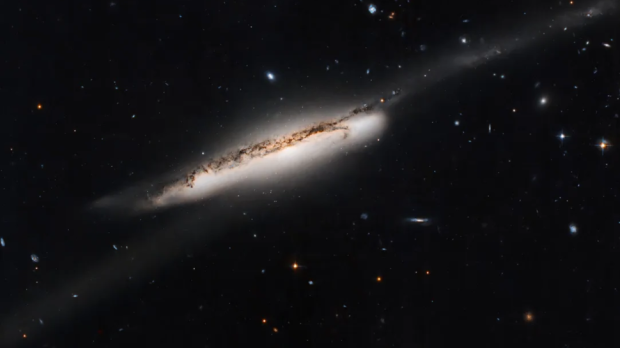
Additionally, at the center of each of the galaxies is a supermassive black hole, which also merge together, forming one giant supermassive black hole. These blackholes spiral around each other, creating angular gravitational waves.
"The two spiral galaxies are approximately 2.5 million light-years away and are drawing together at a rate of around 671,000 miles per hour," per Space.com
- Read more: ASUS releases ROG Strix XG27ACS 180Hz refresh rate QHD Fast IPS display
- Read more: Apple suggests iOS 18 could be the biggest update in the company's history
- Read more: Nintendo Switch 2 slated to launch without its best rumored feature
- Read more: LG officially launches the $900 27GS95QE UltraGear OLED gaming monitor in the US
![Photo of the PlayStation Store Gift Card [Digital Code]](https://m.media-amazon.com/images/I/41cEZpeUA1L._SL160_.jpg)