




A study on the remote-controlled cockroach titled "Integration of body-mounted ultrasoft organic solar cell on cyborg insects with intact mobility" has been published in the journal npj Flexible Electronics.
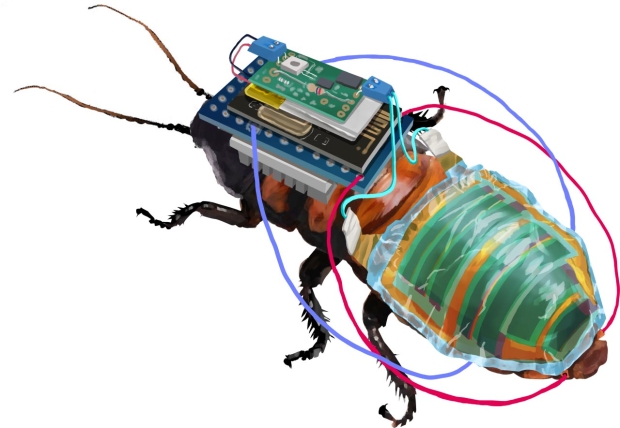
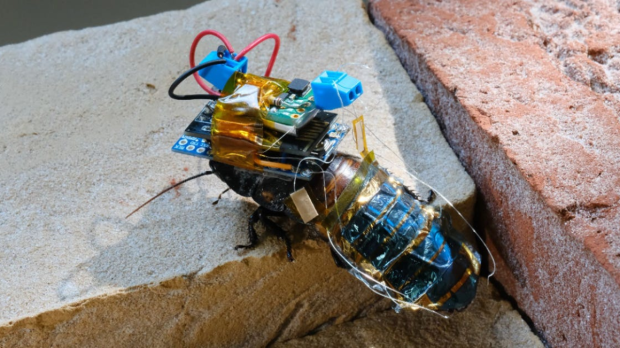
An international research team led by the RIKEN Cluster for Pioneering Research (CPR) in Japan has created a system that allows them to make 'remote-controlled cyborg cockroaches,' that comprises a small, wireless control module, a rechargeable battery, and a solar cell. The cockroach can still move unencumbered by the electronics, as they are relatively thin and flexible. The particular cockroaches used were Madagascar cockroaches, measuring approximately 6 centimeters (2.4 inches) long.
The team's device brings cyborg insects (part insect, part machine) closer to becoming a practical reality, which scientists have been trying to design for applications like inspecting hazardous areas and monitoring the environment. To make a cyborg insect viable, the insect must be remotely controllable for significant lengths of time, meaning its electronics must be able to remain charged for as long.
Instead of developing charging stations, which would mean the insects have to return periodically from wherever they are being utilized, the onboard solar cell allows the cyborg's rechargeable battery to remain charged continuously. The cell is 0.004 millimeters thick, and according to Kenjiro Fukuda, the team leader at RIKEN CPR, "the body-mounted ultrathin organic solar cell module achieves a power output of 17.2 mW, which is more than 50 times larger than the power output of current state-of-the-art energy harvesting devices on living insects."
"Considering the deformation of the thorax and abdomen during basic locomotion, a hybrid electronic system of rigid and flexible elements in the thorax and ultrasoft devices in the abdomen appears to be an effective design for cyborg cockroaches. Moreover, since abdominal deformation is not unique to cockroaches, our strategy can be adapted to other insects like beetles, or perhaps even flying insects like cicadas in the future," continued Fukuda.
You can read more from the study here.