












Building an x86 system without any components from Intel, AMD, or NVIDIA is starting to become more feasible thanks to growing competition from Chinese CPU and GPU makers. YouTuber GPUSpecs published a video pairing the LX7G100 with a Zhaoxin KX7000 CPU to see how a gaming PC with no Intel, AMD, or NVIDIA components fares in games. Performance was playable, with more demanding AAA games such as Cyberpunk 2077 achieving just above 30 FPS.
The YouTuber initially ran the Zhaoxin KX7000 with 16GB of DDR4 and a Moore Threads MTT S80 GPU with 16GB of GDDR6 memory in a previous video. But the system struggled to play any graphically intensive games such as Red Dead Redemption 2 and Black Myth: Wukong at near 30 FPS due to immature graphics drivers. To fix this, the YouTuber swapped the MTT S80 for a Lisuan LX7G100 featuring more stable and mature graphics drivers.
Popular Now: GTA 6 physical copies in Japan have a 170-day expiration dateThe much more potent LX7G100 was able to boost frame rates to the point where performance was being bottlenecked by the CPU. Forza Horizon 5 achieved 62.5 FPS average at 1080p using low settings, Cyberpunk 2077 achieved 32.8 FPS average, and Red Dead Redemption 2 achieved 39 FPS average at 1080p medium settings. Shadow of the Tomb Raider in DX11 mode provided unplayable performance around 15 FPS, but in DX12 mode the game ran considerably better, achieving 62 FPS average at the highest settings at 1080p. Resident Evil 3 ran at 1080p, achieving 67.2 FPS average. Black Myth Wukong ran at 30 FPS average at 1080p low settings.
- Read more: This Gaming PC doesn't include any Intel, AMD, or NVIDIA hardware
- Read more: Auto SR on the ROG Xbox Ally X improves performance by around 30% in several games when upscaling from 720p to 1080p
- Read more: World's first Panther Lake gaming tablet tested, achieves over 60 FPS in Cyberpunk 2077 high settings without frame-gen
The only issues the system had were in DX11 games, as the Shadow of the Tomb Raider results alluded to, demonstrating one of the LX7G100's weaknesses in its graphics driver optimizations. Rocket League achieved just 33.7 FPS average at high settings at 1080p, and in GTA V the GPU was only capable of outputting 12.1 FPS average at the highest settings at 1080p despite the game's age.
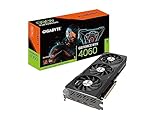
The benchmark results show that building a gaming PC with purely Chinese components for the CPU and GPU is no longer unfeasible as long as you stick with games that support modern APIs such as DX12. The LX7G100 is one of the latest Chinese GPUs on the market, built on a 6nm process node with 6,144 cores, 12 GB of GDDR6 memory, and a 225W TDP. The best part of the LX7G100 is its rather mature graphics drivers compared to its Chinese competitors, featuring the first GPU drivers made in China to boast Microsoft WHQL certification. The GPU is also genuinely performant with advertised RTX 4060-class performance, though benchmark results show the GPU performs more in line with an RTX 3060.

Frequently Asked Questions
TweakBot answers common questions about this news using TweakTown's own coverage from this page and related content from our archive. Tap a question to reveal the answer, or type your own below.
What frame rates did the Lisuan LX7G100 achieve in Cyberpunk 2077, Forza Horizon 5, and Red Dead Redemption 2 on the Zhaoxin KX7000 system?
Which games showed serious DX11 performance issues with the LX7G100 and how did DX12 compare?
Which games ran well at 1080p on the LX7G100 and which were unplayable or underperformed (with example settings/FRAMES)?
What driver advantages does the LX7G100 have compared to other Chinese GPUs according to the article?
Have a question not listed here? Ask below and TweakBot will answer it.

CPU performance was arguably the weakest point of the YouTuber's setup, thanks primarily to the Zhaoxin KX7000's very low 3.7GHz clock speed. But the Zhaoxin KX7000 is far from the best CPU made in China. More advanced chips such as the Hygon C86-4G reportedly feature performance matching Intel's Core i7 Raptor Lake CPUs. If the YouTuber used one of these newer chips, that would likely help alleviate the CPU bottleneck issues.


 This Gaming PC doesn't include any Intel, AMD, or NVIDIA hardware
 Panther Lake Arc B390 iGPU on SO-DIMM memory performs worse compared to using LPDDR5X, 16% slower in 3DMark
 YouTuber proves Snapdragon X2 Elite has the performance chops to run well in a theoretical handheld gaming PC
 Chinese GTX 750 'Ti' with 8GB of GDDR5 runs Cyberpunk at over 30 FPS
 Lisuan Technology's LX 7G100 DirectX 12 gaming GPU launches in China
 Thieves stole 16 RAM sticks from Chinese eSports hotels, arrested
 Elder Scrolls 6 roadmap not affected by layoffs, Bethesda says
 Intel and AMD are locking Chinese customers into long-term CPU deals as server chip prices climb more than 40%
 Ubisoft CEO says Sony's PlayStation disc shutdown will not disturb the industry too much
 Vibe coding is flooding the App Store with new apps - on track for record submissions in 2026
 Geekbench 7 is out with CUDA support, smarter multi-core scoring, and new AI workloads across all major platforms
 GTA 6 physical copies in Japan have a 170-day expiration date
 Ubisoft believes remakes can be more profitable than new releases, after Black Flag Resynced exceeds expectations
 AMD is preparing the 8-core Ryzen 7 9800HX3D CPU for laptops with 96MB L3 cache
 Blizzard fires World of Warcraft game master for abusing god-like powers
 Thrustmaster T.Flight HOTAS 5 MSFS Edition Review
 SteelSeries Arctis Nova Pro Omni Wireless Headset Review - One Headset to Rule Them All
 SteelSeries Arctis Nova 7 Wireless Gen 2 Headset Review - New and Improved, But Is It Enough?
 AMD Ryzen 7 7700X3D Review - Days of Future Past
 Samsung 990 2TB SSD Review - Ninth Gen QLC at PCIe Gen4 Speeds
 ASUS ExpertBook Ultra (Panther Lake) 14" Business Laptop Review
 ASUS ROG Raikiri II Xbox Wireless Controller Review - Ready to Take Control
 MOZA FMP18 Panel Bundle Review: authentic F/A-18 Hornet cockpit controls for flight sims
 Micron 6600 ION 245.76TB Enterprise SSD Review - Best in Class Programming Speeds
 MOZA MA3F EFCM Flight Control Module Review: authentic Airbus A320 autopilot panel for simulators
 The Ultimate Guide to Personalizing Your Windows 11 Taskbar
 How to Turn Your Windows Laptop Into a Second Monitor with Miracast and Wireless Display in Minutes
 6 Mistakes to Avoid When Buying a Windows Laptop
 I capped Windows Update's bandwidth with Delivery Optimization, and my downloads stopped choking
 I use this decade-old free tool that finds files faster than Windows Search does
 I install and update most of my apps with this Windows command now, and I stopped downloading sketchy installers
 Hisense U6SF 65-inch MiniLED TV: High Performance Meets Leisurely Convenience
 I stopped digging through Windows menus after I set up this one folder
 Don't sell your Windows laptop until you do these things
 6 PC cleaning mistakes to avoid for safer hardware maintenance