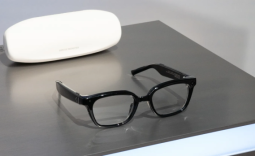


Samsung is reportedly working on a wearable future that lives on your face, which many tech experts have pegged as being the format that will replace the smartphone.

Leaked details of the Galaxy Glasses, including a companion app and integration with existing Galaxy wearables, suggest a seamless ecosystem designed to rival Meta's Ray-Ban smart glasses, which have become the most popular AI-infused smart glasses.
Popular Now: RTX 5090 owner adds two 8-pin connectors to GPU with daughterboard mod dropping cable temps below 40CLeaker SammyGuru showcased the Galaxy Glasses Manager app, revealing a familiar setup process that includes enabling permissions and pairing devices. Once setup is complete, the app shows important status information such as battery levels, software updates, and AI assistance.
The glasses appear to support hands-free photo capture, voice-driven help, and automatic media syncing to Galaxy phones. So, users will be able to capture images/video with the new glasses and then automatically sync that media to a Galaxy smartphone.
Additional leaked details point to a Galaxy Watch companion app and gesture controls via the Galaxy Ring, reinforcing a tightly connected wearable ecosystem. Unlike most smart glasses, these appear to be designed with an AI-first, no-display approach - a bold move that aligns with Samsung's recent experiments with Android XR and Gemini integration.

Story Q&A
Powered by TweakBot
From TweakTown's coverage of this story.
How will automatic media syncing handle storage and transfer — will it upload directly to the phone or to cloud storage?
Can the Galaxy Ring gesture controls be used standalone to operate the glasses without a paired watch?
What kind of battery life or charging status details does the app display for the glasses during typical use?
Want something else? Ask TweakBot.

This approach of integrating smart glasses into an established ecosystem could make the Galaxy Glasses a much more attractive option, as native interoperability between apps, platforms, and services is something Meta currently can't offer customers. The next step for Samsung is likely a full UI leak or hardware render. If the Galaxy Glasses launch as expected, they could be the next big boost the smartglasses industry needs to push adoption even further.