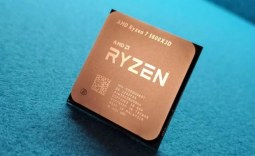
As previously reported, AMD is bringing back the undisputed AM4 gaming champion, the Ryzen 7 5800X3D 10th Anniversary Edition, on June 25, starting at $349. But Team Red didn't simply flip a switch to restart production of the iconic processor. Instead, the chip had to be re-engineered from the ground up for a newer 3D V-Cache stacking process after the original production method was no longer available.
In an interview with Tom's Hardware, AMD Senior VP and GM of Ryzen, David McAfee, explained that the original Ryzen 7 5800X3D used an early version of TSMC's SoIC hybrid bonding process, which enabled AMD to stack the additional cache die directly on top of the CPU compute die. Since then, TSMC has moved on to newer generations of its 3D stacking technology, and that older process was simply no longer available.

McAfee described reworking the chip for the second-generation stacking process as a "labor of love" for the company's engineers. That work included building samples, testing reliability, and validating the bonding process all over again. This also explains why the CPU disappeared from normal retail channels for so long, even as AM4 users kept demanding it.
When that first-gen facility really kind of went offline, then it meant there was a whole, you know, body of engineering work that had to be done to understand if we could even migrate the 5800X3D to the new, second-generation stacking process.
- David McAfee, AMD VP and GM Radeon and Ryzen

While the new Ryzen 7 5800X3D uses "second-generation SoIC," this is not the reversed stacking seen in the Zen 5 9000-series X3D processors, where the 3D V-Cache is flipped to the top of the die. It simply means the method of attaching the cache chiplet to the CPU chiplet had to be reworked. Practically, users should see no real-world performance difference between the new chip and the original. But the 10th Anniversary Edition remains a fully requalified 5800X3D using a newer cache-stacking process, ready for another retail run on the AM4 platform.
The AMD Ryzen 7 5800X3D is still a fantastic gaming processor today. You could pair a bleeding-edge RTX 5080 or Radeon RX 9070 XT with an older AM4 machine running a 5800X3D and lose virtually nothing in gaming performance. Given the current market state, with AM4 still thriving and DDR4 memory modules continuing to sell strongly, AMD saw this as the perfect time to bring back the first-ever X3D chip.