

Intel's Wildcat Lake is finally making its retail debut, with the first wave of laptops hitting shelves in China tomorrow. Honor is among the first out of the gate with its MagicBook X14 2026. Though the company is keeping the official price sticker under wraps, the storefront's installment calculator suggests a sharp ~$650 entry point for the mainstream 16GB/512GB model.
Honor's MagicBook X14 is part of its thin-and-light, affordable Windows laptop series. For now, listings remain exclusive to Honor's Chinese storefront, with sales expected to go live tomorrow, May 18th. A larger variant, the MagicBook X16, should follow in short order as well, being among the teased models at the Wildcat Lake launch.
Popular Now: RTX 5090 owner adds two 8-pin connectors to GPU with daughterboard mod dropping cable temps below 40CAs it stands, we've seen only one global listing for Wildcat Lake: HP's Omnibook 5 at an eye-watering $1,229. In any case, Intel has a sizeable list of partners with an international presence, including Lenovo, MSI, Acer, ASUS, and Dell. It is projected that Google's forthcoming Googlebooks may also be powered by these chips.

While the listing for the MagicBook X14 does not show a price, we dug through the installment plans. The three-phase interest-free plan requires three installments of 1,466 CNY ($215) each, for a total of approximately 4,400 CNY ($645). This is in line with the MacBook Neo's price in the region, at 4,599 CNY ($675), excluding national subsidies and education discounts.
For the price tag, you're getting the Core 5 320, featuring 2P+4LPE cores, a boost clock of 4.6 GHz, and a 2 Xe3 core integrated GPU. The laptop features 16GB of DDR5 memory and 512GB of storage. It is unclear whether the RAM is upgradable or soldered in place. Still, this is a solid upgrade over what the Neo offers, though the build quality, firmware, and the chip's real-world performance still remain to be seen.
The MacBook Neo's massive success even forced Apple to contract TSMC to produce extra A18 Pro chips. Windows alternatives are feeling the squeeze, further crippled by rising DRAM costs. Put bluntly, Windows laptops simply haven't been able to combine processing power, build quality, battery life, and stable firmware in this aggressive price bracket.
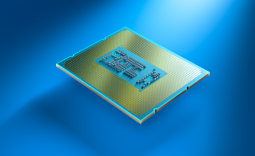
Enter Intel's Wildcat Lake. Early benchmarks reveal these chips can go toe-to-toe with the MacBook Neo while remaining remarkably power-efficient. Under the hood, Wildcat Lake is essentially a scaled-down, single-channel variant of the Panther Lake architecture. Stripping away the Ultra moniker for the standard Core Series 3 branding, it's positioned as the true successor to Raptor Lake (13th Generation and Core Series 1).
If you're eyeing a Wildcat Lake laptop, keep your eyes peeled for Computex next month. We should see more of these laptops debut globally throughout late May and June, and get a better look at how they stack up versus the Neo through independent reviews.