












NVIDIA will be offering its next-gen Vera CPUs as a standalone part of the infrastructure, with wherever the CPU workload is, it will run on NVIDIA CPUs... meaning it'll compete against AMD's mega-successful EPYC processors as well as Intel's fleets of Xeon CPUs.
In a new interview between Bloomberg and NVIDIA CEO Jensen Huang regarding the upcoming Vera CPU plan, Jensen said: "For the very first time, we're going to be offering Vera CPUs. Vera is such an incredible CPU. We're going to offer Vera CPUs as a standalone part of the infrastructure. And so not only, not only can you run your computing stack on NVIDIA GPUs, you can now also run your computing stack, wherever their CPU workload, run on NVIDIA CPUs".
Jensen continued, adding: "Vera is completely revolutionary...Coreweave is going to have to race if Coreweave's going to be the first to stand up Vera CPUs. We haven't announced any of our CPU design wins, but there are going to be many".
NVIDIA's new "Vera" CPU is powered by 88 custom Armv9.2 "Olympus" CPU cores that use Spatial Multithreading technology, unlocking it to an 88C/176T processor. Vera features up to 1.5TB of LPDDR5X memory, with up to 1.2TB/sec of memory bandwidth, perfect for memory-intensive computing workloads.
There's also a second-gen Scalable Coherency Fabric that features up to 3.4TB/sec of bi-section bandwidth, connecting the 88C/176T of power across a unified monolithic die that removes latency issues in competing chiplet architectures. NVIDIA's new Vera chip also has second-gen NVLink Chip-to-Chip technology, offering up to 1.8TB/sec of coherent bandwidth for the external Rubin GPU.



 NVIDIA's 'Vera' CPUs could outperform and outsell competing x86 offerings from Intel and AMD
 NVIDIA's Arm-based 'Vera' CPU benchmarked, beats Intel Xeon and AMD EPYC CPUs
 AMD says its next-gen EPYC 'Venice' processor is over 3X faster than NVIDIA Vera
 Intel officially launches Xeon 6+ 'Clearwater Forest' CPUs, up to 288 cores, built on Intel 18A
 AMD's confirms Instinct MI400 series AI GPUs drop in 2026, next-gen Instinct MI500 in 2027
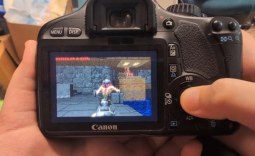 Modder manages to run DOOM on a 16-year-old Canon EOS 550D DSLR Camera
 Leaked Steam Frame unboxing video hints at an imminent launch
 Call of Duty: Modern Warfare 4's PC Shader Compilation will run before you even launch the game
 Call of Duty Modern Warfare 4 will run on a GPU with only 3GB of VRAM
 LG unveils FLiPP, its 'dream next-generation OLED technology'
 AMD on track for a 20X increase in AI rack-scale energy efficiency by 2030
 Windows 11 is finally adding per-app controls for desktop programs accessing your microphone, camera, and location
 PlayStation is rebooting Horizon Hunters Gathering to be a traditional co-op game and not a live-service thing
 Redditor grabs a Radeon RX 7900 XT for just $226, even when it appeared 'out of stock'
 Seasonic's new 1600W PSU is the first ATX power supply with 80 PLUS Ruby certification
 GIGABYTE MO27Q2A Gaming Monitor Review: 1440p, 280Hz, and QD-OLED is a winning combination
 Cooler Master V8 ACE 3DHP BLACK CPU Cooler Review
 ASUS ROG Strix XG129C Review: A $199 Gaming Monitor You Don't Play Games On
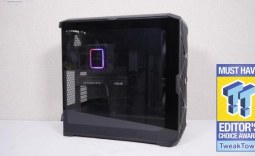 Cooler Master HAF II 500 Mid-Tower Chassis Review
 Corsair HS35 v3 Wireless Gaming Headset Review - An Affordable Winner
 D-Link F518 5G Wi‑Fi 6 AX1800 Mobile Hotspot Review: All-Day Mobile Hotspot
 Bose Lifestyle Ultra Speaker Review - Impressively Detailed Room-Filling Sound
 MSI Z890 Gaming Plus WIFI6E Review - Z890 for under $200
 Mortal Kombat (1995) 4K Ultra HD Blu-ray Review
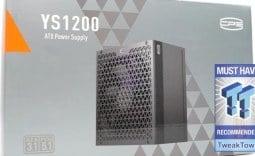 CPS PCCOOLER YS1200 ATX 3.1 80 PLUS Gold PSU Review
 Using Multiple Monitors? Change these Windows settings for a Better Experience
 Windows Sandbox is The Windows Security Feature Most People Never Use
 I ditched the Windows 11 context menu for this open-source tool, and here's why
 Windows 11 may be encrypting your drive already, and I checked where my recovery key went
 GIGABYTE's 40 Days of INFINITY celebrates 40 Years of Innovation with stunning GeForce RTX graphics cards and rewards
 I swapped File Explorer for this free file manager and finally got the layout I wanted
 How to tell if someone has been using your Windows PC without your permission
 6 Task Manager tips for troubleshooting Windows performance problems
 ASUS ROG's 20th Anniversary Line-up of Premium PC Gaming Gear has Arrived - Here's Everything You Need to Know
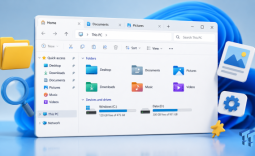 Six File Explorer tips every Windows user should know