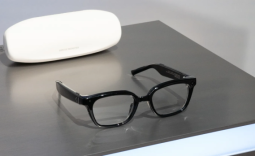


Lenovo has jumped into the AI smart glasses market with the unveiling of V1, a pair of smart glasses that are lighter than any other competitor.


One of the biggest problems when it comes to smart glasses is the bulkiness that users have to endure, and while companies such as Meta are ironing out this issue with each new generation, AI smart glasses are generally still thicker and heavier than a traditional pair of reading glasses. This isn't surprising, given that AI smart glasses need to house all the necessary components within the glasses' frame, but the weight trade-off may outweigh the functionality they offer, making them a dealbreaker for some users.
Lenovo is looking to scoop those users up with the AI Glasses V1, which come in at just 36g, making them lighter than the Rokid Glasses, which weigh 49 g. The V1 glasses are only 1.8mm thick and feature a resin diffraction waveguide display that has a peak brightness of 2,000 nits. Additionally, the V1 glasses support a 15 x 11 mm eye-box, which assists in keeping visuals stable as the user is moving their head. Users can also switch between monocular and binocular display modes.

Moving to the software, Lenovo has integrated the Tianxi AI assistant into the glasses, which is capable of voice commands, real-time translation with on-screen text or voice, and information search. Furthermore, the V1 comes with microphones and speakers integrated directly into the frame of the glasses, and the ability to be linked to a smart ring accessory for creators who want to take advantage of the V1's teleprompter capabilities.
Lenovo claims the V1 will last up to 10 hours when using the live translation feature, 4 hours in teleprompter mode, and 250 hours in standby. Charging time is estimated at around just 40 minutes from zero percent all the way to 100%.

In an effort to make the lightest pair of AI smart glasses available, Lenovo has removed components such as the camera, which many competing wearables are built around, and significantly reduced the size of the battery.
Lenovo has already begun selling the V1 in China for a price of CNY 3,999, which converts to about $562, and preorders are already open. The V1 is expected to become available in China on November 9. Currently, there is no word on when or if Lenovo plans to bring the V1 to Western markets.