












Intel has just confirmed that its next-gen Core Ultra 400 series "Nova Lake" desktop CPUs will feature Coyote Cove P-Cores and Arctic Wolf E-Cores.

In its new 59th Edition of the ISA Extensions Reference, Intel packs in details for its next-generation architectures that will power its next-gen Nova Lake desktop CPUs and its next-gen Diamond Rapids server Xeon CPUs. Both of these new CPUs will be launching in 2026, with full details on the P-Core and E-Core architectures.
Popular Now: Assassin's Creed Odyssey becomes the highest-rated entry in the franchise, thanks to Nolan's 'The Odyssey'Intel will be launching its next-gen Panther Lake laptop CPUs next week, but in 2026 we'll see a new family of consumer desktops CPUs in the new Core Ultra 400 "Nova Lake" CPU family. We've had plenty of leaks over the last year, but now Intel has officially confirmed that Nova Lake will feature Coyote Cove P-Cores and Arctic Wolf E-Cores, successors to the Cougar Cove P-Core and Darkmont E-Core architectures to the soon-to-be-released Panther Lake CPUs.
The new P-Core and E-Core architectures will provide some big changes, including IPC performance improvements, as well as performance-per-watt optimizations.
We should expect to see the Intel Nova Lake-S desktop CPUs to feature up to 52 cores, while the Nova Lake mobile family will feature up to 28 cores, as well as a next-gen graphics tile based on the new Xe3 GPU architecture, and the desktop Nova Lake CPUs will ship on a shiny new LGA 1954 socket (so new motherboards, everyone).
On the server side of things, Intel's next-gen Diamond Rapids Xeon CPUs will utilize the Panther Cove P-Core architecture, a small upgrade over the Cougar Cove P-Cores, which will debut with Panther Lake laptop CPUs later this year. Intel's new Diamond Rapids "Xeon 7" processors will feature up to 256 cores and will be released in 2H 2026 without SMT support, something Intel made a big boo-boo with, later acknowledging its mistake, and will bring it back in the future.


 Intel's next-gen Nova Lake desktop CPU: NPU6 with 74 TOPS of AI power, 1.5x over Panther Lake
 Intel on next-gen Nova Lake CPUs: new LGA1954 socket, up to 52 cores, Xe3 GPU on Intel 18A
 Leak: Intel Razor Lake packs up to 52 cores, but most mobile chips may reuse Nova Lake silicon
 Intel Nova Lake CPUs rumored to feature hybrid Xe3 & Xe3P architectures, no sign of Xe4 'Druid' for now
 Intel's answer to X3D cache on AMD CPU: 144MB of bLLC cache on next-gen Nova Lake desktop CPUs
 Giveaway: 12 Winners Will Score MONTECH NX400 and NX600 CPU Coolers
 Assassin's Creed Odyssey becomes the highest-rated entry in the franchise, thanks to Nolan's 'The Odyssey'
 PlayStation gamers' planned week-long 'PS Blackout' begins today
 Nintendo Switch 2 will rise to £419.99 in the UK, starting September 1
 One retailer says 91% of attempts to buy DDR5 memory are coming from bots
 Jensen Huang signed NVIDIA RTX Pro 6000 graphics card sells for $57,450 at auction
 GTA 6 leaks have reportedly led to a morale drop at Rockstar, with Netflix frustrated as well
 The Blood of Dawnwalker won't hit 60 FPS on any console, PS5 Pro tops out at 40 FPS
 AMD claws back ground against Intel in the CPU market, climbs to 35% share in desktop CPUs
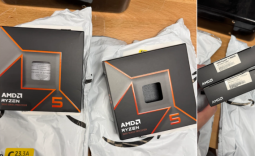 Redditor receives not one but TWO empty boxes of Ryzen 5 9600X from Amazon
 Xbox Series X25 Limited Edition Console is priced at $900, arrives November 2026
 Cooler Master MasterFan A120 Fan Review
 GIGABYTE MO27Q2A Gaming Monitor Review: 1440p, 280Hz, and QD-OLED is a winning combination
 Cooler Master V8 ACE 3DHP BLACK CPU Cooler Review
 ASUS ROG Strix XG129C Review: A $199 Gaming Monitor You Don't Play Games On
 Cooler Master HAF II 500 Mid-Tower Chassis Review
 Corsair HS35 v3 Wireless Gaming Headset Review - An Affordable Winner
 D-Link F518 5G Wi‑Fi 6 AX1800 Mobile Hotspot Review: All-Day Mobile Hotspot
 Bose Lifestyle Ultra Speaker Review - Impressively Detailed Room-Filling Sound
 MSI Z890 Gaming Plus WIFI6E Review - Z890 for under $200
 Mortal Kombat (1995) 4K Ultra HD Blu-ray Review
 Using Multiple Monitors? Change these Windows settings for a Better Experience
 Windows Sandbox is The Windows Security Feature Most People Never Use
 I ditched the Windows 11 context menu for this open-source tool, and here's why
 Windows 11 may be encrypting your drive already, and I checked where my recovery key went
 GIGABYTE's 40 Days of INFINITY celebrates 40 Years of Innovation with stunning GeForce RTX graphics cards and rewards
 I swapped File Explorer for this free file manager and finally got the layout I wanted
 How to tell if someone has been using your Windows PC without your permission
 6 Task Manager tips for troubleshooting Windows performance problems
 ASUS ROG's 20th Anniversary Line-up of Premium PC Gaming Gear has Arrived - Here's Everything You Need to Know
 Six File Explorer tips every Windows user should know