
NVIDIA is reportedly halting development of its dual-rack 72-way GB200-based NVL36x2 AI server, shifting focus into the single-rack NVL36 and NVL72 AI servers, according to analyst Ming-Chi Kuo..
In a new post on Medium, Ming-Chi Kuo deep dives into why NVIDIA is nixing its NVL36x2 AI server, with the single-rack GB200 NVL36 will "maintain its original development and shipment plans". NVIDIA originally plans to have 3 different GB200 projects: NVL36, NVL72, and NVL36x2 under simultaneous development.
Popular Now: You can now apply DLSS 5 Neural Rendering to your entire Windows desktopHowever, due to "uncertainties in NVL36 development, simultaneous development of two 72 GPU versions (NVL72 and NVL36x2) is even more challenging" writes Kuo. The analyst breaks it down on his Medium post, but I've included some of the highlights below.
- Limited development resources. The original plan was for three GB200 projects (NVL36, NVL72, NVL36*2) under simultaneous development. The development drop (DevDrop), starting from mid-November, will expect to converge on NVL72 and NVL36*2 (as NVL36 is theoretically prepared to enter the mass production stage), with final quality assurance (QA) for both to be completed by mid-March 2025. However, with uncertainties in NVL36 development, simultaneous development of two 72 GPU versions (NVL72 and NVL36*2) is even more challenging.
- NVL72 saves data center space. If cooling design challenges for the sidecar can be well addressed, NVL72 would require one less rack than NVL36*2, improving data center space efficiency.
- NVL72 offers better inference efficiency. Benefiting from parallelizable software design, NVL72 and NVL36*2 show minimal differences in AI LLM training results. However, in non-parallelizable or less easily parallelizable inference processes (such as autoregressive models), NVL72 tends to outperform NVL36*2.
- Major customer preference. Clients like Microsoft prefer NVL72 over NVL36*2.
- Fulfilling public commitments. NVIDIA has consistently promoted the single-rack NVL72 in public. To honor these commitments under resource constraints, NVL72 development takes priority over NVL36*2.
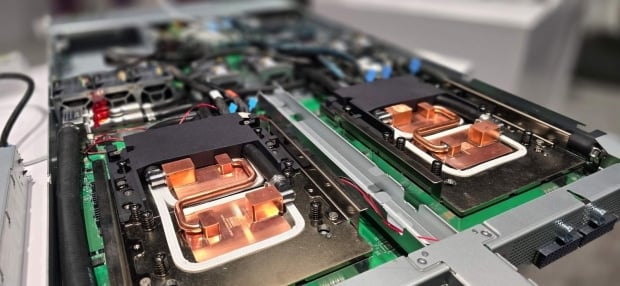
- Read more: Taiwan preps for GB200 NVL36 AI servers in September, NVL72 in October
- Read more: NVIDIA hits major roadblocks with Blackwell AI GPU: revised B200A coming
- Read more: NVIDIA's new Blackwell AI GPUs have 'major issues' which requires redesign
- Read more: NVIDIA's next-gen Blackwell AI GPUs delayed, 'design flaws' are to blame
- Read more: NVIDIA to make $210B revenue from Blackwell GB200 AI servers in 2025 alone
- Read more: NVIDIA places new orders with TSMC for more GB200, B100, B200 AI chips
- Read more: Foxconn is the sole supplier of NVLink switches for next-gen GB200 AI servers
- Read more: NVIDIA GB200 AI servers led by Foxconn with 40% and Quanta with 30%
- Read more: NVIDIA's next-gen GB200 AI servers to ship in 'small quantities' in Q4 2024
- Read more: NVIDIA's new GB200 Superchip costs up to $70,000: full B200 NVL72 AI costs $3M
Ming-Chi Kuo's conclusions:
- This development does not affect the long-term positive trends for AI and NVIDIA. However, in the short term, some market participants may question NVIDIA's and the supply chain's execution capabilities.
- NVIDIA's recent frequent changes to AI server product roadmaps reflect, in my opinion, their attempt to achieve a better balance between supply chain execution, competitive advantage, and customer demand under limited resources (discontinuing NVL36*2 development is one example). This is a good thing, indicating NVIDIA's more pragmatic approach to the product plan, but the transition may confuse some market participants regarding supply chain changes.
- Due to low visibility on Blackwell servers' 2025 product shipment mix (a few months ago, the market generally believed there would only be NVL36, NVL72, and NVL36*2), some suppliers, such as those in assembly and cooling solutions, may face significant impacts on their 2025 outlook.