












China's largest memory chipmaker, CXMT, is reportedly considering building a second DRAM fabrication facility in Beijing, according to a Reuters report.
The proposed plant would be located in Yizhuang, around 20 kilometers southeast of central Beijing, in the same development area where CXMT already operates a DRAM fab. The company is in early-stage financing discussions with the Beijing Economic-Technological Development Area, seeking at least 60 million yuan (roughly $8.9 million).
The total investment required has not yet been determined, but building a modern leading-edge DRAM facility typically costs more than $10 billion. CXMT currently operates two 12-inch fabs in Hefei and one in Beijing, each capable of producing around 100,000 wafers per month, for a combined output of roughly 300,000 wafers per month.

Expansion plans already underway in Shanghai and Hefei are expected to more than double that figure to over 600,000 wafers per month once fully operational.
One of the more striking aspects of CXMT's expansion is its construction speed. Semiconductor cleanrooms typically take around two years to build, but CXMT has reportedly reduced that timeline to approximately 12 months. By the end of 2026, the company is on track to produce around 350,000 wafers per month, putting it close to Micron's approximately 375,000 wafers per month.
Despite that momentum, CXMT still ranks fourth in the global DRAM market behind Samsung, SK Hynix, and Micron, which together controlled nearly 90% of the market in Q1 2026. CXMT's market share reached 8% during the quarter, up from 3% a year earlier, while its DRAM revenue grew by more than 700% year over year.

Its growth has been driven in part by the gap left as Samsung and Micron redirected significant production capacity toward high-bandwidth memory for AI data centers, creating an opportunity in the standard LPDDR and DDR markets where CXMT has been steadily gaining ground.

Frequently Asked Questions
TweakBot answers common questions about this news using TweakTown's own coverage from this page and related content from our archive. Tap a question to reveal the answer, or type your own below.
What is the planned location and funding stage for CXMT's proposed second Beijing DRAM fab in Yizhuang?
How quickly has CXMT reportedly reduced cleanroom construction time compared with typical semiconductor build timelines?
What portion of the global DRAM market did CXMT hold in Q1 2026 and how much did its DRAM revenue grow year over year?
Which memory segments benefited CXMT as Samsung and Micron shifted capacity toward HBM for AI, and how did that affect CXMT's bookings?
Have a question not listed here? Ask below and TweakBot will answer it.

For the global memory market, CXMT's expansion adds capacity, but most of it is expected to be absorbed domestically. Chinese hyperscalers, smartphone manufacturers, and AI labs are consuming memory at record rates, and with U.S. export restrictions limiting China's access to foreign chips, domestic demand effectively provides a floor for nearly everything CXMT can produce.


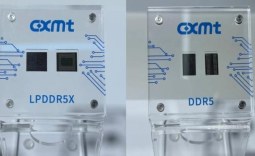 China's CXMT is on track to nearly match Micron's DRAM production capacity by the end of 2026
 SK Hynix plans to double wafer production capacity by 2030 as chairman warns AI will keep memory tight
 SK hynix expands investment plan for new semiconductor cluster in South Korea to $410 billion
 China pushing to ban foreign chips from being used for AI inference, but need NVIDIA for now
 MLC NAND prices have tripled as Samsung shuts its last 2D NAND line and Kioxia plans a full exit by 2029
 GeForce RTX 5070 is now the third most popular desktop gaming GPU among PC gamers
 Original Game Boy versions of Pokémon Red and Blue ported to PC with 3D voxel graphics
 TSMC is ramping up 2nm production, 100K monthly wafers by the end of 2026
 Spider-Man games are back in Steam's top 10 and on sale for up to 60% off following Brand New Day's success
 Redditor finds $600 Kingston Fury 32GB DDR5-6000 kit at a thrift store for just $14
 The Steam Frame could be priced at $1,500 at launch, according to insider
 NVIDIA GeForce RTX 50 series GPUs get up to 30% more expensive in South Korea
 Giveaway: Win an ASUS TUF Gaming B850-PRO WiFi 7 Motherboard and 360mm ARGB AIO
 Per-chip VRAM temperature monitoring arrives on AMD Navi GPUs with new HWiNFO64 pre-release version
 AMD could have a plan to make Zen 6 CPUs run games much more smoothly, taking the pain out of jerky frame rates and 1% lows
 Thinkware U3000 Pro Review - Smart Dashcam with Wi-Fi quirks
 Montech TG3 Mid-Tower Chassis Review
 ASUS ROG Strix X870E-A Gaming WiFI7 Neo Review - A New Enticing Option
 Noctua NL-LC1-36 Liquid CPU Cooler Review
 Logitech G316 X 98 Wired Gaming Keyboard Review - Retro-Inspired Board that Falls a Little Short
 Biwin M560 2TB SSD Review - Best Overall Retail-Ready DRAMless SSD
 Logitech G512 X 98 Analog Mechanical Gaming Keyboard Review - An Innovative Two-in-One
 Thrustmaster T.Flight HOTAS 5 MSFS Edition Review
 SteelSeries Arctis Nova Pro Omni Wireless Headset Review - One Headset to Rule Them All
 SteelSeries Arctis Nova 7 Wireless Gen 2 Headset Review - New and Improved, But Is It Enough?
 How to tell if someone has been using your Windows PC without your permission
 6 Task Manager tips for troubleshooting Windows performance problems
 ASUS ROG's 20th Anniversary Line-up of Premium PC Gaming Gear has Arrived - Here's Everything You Need to Know
 Six File Explorer tips every Windows user should know
 I switched my PC to encrypted DNS in Windows 11, and browsing felt more private
 Printer Not Working in Windows? How to fix detection, print queues and drivers
 The Ultimate Guide to Personalizing Your Windows 11 Taskbar
 How to Turn Your Windows Laptop Into a Second Monitor with Miracast and Wireless Display in Minutes
 6 Mistakes to Avoid When Buying a Windows Laptop
 I capped Windows Update's bandwidth with Delivery Optimization, and my downloads stopped choking