Our Verdict
Pros
- Lightweight with long battery life
- Well built
- Good OLED screen and speakers
- Good value
Cons
- Snapdragon software compatibility issues
- Glossy screen
Should you buy it?
Introduction, Specifications, and Pricing
When Snapdragon-based Windows laptops first appeared last year, they impressed the world with both their long battery lives and NPUs, which facilitated Microsoft's full CoPilot+ functionality. They accelerated the adoption of the term AiPC, and it was the perfect opportunity for Qualcomm to steal some serious market share from Intel and AMD. Unfortunately, however, the devices were (mostly) so expensive that they missed their opportunity.
It also quickly became apparent that the ARM processor was severely hampered by its lack of compatibility with most Windows applications (and games), to the point where, when Intel Lunar Lake laptops launched with their matching battery life, similar AI chops, and unlimited software compatibility, we wondered whether there was any reason to buy a Snapdragon laptop at all. Fortunately, things have changed and will be changing more in the coming months.
Over the past year, we've seen some impressively built Snapdragon laptops, and some have been appearing at very low prices. Now we're heading into the holiday season, and additional heavy discounts mean you can save some serious cash. That means, if you want a basic, high-quality ultraportable laptop for Microsoft Office tasks and web browsing, they can be tempting - a welcome link between ultra-basic Chromebooks and low-end x86 Windows laptops.
On top of all this, I also recently attended Snapdragon's Architecture Deep Dive tech conference where I happily drank Qualcomm Kool Aid to the point where I became satisfied that, not only will the forthcoming second-gen Snapdragon processors likely shake up the laptop market with their significant upgrades (the currently embargoed benchmarks alone demonstrate as much) but compatibility with major ISVs (including Adobe and Maxon) is about to significantly improve (to something approaching Apple levels). They've been working well, in beta, for some time already. What's more, massive strides have been made in terms of game compatibility. This won't all help HP's low-powered, Gen 1 Snapdragon-based OmniBook 5, but the software compatibility improvements will... albeit down the line (I asked when everything will go live many times, but Qualcomm's not saying).

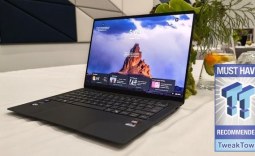
We've been seriously impressed with HP's recent OmniBooks, EliteBooks, and ZBooks (including its business-class Snapdragon-based EliteBook G1q), but this OmniBook comes in at a fraction of the price. Initially, it's hard to see where the limitations lie: the 'Glacier Silver' lid is made from solid (eco-friendly) sandblasted aluminium and behind it sits an OLED screen. It looks stylish and, along with the rounded corners, feels smooth and very high quality. The palm rest is painted-white plastic, but it still feels very rigid. The hinges feel strong.
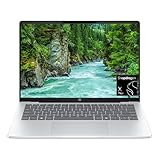
Best Deals: HP OmniBook 5 14-inch Next Gen AI PC


Our review unit incorporated Qualcomm's bottom-tier X1-26-100 Snapdragon APU, which features the line's lowest-powered (3GHz) octa-core CPU, its lowest-powered, integrated (1.25GHz) X1-45 GPU, and standard-across-the-range 45 TOPS NPU. It's partnered by 16GB of LPDDR5-8448 RAM and a 512GB NVMe hard drive.
Different SKUs vary in their availability around the world, and they include: 16-inch versions; Intel-powered variants; models with higher-resolution screens; touch screens; and models that come in pastel-like colours called Powder Pink and Sky Blue. These can also have faster processors, more RAM, and larger SSDs. Once you do settle on a favoured load-out, it's worth double-checking your local store, as seemingly identical versions can appear at considerably different prices. Our review unit (SKU: BU1K2UA#ABA) has a sticker price of $730 but is currently at $530 in HP's early Black Friday sale. However, HP is also selling a lesser, 256GB version of the same model (SKU: B78YXAV_1) for $900 and an all-round superior model for one-third of the price! So, check every option before buying.
Our Latest Standard Laptops Review Coverage
- ASUS ExpertBook Ultra (Panther Lake) 14" Business Laptop Review
- HP OmniBook 7 (Panther Lake) 16" Laptop Review
- GEEKOM GeekBook X14 Pro (Intel Core Ultra Series 1) Laptop Review
- Lenovo Yoga 7 2-in-1 Gen 10 (Krackan Point | Radeon 860M) Laptop Review
- MSI Stealth A16 AI+ (Strix Point | RTX 5070 Ti) Laptop Review
Ultimately, after a cursory inspection, the HP OmniBook 5 looks and feels like the high-quality, mid-range, consumer-grade ultraportable that it's designed to be. But, should you buy it?
Features, Details and Design
Opening it up reveals the 1,920 x 1,200 glossy OLED screen. It displays the vibrant colours, flawless true-blacks, and impressive contrast that are inherent in OLED displays, and the resolution is comfortable enough to view the Windows Desktop and office applications without squinting. The downside (as always) is that the glossy screen can become a black mirror when viewing dark content or you're in a bright environment, like outdoors.

These factors all transfer across into multimedia engagement, but a few (minor) foibles then start to rear their head. The screen is relatively bright (300-nits), but details can get blown out in bright areas. It's not HDR compatible, but flicking this setting on can smooth out colourful and monochromatic transitions which otherwise exhibit some light banding - something that's normal with most 'business and productivity' laptops, mind. The Full HD+ resolution means that some native-resolution video content can distort with artefacts on occasion, but it's no dealbreaker. Trying to fix this by forcing it to transcode higher-resolution 4K footage can lead to stuttering playback.
The screen has a bog-standard 60Hz refresh rate, meaning that, even with a quick, OLED-based, pixel-response time, fast-moving objects can look blurry - but only FPS players would gripe. The issue is likely moot, however, as this isn't usually the type of laptop you'd buy if you want to play much beyond the most casual game types that run in web browsers (Or is it? Now that I've returned from Qualcomm's conference, I'm wanting to revisit this statement, below).
The OmniBook 5 also punches above its weight when it comes to its speakers. Here, HP has done well to incorporate Poly and HyperX's expertise into its laptops. Its previous audio partners, which include Bang & Olufsen, weren't exactly bad at this sort of thing, but you tended to see these types of premium-partnered integrations reserved for higher-end models. Nowadays, it's fair to expect high-quality audio from all HP laptops, and that's what you get here, where, despite the thin 13mm chassis, the dual-speakers (specs unspecified) get loud and punchy and offer impressive audio fidelity from top to bottom. There's not a massive amount of bass, but there's more than you get on plenty of more-expensive, rival models.

Below the screen is a Scrabble-tile keyboard with large, well-weighted keys. It's comfortable and accurate to type upon for extended periods, although we did detect a minor chassis rattle on occasion - reminding us that this wasn't HP's most-premium model. That said, the large keys mean that, while the up-and-down arrow keys are squished, they're large enough for it not to be an issue. This is a major contrast to HP laptops' Achilles heel of horrendously mashed-together arrow keys.
Below this, the trackpad is smooth and accurate, and its buttons have a high-quality, low-noise clicking action.
Above the screen is a high-quality Full HD webcam and microphone array, which, again, leverages Poly performance. There's very little grain evident in low-light settings, and clear audio is captured even in noisy environments. There's a hardware slide for privacy, and its IR neighbour supports Windows Hello's facial-recognition log-in.
It's good to see that the OmniBook 5 isn't riddled with bloatware (like some rivals). There are two easily ignorable apps, though. The first is HP Ai Companion, which is an AI assistant you can talk to and use to manage your laptop's files and performance (in addition to performing offline AI tasks). But it's in beta and rather feels like it. It also can't generate images, and it's not up to date with much recent history, let alone current affairs.
Meanwhile, the main HP app offers all kinds of support and system optimisation options, although most of the latter are also part of Windows. While it doesn't offer much beyond n00b-level, feature-access improvements, it doesn't get in the way either.
While I'm now confident that things will change at some currently interminable point in the near-to-mid-term future, the main issue, as always, is that very few applications and programs work with it due to the lack of x86 compatibility - the complex instruction sets that make most applications work with the operating system. The ARM RISC processors, which Qualcomm (and Apple) favour, might offer all kinds of performance-per-Watt, performance optimisations on specific, well-tailored, high-profile applications, but it doesn't count for much if you can't use much beyond Microsoft Office and web browsers. Other apps, like Adobe Creative Cloud, are barely functional, and many triple-A games (like Call of Duty) simply won't install. So, be very aware that this lack of general compatibility - at least for the moment - is what actually currently defines Snapdragon laptops.
Of course, another thing that defines Snapdragon laptops is their relatively high-powered NPU, which is standard across the range of processors. It's powerful enough to support various AI features, including all of Microsoft's CoPilot+ functionality, its web-conferencing AV enhancements, and tailored LLM functions like meeting and document summaries. The platform was the first to facilitate this, and it's why Snapdragon laptops were known as the new generation of AiPCs. Just remember that both Intel and AMD have caught up in this area.
I/O

On the left of the HP OmniBook 5 are two USB-C 3.2 Gen 2 ports (one of which is used for charging). Note that the laptop can get a little warm around the charging port.

On the right is a USB-A 3.2 Gen 1 port and a 3.5mm audio jack.
Inside, there's Wi-Fi 6E and Bluetooth 5.3. That's an acceptable complement for a mid-level laptop and, while an HDMI port would have been nice, few will grumble.
Portability
One of the most-advertised 'defining' features of Snapdragon laptops is their portability. While I couldn't run the regular PCMark 10 Modern Office benchmark (compatibility issues, again), I could run the slightly lesser PCMark 10 Applications battery benchmark, which focuses on intermittent MS Office app usage mixed with idle time. The OmniBook 5's 59Wh battery enabled it to do this for a very impressive 28 hours and 19 minutes. We've seen some Lunar Lake laptops and larger MacBook Airs last a similar amount of time, but most ultraportables struggle around the 20-hour mark. Still, in the real world, much will depend on the applications you're using.

I always prefer to see a phone-style charger with laptops like this, as the small power brick and cables add a relatively bulky 323g to the mix. However, it does facilitate fast charging (to 50 per cent capacity in 30 minutes), so, for the most part, you can carry this svelte, 1.3KG, 13mm-thick laptop around like it's barely there.
The aluminium lid and stiff plastic chassis also feel like they'll survive life on the road. The hinges feel high-quality and (hopefully) will last a long time.
Benchmarks
Unsurprisingly, the OmniBook 5's 3GHz (with no boost) Snapdragon X1-26-100 processor wouldn't run all of our benchmarks, but it ran enough for me to compare its performance to rivals using other platforms.
CrystalDiskMark

In the CrystalDiskMark benchmark, the OmniBook 5's 512GB SSD hit impressive 6,345MB/s write speeds. That's one of the fastest scores we've seen on an ultraportable, so there shouldn't be any bottlenecks caused by the hard drive.
CineBench
We know that Snapdragon processors can perform well despite having to run Cinebench non-natively, but this test was always going to be a struggle for the bottom-tier Snapdragon X1-26-100 with its eight cores limited to 3GHz. Its single-core score of 96 isn't too horrible (spoiler: just wait 'til you see what the X2 can do in this test), but its multi-core score of 554 is the lowest we've seen. Don't buy this for processor-based rendering tasks.
3DMark Speed Way + Steel Nomad
The 1.25GHz Adreno X1-45 GPU represents the lowest-tier of the Snapdragon X1's integrated graphics. As such, I wasn't surprised to see the OmniBook 5 completely nope out of running the difficult, gaming-PC-oriented 3DMark Speed Way benchmark.

However, it did at least try to run the Steel Nomad benchmark (which checks for modern, 4K gaming prowess). Here it scored 227, which is an average of just 2.3fps. So, we've proved what we already know - this laptop won't play the latest and greatest, eye-candy-rich games. To be fair, hardly any other ultraportables can either.
3DMark Solar Bay + Night Raid

The 3DMark Solar Bay test uses less-demanding ray-tracing at a 1,440p resolution. The OmniBook 5 scored 6,118 (an average of 23.3fps). That's approaching payable framerates but is nonetheless the lowest score we've ever seen in this test. Lunar Lake laptops can push past 60fps.

In the old-school, easy-peasy 3DMark Night Raid test, which establishes Full HD gaming potential (and is therefore, arguably the most relevant test for this OmniBook 5), it scored 16,658, which is an average framerate of 82.6fps. On the one hand, that's the slowest score we've seen for years. On the other hand, it demonstrates that this laptop will be able to play compatible Full HD games smoothly. Browser-based games are your best bet.

In terms of real-world games. It wouldn't install Call of Duty. However, it did run Shadow of the Tom Raider... just. We had to drop to a 720p HD resolution with all details set to LOW, and it averaged 29fps - right on the cusp of playability. At native resolution, it couldn't get past 20fps.

In Black Myth: Wukong, HP's OmniBook 5 averaged 17fps at Low Settings and wasn't playable. This only improved to 18fps at an HD resolution.
Ultimately, while game compatibility on Snapdragon has indeed improved a great deal, the HP OmniBook's lowest-tier Snapdragon processor isn't powerful enough to take advantage.
NPU Testing
In the ARM version of the UL Procyon AI (Computer Vision) benchmark, the OmniBook 5 scored 1,936. It's difficult to affix real-world meaning to that number beyond saying that this AiPC, with its decent 45 TOPS-capable NPU, is not the worst at dedicated LLM workloads like document and meeting summaries.
Adobe Creative Cloud Tests
We don't always mention these tests, but they help paint a picture of Snapdragon's performance when it comes to popular multimedia work. In the UL Procyon Image Editing test (which uses Photoshop and Lightroom Classic), its score of 3,617 is the lowest we've recorded. Creative Cloud will warn you that it's not optimized to run with ARM-based systems, and this score proves it. You can do basic photo editing, but not much more.
One of my favourite tests is the UL Procyon Video Editing benchmark, which uses Adobe Premiere to encode four 900MB UHD files. The OmniBook 5 scored 3,619, which is one of the slowest scores we've seen. To visualize that, it took 912 seconds to render the hardest test (UHD, H.265, 60fps). A 5090 gaming laptop will do it in 30 seconds. Lunar Lake rivals will do it in around 201 seconds, while the AMD Kracken Point-sporting Lenovo Yoga 7 2-in-1 did it in 260 seconds.
That said, I've recently seen optimized versions of Premiere and Photoshop running in beta environments on next-gen Snapdragon laptops, so this performance will improve... at some point. Don't buy this laptop for video editing, though.
Cooling
For the most part, the Snapdragon-equipped HP OmniBook 5 runs cool and quiet. However, it can get a little warm under general usage and very warm when under sustained load. When it comes to the latter, the fans will finally make themselves known, but only by ramping up to a very light whoosh.
Final Thoughts
HP positions the OmniBook 5 as a high-quality, mid-range, affordable ultraportable laptop, and that's exactly what it is. The current software compatibility issues will be the largest sticking point, but improvements are looming on the horizon. For now, if you just want a low-cost, high-value, barely-there laptop with long battery life that can't handle much beyond Microsoft Office and web-browser-based applications, it's worth investigating. Just note that there are some serious discounts on some superior rivals at this time of year, so it shouldn't be hard to find something better for a little more money.