






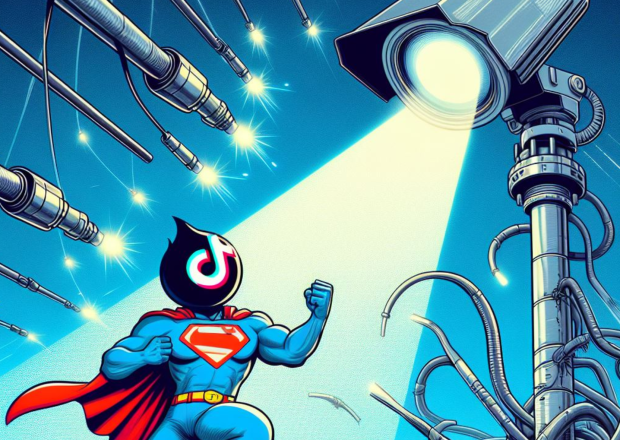




The Senate officially banned TikTok in the United States, giving the popular app owner the choice of selling it to a US government-approved buyer or having it banned from app marketplaces.
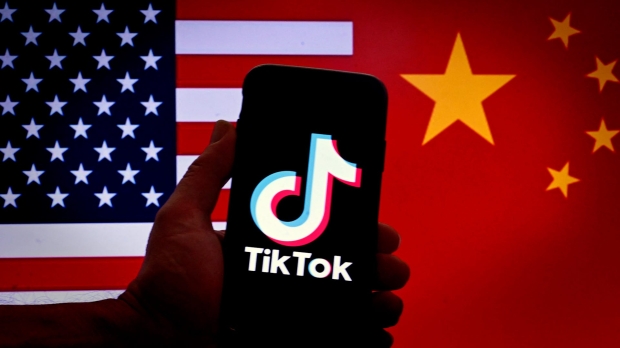
The US government has deemed TikTok a national security risk due to its owner being China-based company ByteDance, which officials believe have ties to the Chinese government. More specifically, the US government believes TikTok is capable of scraping the personal data of 170 million Americans, and that data could then be shared with the Chinese government. Furthermore, the US government believe TikTok could be used to spread misinformation throughout the US.
The banning of the app gave its owner 270 days to sell TikTok, with an additional 90-day presidential extension. TikTok and ByteDance have since responded to the new legislature by filing a lawsuit that directly challenges the Protecting Americans from Foreign Adversary Controlled Applications Act, which President Biden signed into law last month.
The complaint argues the new law is unconstitutional, and the maximum granted period of time is simply not long enough to complete a sale of the app. This would mean that on January 19, 2025, when the new law comes into effect, TikTok will be forced to shut down, removing access from 170 million Americans.
"While US courts have in many contexts been far too deferential to the federal government's claims of national security harms, there is no First Amendment exception for national security: the government will have to demonstrate to the court that the national security concern is real and not hypothetical or conjectural (as it appears to be in the last public ODNI report) and that a total ban on TikTok as it currently exists is the appropriately tailored means of addressing that national security concern," said David Greene, civil liberties director at the Electronic Frontier Foundation (EFF), a US-based cyber liberties advocacy group to The Register
![Photo of the $10 -PlayStation Store Gift Card [Digital Code]](https://m.media-amazon.com/images/I/41MT2s0Gm2L._SL160_.jpg)


 TikTok ban in US stands firm as court officially denies pause for January deadline
 Instagram moves to capitalize on TikTok ban with release of new app
 TikTok is officially back after Trump drops the hammer on the ban in new response
 TikTok hit with half a billion fine for sharing user data with China
 TikTok officially banned across the US, Trump named as savior in new message
 Xbox testing disc-to-digital feature that digitizes a physical game collection
 Shuttle's new bare-bones PC lets you build your own Steam Machine
 Samsung to begin mass production of its cutting-edge 1.4nm process in 2029
 Intel Arc Game On Driver adds support for the new G3 Extreme chip and fixes multiple issues in games
 007 First Light developer hit with layoffs as Xbox pulls out of Project Fantasy deal
 Microsoft finally improves File Explorer launch speed in Windows 11
 Xbox to convert discs to digital games for Project Helix, new reports indicate
 AMD 'Zen 6 LP' cores spotted, power-efficient cores back up PS6 Portable rumors
 PlayStation 6 soft confirmed to launch without physical disc drive
 Xbox Helix won't have a disc drive as Sony officially gives death date for physical games
 Next Level Racing ERS3 Haptic Seat Review: immersive sim racing comfort with integrated haptics
 ASUS TUF Gaming X870-Pro WiFi7 W NEO Review - Tuffed up
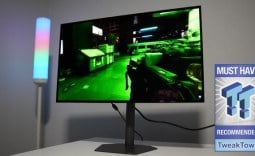 GIGABYTE GO27Q24G Gaming Monitor Review: Glossy OLED Gaming at 240Hz
 Lian Li B4-mATX Review: a compact mATX SFF case with excellent airflow and premium features
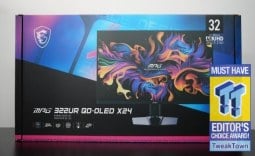 MSI MPG 322UR QD-OLED X24 Review: A Brighter, Tougher 4K 240Hz QD-OLED for $1099
 UGREEN NASync DXP4800 GT Review: powerful 4-bay NAS with AMD Ryzen and dual 10GbE ports
 Dell XPS 14 (2026) Laptop Review - Premium Quality, Impressive Performance
 Ocypus Sigma F36 BK ARGB Cooling Fan Review: high airflow and unified design in one frame
 PCCooler CPS RZ820 Display Review: a flagship-level CPU air cooler with an LCD screen
 UGREEN FineTrack Mini 2 Air Tracker Tag Review - Long battery life, lesser performance
 Intel Arc G3 Extreme first impressions with MSI's Claw 8 EX AI+ - Incredible power for an extreme price
 How to fix Wi-Fi Adapter Not Working on Windows laptops: troubleshooting tips
 Hisense U7SG 4K TV: Modern Entertainment for the New Age
 6 underrated Microsoft Word features worth using to boost your productivity
 Level Up Your PC Gaming with these Fantastic ASUS Prime Day Deals on GPUs, Motherboards, and More
 GIGABYTE Wants to Kickstart Your New Gaming PC or Upgrade with These Limited-Time Deals
 7 Windows settings to change right after installation for better privacy, security, and performance
 I stopped Windows 11 notifications from interrupting me with Do Not Disturb, Focus, and a priority list
 7 ways to transfer data from Android to Windows PC quickly and easily
 I read the Windows Backup app screen carefully, and it does not back up what most people think