













When NVIDIA announced and launched the GeForce RTX 40 Series last year, it also introduced the ground-breaking new DLSS 3 - which offered AI-powered Frame Generation technology to boost performance. The only catch is that the new tech is exclusive to the latest GPU generation because it uses new and updated AI hardware as part of the architecture.
And with that, there has been a long-standing belief in some corners of the tech community that DLSS 3 and Frame Generation are artificially locked to the new GPUs and that there's no reason why it shouldn't also be able to run on GeForce RTX 20 and 30 Series hardware. These, too, feature AI-based Tensor Cores, so why not?
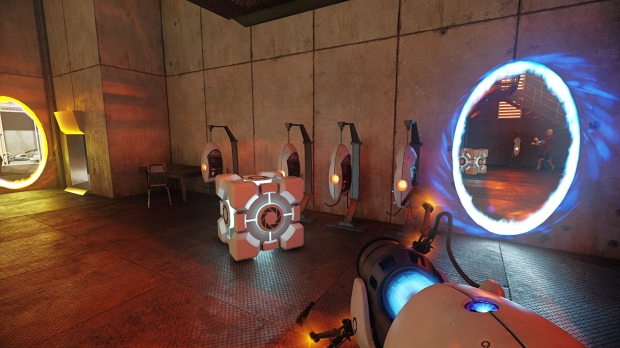
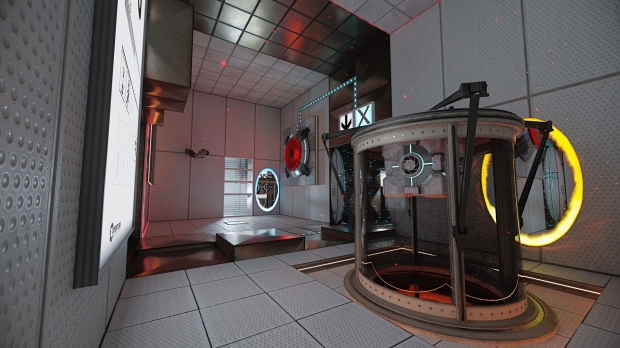
Recently, the discussion surrounding DLSS 3 Frame Generation and older GeForce RTX hardware reignited because it was found that in Portal Prelude RTX - an RTX Remix community mod - GeForce RTX 20 and 30 Series owners could enable Frame Generation. And see their FPS effectively double.
A definite cause for concern and a smoking gun for those adamant that NVIDIA could get Frame Generation to work on older GeForce RTX GPUs. However, this was a bug in an older DLSS DLL that simply led to raw duplication of existing frames.
"There is no DLSS Frame Generation occurring-just raw duplication of existing frames," writes an NVIDIA staff member on the company's forum. "Frame counters show a higher FPS, but there is no improvement in smoothness or experience. This can be verified by evaluating the duplicated frames using tools like NVIDIA ICAT or viewing the error message in the Remix logs indicating an error with frame generation."
Throw in that recent Redditor investigation into Tensor Core usage for Frame Generation that found small bursts of massive activity on NVIDIA's AI hardware, and it seems that, yes, DLSS 3 Frame Generation and DLSS 2 Super Resolution require specialized AI hardware to work. This differs from AMD's platform-agnostic approach for its Fluid Motion Frames and FSR tech but is yielding better results regarding image quality.
NVIDIA's AI approach to upscaling, and now Frame Generation, offers the best of both worlds regarding visual fidelity - you just need the right NVIDIA GeForce hardware to turn them on.
Regarding this specific case, NVIDIA has fixed the bug and will update RTX Remix to "prevent further confusion when frame generation is behaving incorrectly."


 NVIDIA teases DLSS Frame Generation for GeForce RTX 30 Series owners
 These exciting DLSS 4 features will work with GeForce RTX 20 and 30 Series GPUs
 DLSS 4 support comes to WUCHANG: Fallen Feathers, Killing Floor 3, and more
 DLSS 4 comes to Wild Assault, THE FINALS, and The Last of Us Part II
 GeForce RTX 50 Series owners will get to choose how many AI frames DLSS 4 renders
 Sony CEO sells $4.7 million worth of stock days after PlayStation announces disc phase out
 Black Flag Resynced is a win for Ubisoft, pirate remaster achieves 2 million sales in 24 hours
 Giveaway: Win an NZXT H6 RGB+ Case, Kraken Elite AIO, RGB Fans and 1200W PSU
 Ubisoft responds to Black Flag Resynced DLC critics by telling them they're 'not a requirement'
 NVIDIA is reportedly preparing the GeForce RTX 5090 SE to sit between the RTX 5080 and 5090
 id founder John Carmack comments on sad fate of studio
 Report: Minecraft profits used to fund Xbox games portfolio
 Assassin's Creed Black Flag Resynced has $80 worth of cosmetics and time-saving DLC
 Need For Speed seemingly on ice as Criterion becomes a Battlefield studio
 51 Ubisoft employees who worked on the successful Assassin's Creed Black Flag Resynced have just been laid off
 Micron 6600 ION 245.76TB Enterprise SSD Review - Best in Class Programming Speeds
 MOZA MA3F EFCM Flight Control Module Review: authentic Airbus A320 autopilot panel for simulators
 Turtle Beach Stealth Pro II Wireless Gaming Headset Review - Premium Sound, Fantastic Features
 MOZA MGX1000 Instrument Panel Review: a realistic Garmin G1000 replica for immersive flight sims
 Simagic Zeus Formula Steering Wheel Review: premium build and advanced inputs for F1 racing
 GIGABYTE X870E Aero X3D Dark Wood Review - A woody goody
 The Super Mario Galaxy Movie (2026) 4K Ultra HD Blu-ray Review
 KTC H49S66 5K2K (5120x1440) 49-inch 180Hz Gaming Monitor Review
 HighPoint Rocket 1604L Gen5 x16 NVMe Software RAID AIC Review: half the price with full 59 GB/s speed
 Next Level Racing ERS3 Haptic Seat Review: immersive sim racing comfort with integrated haptics
 Don't sell your Windows laptop until you do these things
 6 PC cleaning mistakes to avoid for safer hardware maintenance
 Phison and Intel Take Aim at Local AI's Memory Wall with aiDAPTIV
 How to Remap Keyboard Keys in Windows using Microsoft PowerToys
 7 tips to organize your Windows files for faster, easier access
 Intel Arc G3 Extreme first impressions with MSI's Claw 8 EX AI+ - Incredible power for an extreme price
 How to fix Wi-Fi Adapter Not Working on Windows laptops: troubleshooting tips
 Hisense U7SG 4K TV: Modern Entertainment for the New Age
 6 underrated Microsoft Word features worth using to boost your productivity
 Level Up Your PC Gaming with these Fantastic ASUS Prime Day Deals on GPUs, Motherboards, and More