










Arianespace's launch of two Galileo FOC (Full Operation Capability) global navigation satellites has been temporarily delayed.

The VS26 launch was 8 minutes and 22 seconds from lift-off but was scrubbed due to the risk of lightning in poor weather. It has been rescheduled for 21:19 local time in Kourou on December 4th (00:19 UTC on December 5th).
The rocket used for the mission is a four-stage Soyuz ST-B Fregat and will be launching from the Guiana Space Center, the first Soyuz rocket from there in 2021. Soyuz rockets have been used to launch Galileo satellites before. The first two test-bed Galileo satellites were launched aboard a Soyuz rocket in December 2005 and April 2008, respectively, and were ultimately retired in July 2012. Other Galileo launches have also involved Soyuz, but they can only carry two at a time, so Arianespace has also used its Ariane 5 ES to carry four at a time for multiple launches.
Galileo is a constellation of global position/navigation satellites commissioned by the European Space Agency (ESA) and European Union (EU). 28 satellites currently make up the constellation (including the retired two), and now, more than three years after the last addition, another two are being added with this launch. Galileo-FOC FM23 and FM24 will be the next to join the constellation.
Here you can view the livestream of the attempted launch, and you can expect to find a livestream of the second attempt on Arianespace's channel soon.


 Starship launch ends in double failure yet deemed a milestone launch by SpaceX
 A SpaceX Falcon 9 rocket is on a collision course with the Moon
 WB Games to lean into free-to-play, may license out Batman, Superman IPs to other publishers
 Microsoft Flight Simulator 2024 detailed: 4000x more detail, new Career mode, and SO much more
 Opinion: Game Pass tier with first-party games won't fix the subscription's biggest problem
 HDMI 2.2 products are coming in 2027 as chip makers begin sampling FRL2 silicon this year
 Solo dev tries to make his own GTA 6 with AI, as he got tired of waiting for Rockstar
 A HandBrake update just gave Threadripper owners up to a 215% performance boost for free
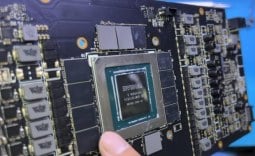 Repair channel buys ASUS RTX 4090 for $222 and finds plastic die with fake NVIDIA markings
 Epic's gen AI use deters partners, Vampire Survivors x Fortnite might get cancelled
 Sony seems to confirm singleplayer first-party PlayStation games will remain console exclusive
 NVIDIA GeForce GTX 1650 modded with 8GB of GDDR6 memory doubles performance in God of War and Unigine Superposition
 Apple will be working with Intel to design and build its chips in the USA, confirms President Donald Trump
 GTA 6 pre-order date revealed by Rockstar
 Anthropic's CEO confirms he can be fired as CEO through the company's own authority
 UGREEN FineTrack Mini 2 Air Tracker Tag Review - Long battery life, lesser performance
 Speed Racer (2008) 4K Ultra HD Blu-ray Review: a stunning remaster of the cult classic
 MOAIPLAY ORA PRO G1 850W ATX 3.1 PSU Review: high efficiency and 10-year warranty for $119.99
 Navman MiVue Smart True 4K Surround Dashcam Review - Seeing In All Directions At Once
 IQUNIX Magi96 Pro Aluminum Low Profile Mechanical Keyboard Review - Premium Build, Satisfying Sound
 Asetek Forte S-Series Racing Simulator Bundle Review
 Razer Pro Type Ergo Wireless Split Ergonomic Keyboard Review - Built for Comfort and Support
 ASUS ROG Strix Morph 96 Wireless Gaming Keyboard Review - Great Performance, More Affordable
 SAPPHIRE Radeon RX 9070 GRE PULSE OC Review - A New 1440p Challenger Has Arrived
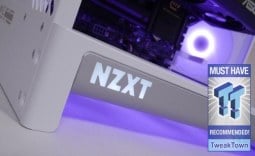 NZXT H6 RGB+ Compact Dual-Chamber Chassis Review
 7 ways to transfer data from Android to Windows PC quickly and easily
 I read the Windows Backup app screen carefully, and it does not back up what most people think
 Low Sound Volume on Windows 11? How to fix audio issues and restore normal volume
 8 Critical Warning Signs You Should Never Ignore in Windows 11
 This Windows security feature protects Documents from ransomware, but it is off by default
 Windows 11 already has a voice typing tool, and it is the one most people are not using
 Quick Assist is the only remote-support tool I open when a relative calls about their PC
 The PowerToys utilities I keep enabled on every Windows 11 PC, and the ones I turned off within a week
 TweakTown's Best of Computex 2026 Awards - The Best Hardware, Gaming Gear, and AI
 Phison E37T SSD Controller Exclusive Preview - The Fastest DRAMless SSD Platform Yet