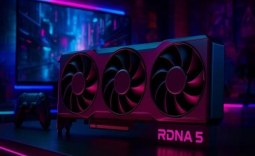


AMD's open-source graphics card drivers for Linux have long been a great source of information on upcoming hardware releases, and one of the latest patches adds support for GDDR7 memory, suggesting this is for the company's next-generation RDNA 5-powered Radeon graphics cards.

For Team Red's RDNA 4-based Radeon RX 9000 Series, the company stuck with GDDR6 memory, even though the industry was moving toward GDDR7 and NVIDIA's GeForce RTX 50 Series would fully support the next-gen memory. At the time, this was seen as a mistake on AMD's part, especially when the switch to faster memory and increased bandwidth on the RTX 50 Series has led to some notable gen-on-gen performance gains.
Of course, with the current memory crisis, RDNA 4's GDDR6 memory configuration means Radeon GPUs haven't been hit quite as hard by price increases. Still, with multiple leakers already saying RDNA 5 will usher in a switch to GDDR7, this driver update from AMD certainly makes it seem that way.
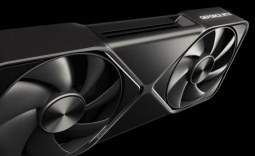
With GDDR6 memory topping out at 20 Gb/s, as seen on the flagship Radeon RX 9070 XT, a switch to GDDR7 would raise that to 36 Gb/s, with the possibility of up to 48 Gb/s in the future. At 36 Gb/s, the Radeon RX 9070 XT 16GB would see memory bandwidth increase from 640 GB/s to 1,152 GB/s by switching from GDDR6 to GDDR7. This would improve gaming and productivity performance, so it makes sense for RDNA 5 to make the switch.

Frequently Asked Questions
Open a question for an answer from TweakTown's coverage of this news, or ask your own below.
Which Radeon GPUs are expected to use GDDR7 first in RDNA 5?
How much memory bandwidth could RDNA 5 gain from GDDR7 compared with RDNA 4?
What does the new RDNA 5 DCN display engine change for high-refresh-rate gaming?
Does AMD's GDDR7 driver support confirm RDNA 5 hardware is already in development?
Have a question that isn't listed here? Ask below, and TweakBot will answer it.

The new patch also includes an RDNA 5 update for the Display Core Next (DCN) display engine, which handles display output, scaling, and support for smooth high-resolution, high-refresh-rate gaming. With rumors pointing to AMD launching a single mid-range desktop PC gaming GPU in the RDNA 5 lineup in 2027, which would be the follow-up to the Radeon RX 9070 XT, adding driver support now makes sense.