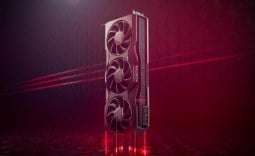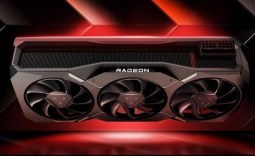
AMD has issued a hotfix driver for Windows 10 users to fix a problem preventing Radeon gamers from running Adrenalin driver 26.6.2 - AMD's first driver with FSR 4.1 enablement for RDNA 3 GPUs, on Windows 10. AMD announced the new hotfix driver on X, version 26.6.3, and further elaborated that the hotfix will only be needed for a week, as the team gets ready to push the Windows 10 installation fix to an upcoming WHQL update next week.
Adrenalin driver 26.6.2 was one of the most important driver updates AMD has released this year, featuring FSR 4.1 upscaling support for previous-generation RX 7000 series GPUs and RDNA 3.x integrated graphics chips. After the driver's release, gamers quickly discovered that the update was broken on Windows 10, forcing Windows 10 users to switch back to an older revision. The issue specifically relates to a conflict with the driver and AMD's control panel software, which spits out an error message telling the user that the control panel version is incompatible with the driver. The issue is widespread, affecting a broad range of hardware, including Ryzen 9000 series CPUs and RX 9000 series GPUs. Windows 11 users are apparently not affected for unknown reasons.
AMD could have waited a week to get this fix out to everyone, but demand for AMD to extend FSR 4 support to older RDNA 3 and RDNA 2 GPUs has been significant over the past year on social media and comments on various AMD YouTube videos. Likely incentivizing AMD to push out a hotfix driver to fill in the gap. It's worth mentioning that hotfix drivers do not represent the most stable releases, so if you value driver stability, you might want to skip this update. But, for those who want FSR 4.1 support right now and are running an RX 7000 GPU and Windows 10, AMD's latest hotfix driver is the best option.
- Read more: AMD updates FSR SDK with FSR 4.1.1 support for RDNA 3 and improved FSR Ray Regeneration 1.2.0
- Read more: AMD confirms Adrenalin 26.6.2 driver fails to launch on Windows 10, recommends rolling back
- Read more: FSR 4.1 support for RX 7000 GPUs arrives ahead of schedule with new Adrenalin driver update
As a reminder, AMD's FSR 4.1 can be overridden in games that don't support the latest version of FSR so long as the game is using FSR 3.1 or newer. AMD just updated its FSR SDK to FSR 4.1.1 to support RDNA 3 GPUs, which will take time for developers to implement into existing and upcoming titles. The FSR SDK also comes with Ray Regeneration 1.2.0, featuring quality improvements over older versions (Ray Regeneration is AMD's denoising counterpart to NVIDIA's Ray Reconstruction technology).