










Earlier today, AMD released AMD Software: Adrenalin Edition 26.6.2 for Radeon GPUs, which added FSR 4.1 Upscaling support to the RDNA 3-powered Radeon RX 7000 Series graphics cards. This earlier-than-expected release of FSR 4.1 for RDNA 3 is definitely welcome, as it will help breathe new life into previous-gen GPUs like the mid-range Radeon RX 7800 XT and flagship Radeon RX 7900 XTX.

To make FSR 4.1 compatible with RDNA 3, AMD had to develop a new version of the technology that uses the INT8 format, since the RDNA 4 version was built specifically for the new architectures' advanced AI hardware and the FP8 format. The good news is that FSR 4.1 for RDNA 3 delivers no quality loss compared to running on RDNA 4 GPUs. However, as per the Adrenalin Edition 26.6.2 release notes and word from AMD, this new version is limited to RDNA 3 desktop GPUs. At least, officially.
Turns out the new FSR 4.1 DLL leaked a little early, via Valve and the Proton Experimental channel for SteamOS/Linux, of all places. And, like the previous version, when paired with the OptiScaler tool to force it, it can run on systems and configurations that aren't desktop RDNA 3 GPUs. In fact, according to this thread over on Reddit, some users are getting it to run just fine on RDNA 3.5 GPUs.
- Read more: AMD FSR 4.1 DLL leaks and gamers are already getting it to run on older RDNA 3 GPUs
- Read more: FSR 4.1 support for RX 7000 GPUs arrives ahead of schedule with new Adrenalin driver update
- Read more: AMD surprises RDNA 3 and RDNA 2 owners with FSR 4.1 support, arriving in July for RX 7000 series
RDNA 3.5 graphics is what's found inside handhelds like the ROG Xbox Ally X and Legion Go 2, where it's currently AMD's most powerful PC gaming handheld architecture. Getting word that this new FSR 4.1 DLL not only runs on these devices via the OptiScaler tool but also delivers the intended image quality and performance uplift is great to hear. Bringing FSR 4.1 to RDNA 3.5 handhelds and devices like the Steam Machine makes the most sense, as you get the biggest benefit over using FSR 3.1 when upscaling from a lower resolution.
Now, as the Steam Deck is powered by a custom AMD APU with RDNA 2 graphics, the early reports do say that FSR 4.1 running on these GPUs leads to image quality issues and ghosting, which makes sense as AMD notes that as RDNA 2 doesn't really feature capable AI hardware so it will need to build a whole new version of the technology that runs on the GPU itself for it to work. Either way, as we've seen with previous leaks, hopefully AMD sees the feedback and officially adds RDNA 3.5 to the list of supported GPU architectures for the new and impressive FSR 4.1 Upscaling.


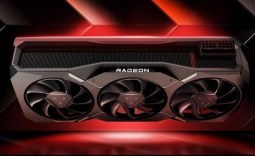 FSR 4.1 support for RX 7000 GPUs arrives ahead of schedule with new Adrenalin driver update
 AMD says FSR 4.1 on RDNA 3 will feature no quality loss
 AMD's FSR 4 coming to RDNA 2 could give the Xbox Series X a PS5 Pro-like upgrade
 AMD FSR 4.1 DLL leaks and gamers are already getting it to run on older RDNA 3 GPUs
 AMD's FSR 4 passes a new milestone, AI-powered super resolution in 300+ games
 Steam Deck code is bleeding into Steam Machine game functionality
 GIGABYTE launching stylish new RTX 5080 AORUS Infinity Wood graphics card
 Steam Machine buyers will receive different RAM configurations, Valve confirms
 For that 1993 PC look, check out SilverStone's new FLP03 Micro-ATX case
 MONTECH's new TG3 is an entry-level premium ATX case for your next build
 Valve confirms AMD FSR 4 support is coming to the Steam Machine
 Xbox has more than a dozen TV shows and films in development
 CD Projekt Red CEO warns that AI-generated games are coming
 The Steam Machine was originally supposed to cost around $750
 iiyama launches its first OLED gaming monitor with 280Hz, 1,500 nits, and LG's fourth-gen WOLED panel
 PCCooler CPS RZ820 Display Review: a flagship-level CPU air cooler with an LCD screen
 UGREEN FineTrack Mini 2 Air Tracker Tag Review - Long battery life, lesser performance
 Speed Racer (2008) 4K Ultra HD Blu-ray Review: a stunning remaster of the cult classic
 MOAIPLAY ORA PRO G1 850W ATX 3.1 PSU Review: high efficiency and 10-year warranty for $119.99
 Navman MiVue Smart True 4K Surround Dashcam Review - Seeing In All Directions At Once
 IQUNIX Magi96 Pro Aluminum Low Profile Mechanical Keyboard Review - Premium Build, Satisfying Sound
 Asetek Forte S-Series Racing Simulator Bundle Review
 Razer Pro Type Ergo Wireless Split Ergonomic Keyboard Review - Built for Comfort and Support
 ASUS ROG Strix Morph 96 Wireless Gaming Keyboard Review - Great Performance, More Affordable
 SAPPHIRE Radeon RX 9070 GRE PULSE OC Review - A New 1440p Challenger Has Arrived
 7 Windows settings to change right after installation for better privacy, security, and performance
 I stopped Windows 11 notifications from interrupting me with Do Not Disturb, Focus, and a priority list
 7 ways to transfer data from Android to Windows PC quickly and easily
 I read the Windows Backup app screen carefully, and it does not back up what most people think
 Low Sound Volume on Windows 11? How to fix audio issues and restore normal volume
 8 Critical Warning Signs You Should Never Ignore in Windows 11
 This Windows security feature protects Documents from ransomware, but it is off by default
 Windows 11 already has a voice typing tool, and it is the one most people are not using
 Quick Assist is the only remote-support tool I open when a relative calls about their PC
 The PowerToys utilities I keep enabled on every Windows 11 PC, and the ones I turned off within a week