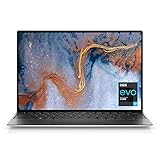
Dell's new XPS 13 (DX13260) debuts as the company's thinnest and lightest XPS model to date. Targeting the mainstream market, the ultra-lightweight chassis is configured with Intel's new Wildcat Lake or Panther Lake CPUs, lowering the entry barrier for students.
The XPS family has been Dell's flagship ultrabook brand, strictly targeted at the $1,000+ premium prosumer market with CNC-machined metal, high-fidelity displays, and bleeding-edge silicon. The recent Panther Lake-powered XPS 14 and 16 refreshes pushed that premium envelope even further, commanding prices north of $2,000. While this flagship tier delivers unmatched build quality, buyers pay a massive premium for the experience.
Popular Now: DLSS 5 has been modded into Skyrim, and it definitely transforms character facesThe new XPS 13 breaks this trend by bringing the same premium laptop design to the mainstream market. Under the hood, Dell offers entry-level configurations with Intel's latest Wildcat Lake chips alongside higher-tier Panther Lake options.
The XPS 13 uses a 1kg, 12.7mm CNC-aluminum chassis. Wildcat Lake models feature a Core 5 320 with up to 16GB of RAM and 512GB of storage, while higher-tier Panther Lake models use the Core Ultra 7 355, supporting up to 32GB of RAM and 1TB of storage.
Display specifications feature a 13.4-inch 2.5K (2560x1600) touch panel boasting a 30-120 Hz variable refresh rate, 500 nits of brightness, and full 100% DCI-P3 coverage alongside a DisplayHDR 400 rating. This panel likely uses IPS technology. Network connectivity leverages Bluetooth 6.0 paired with two architecture-specific Wi-Fi 7 modules: Intel's BE213 2x2 for Wildcat Lake models, and the higher-tier BE211 2x2 for Panther Lake configurations.

Audio is driven by a quad-speaker configuration, while the 52 Wh battery yields an advertised 17-hour video playback runtime. Peripheral connectivity is limited to two USB Type-C ports that support DisplayPort 2.1 and Power Delivery. Full Thunderbolt throughput remains exclusive to the premium Panther Lake models.
The XPS 13 will be available in two colors: Sky and Storm. The keyboard features a full-size, backlit, chiclet layout with 0.8mm of key travel. The glass trackpad is likely mechanical. Another notable inclusion is an ambient light sensor for automatically controlling keyboard and display brightness.

As reported by VideoCardz, the XPS 13 will retail at $699 ($599 for students). This is $100 higher than the MacBook Neo, and is very likely the 8GB model. Moving up to 16GB may offset the value proposition with the current state of the DRAM market.
This material was sourced from an embargoed XPS 13 guide from Dell for Computex. We'll likely hear more details next week and see even more affordable models from other brands.